
Hunger, appetite, and nighttime overeating are not identical
Physical hunger may build gradually and accept several food options. Cue-driven appetite can appear suddenly when a show starts or food becomes visible. A binge episode involves loss of control and often marked distress; it is not solved by stricter tips. Night eating syndrome is a clinical pattern, not a casual label for one late snack.
This page diagnoses late-night hunger. Our nighttime overeating guide focuses on environmental and behavioral containment. The distinction matters because locking the kitchen will not correct an underfed day.
Six common cause categories
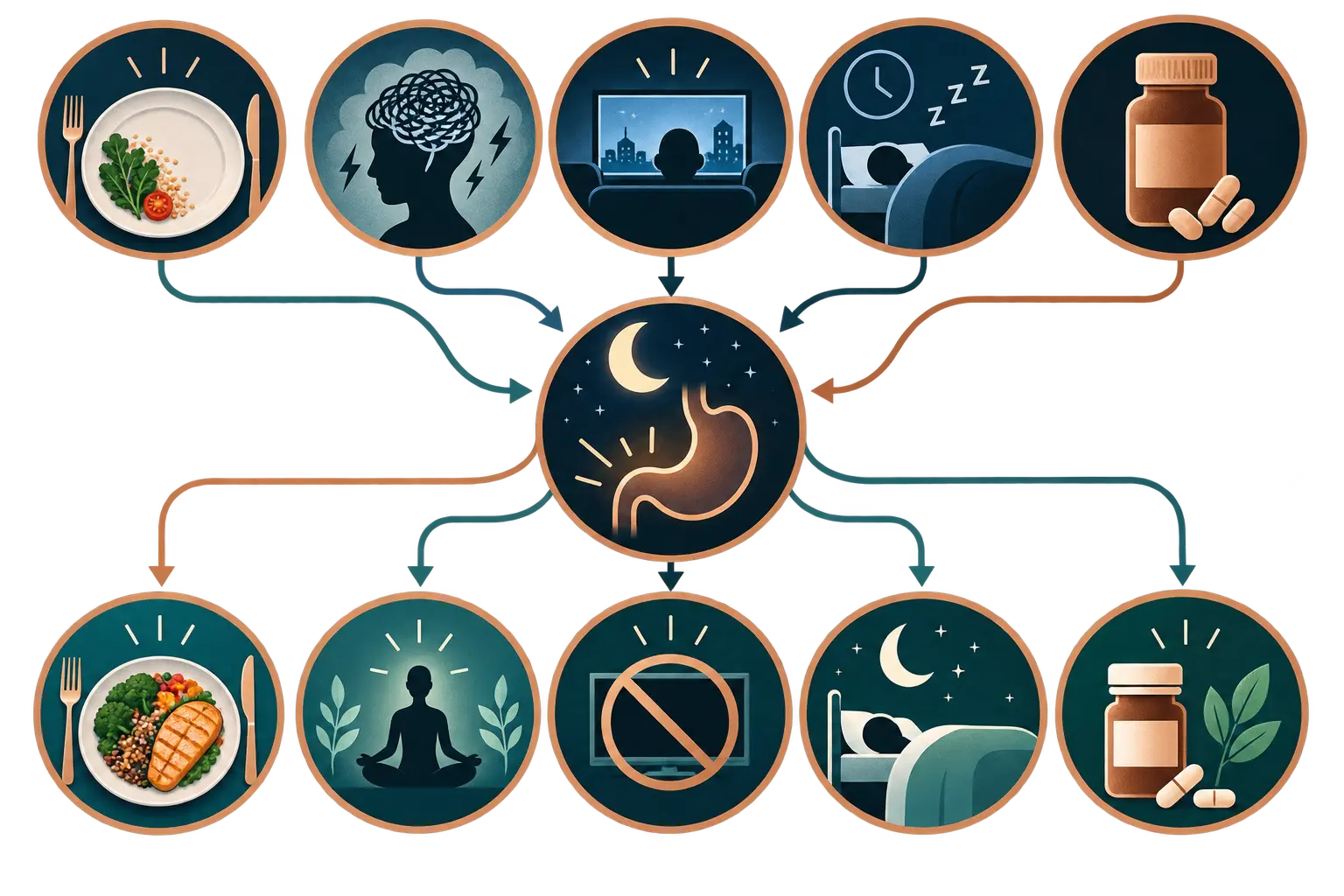
The seven-night cause log
At the first urge to eat, record the time, hunger from 0 to 10, the last meal and its components, sleep the previous night, alcohol, training, mood, location, and the food you want. After eating or waiting, record what changed. Keep the exercise neutral; it is evidence collection, not a confession.
If the desire is specifically for dessert right after dinner, the sweet-craving guide compares a different set of triggers.
If dinner repeatedly leaves you hungry, inspect the protein-forward dinner formula before assuming an evening snack is a failure.
Patterns often emerge quickly. Broad food flexibility and stomach hunger suggest under-fueling; a specific snack paired with the same chair and program suggests a cue. Both can coexist, so the solution may need a stronger dinner and a changed routine.
Match the response to the cause
For physical hunger, improve dinner or plan a defined evening snack containing protein and fiber, such as yogurt and fruit or a suitable whole-grain option. For a cue, portion food away from the package, close the kitchen after the planned choice, brush teeth, change rooms, or pair television with tea or another non-food activity.
For stress, use a short decompression sequence before deciding: ten minutes away from the kitchen, a shower, breathing, a walk where safe, journaling, or contacting someone. The goal is not to forbid food; it is to create enough space to identify the need.
Example: the solution is a planned snack
Priya finishes work at 10 p.m. after eating dinner at 6. She repeatedly grazes while preparing for bed and calls it emotional eating. Her log shows hunger rising gradually on every late shift, regardless of mood. She adds a planned 9 p.m. snack and places it in her work bag.
The snack adds energy on paper but replaces a larger, unstructured sequence. If the same urge occurred after adequate meals only during stressful calls, a decompression routine would be the better first test. Cause matching prevents generic advice from backfiring.
Sleep changes both opportunity and food reward
Short sleep lengthens the eating day and can make energy-dense foods more appealing. Going to bed earlier may remove an eating opportunity, but “just sleep more” is not sufficient for insomnia, shift work, caregiving, pain, or sleep apnea. Protect a consistent wind-down period and address the reason sleep is short.
Caffeine used to suppress evening hunger can delay sleep and strengthen tomorrow's appetite problem. Alcohol may reduce restraint, add calories, fragment sleep, and intensify snack cues. Record both rather than evaluating food in isolation.
When a curfew is the wrong response
Seek professional help for recurrent loss-of-control eating, compensatory behaviors, waking repeatedly to eat, eating a large share of daily intake after dinner with distress, or severe daytime restriction. Sudden appetite change, excessive thirst and urination, unexplained weight change, or symptoms after a medication change also deserve medical review.
Do not respond to a difficult evening by skipping breakfast and lunch the next day. Return to regular meals. Compensation often recreates the biological and emotional conditions for another episode.
Review the result without creating another rigid rule
Use a minimum-effective-change rule. If dinner is adequate but the eating episode begins when a delivery app sends a notification, disable the cue before redesigning the whole diet. If dinner contains little protein or food volume, strengthen it before demanding more restraint. If a planned snack solves the problem, define its portion and purpose rather than treating it as failure.
Review the result across a full week. Count nights with intense hunger, unplanned eating episodes, sleep onset, and next-day compensation. Do not grade food as clean or bad. The intervention works when nights become more predictable and the next day can begin normally. If the pattern remains frequent despite adequate meals and environmental changes, move from self-experiment to professional assessment.
Remember that body weight after a late meal is especially noisy. Food mass, fluid, sodium, carbohydrate, and a later bathroom schedule can raise the next morning's reading without equivalent fat gain. Use weekly averages and never use one high measurement to justify fasting all day.
Create a written evening default: the planned snack if physically hungry, the non-food decompression step if not, and the person or professional to contact when loss of control feels likely. Keep suitable food visible and portion triggering packages before the evening begins. A default lowers the number of decisions made while tired. It also makes review clearer: you can see whether the plan was inadequate, unavailable, or simply not matched to the real cause, then adjust one element for the next week.
Where Fat Burn Active fits
Fat Burn Active is optional and cannot repair a meal pattern that repeatedly leaves you hungry. A stimulant sensation or temporary appetite change is not proof of fat loss, and ingredient studies do not establish the effect of a finished multi-ingredient product. Protect food quality, sleep, movement, and an appropriate calorie target first. Never use a capsule to postpone food when genuine hunger is repeatedly disrupting the plan.
Once the practical steps in Late-Night Hunger: Causes and Solutions are working, decide whether an optional supplement adds enough value. Start with the Fat Burn Active review; if the formula and limitations are acceptable, see current availability and official ordering details. We may receive a commission.
Frequently asked questions
Should hunger be eliminated during weight loss?
No. Mild hunger before a meal can be normal. The concern is persistent, intense, or disruptive hunger that repeatedly defeats the plan or accompanies dizziness, weakness, loss-of-control eating, or inadequate nutrition.
Does one difficult day prove the schedule is wrong?
No. Compare several ordinary days and include sleep, activity, meal composition, stress, and menstrual-cycle context where relevant.
Should I copy another person's meal times?
Not automatically. Work hours, medication, training, culture, family meals, and appetite differ. Test a schedule against your complete day.
When is professional help appropriate?
Seek qualified help for recurrent binge episodes, purging, severe restriction, fainting, rapid unexplained appetite change, pregnancy-specific needs, diabetes medication questions, or a distressing relationship with food.
Sources
- Circadian System and Hunger
- Sleep Restriction and Food Intake
- NIMH: Eating Disorders
- NIDDK: Binge Eating Disorder
Sources reviewed September 14, 2026. This article is general educational information, not medical advice, diagnosis, or treatment.