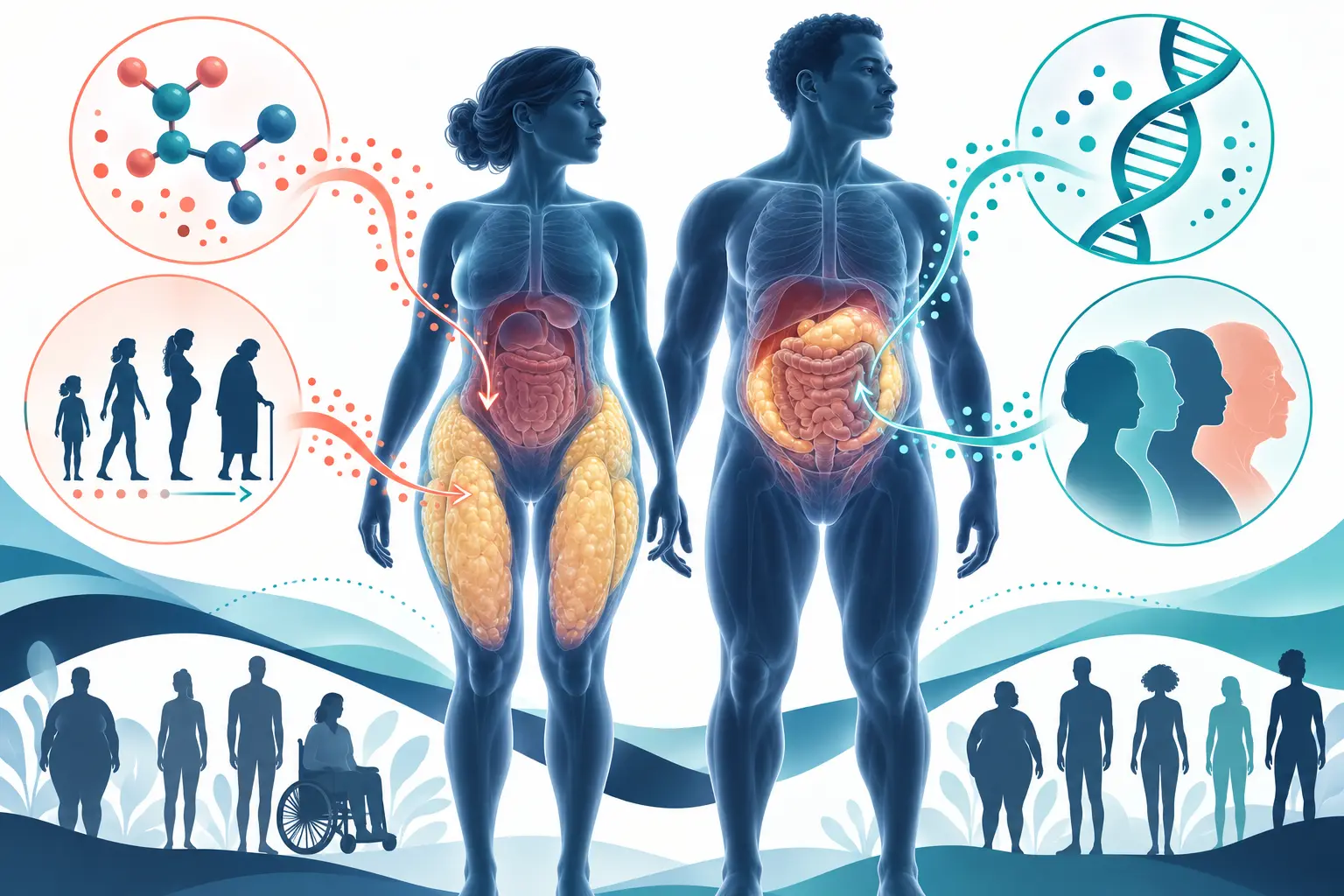
Fat depots are biologically different
Subcutaneous fat sits beneath the skin; visceral fat lies within the abdominal cavity around organs. These depots differ in blood flow, cell behavior and metabolic associations. Waist circumference can add useful context about central fat, but it does not directly measure visceral fat or identify a hormonal disorder.
Lower-body gluteofemoral storage and abdominal storage exist on a continuum. Body shape reflects skeletal structure, muscle and total adiposity as well as fat distribution.
Which hormonal signals matter

Why puberty, pregnancy and menopause can change the pattern
Sex-hormone changes across puberty and adulthood contribute to typical population differences in fat distribution. During the menopause transition, declining ovarian estrogen and aging can coincide with more central fat, changes in lean mass, sleep disruption and reduced activity. The pattern is variable rather than inevitable.
Pregnancy and postpartum changes require their own clinical context. Attempts to “correct” normal life-stage biology with unverified supplements can distract from symptoms that deserve care.
What body shape cannot diagnose
A larger abdomen does not prove high cortisol, insulin resistance, low testosterone, thyroid disease or a single “imbalanced” hormone. Bloating, posture, muscle, subcutaneous fat and visceral fat can all affect appearance. Diagnosis requires history, symptoms, examination and appropriately selected tests.
Broad hormone panels marketed directly to consumers may produce incidental results without answering the clinical question. Testing should follow a credible symptom pattern and professional interpretation.
What you can change safely
You cannot choose the exact depot from which fat is mobilized. You can use sustainable nutrition, resistance and aerobic activity, daily movement, sleep support, smoking avoidance and evidence-based care to improve health and reduce excess fat over time. Track waist under repeatable conditions alongside weight and function.
For menopause symptoms, PCOS, suspected thyroid disease, Cushing syndrome, hypogonadism or medication effects, treat the actual condition with qualified care. Hormone therapy has specific indications and risks; it should not be self-prescribed as a fat-distribution intervention.
Example: separating a pattern from a diagnosis
After menopause, Elaine notices a larger waist despite little scale change. This is compatible with several overlapping factors: regional redistribution, lower muscle mass, reduced movement, sleep disruption and diet changes. Appearance alone cannot rank them.
She records waist, strength, symptoms, medicines, sleep and meals, then discusses persistent symptoms with a clinician. Her plan addresses muscle and health while clinical evaluation handles diagnosis. A “cortisol blocker” is not used as a shortcut.
A deeper check before changing the plan
Use a three-layer explanation. Layer one is normal biology: sex, age, puberty, menopause and inherited tendencies shape population patterns. Layer two is modifiable context: total energy balance, physical activity, sleep, medicines and overall fat mass can influence waist and health. Layer three is clinical disease: specific endocrine conditions require diagnosis and treatment. Marketing often collapses all three into one vague “imbalance.”
Prepare a focused clinical timeline if change seems unusual. Record when the distribution or weight changed, menstrual or reproductive changes, muscle weakness, bruising, skin changes, sleep, mood, appetite, medicines and supplements. Add repeatable waist and weight data. This is more useful than ordering every available hormone test without a clinical question.
Interpret cortisol claims carefully. Cortisol is essential physiology, and short-term levels vary by time, illness, sleep and stress. Pathologic glucocorticoid excess is not diagnosed from feeling stressed or having abdominal fat. Likewise, insulin participates in storage and fuel regulation, but eating carbohydrate does not uniquely command the body to store belly fat independently of the full energy and health context.
Regional fat loss cannot be selected with exercises or supplements. Abdominal training strengthens muscles but does not guarantee that nearby adipose tissue supplies the energy. Sustainable reduction in overall excess fat may reduce waist, while genetics and life stage influence the pattern. The honest goal is to improve health markers, function and overall composition, and to investigate credible symptoms—not to promise control over the exact order in which each depot changes.
The final interpretation rule
Measure waist for risk context, not as a home hormone test. Use the same landmark and conditions, then discuss concerning trends alongside symptoms, history and clinical markers. A number can guide a conversation; it cannot name the endocrine cause.
Use a four-signal decision system
Collect a rolling body-weight average, a repeatable waist measurement, performance or daily-function notes, and a short adherence record. Interpret them together every two to four weeks. A stable scale with a smaller waist and maintained strength suggests a different response from falling weight with worsening strength, fatigue, and unchanged waist.
Change one major variable at a time. If calories, training, sodium, carbohydrate, supplements, and measurement conditions all change together, the result cannot explain which action helped. Set the next review date before making an adjustment and use the least aggressive change that addresses the evidence.
Seek qualified care for rapid unexplained change, swelling, fainting, chest symptoms, serious weakness, persistent menstrual change, signs of an eating disorder, or symptoms suggesting an endocrine or other medical condition. Body-composition advice cannot diagnose the cause of a symptom.
Where Fat Burn Active fits
Fat Burn Active cannot reveal which tissue changed, target a chosen fat depot, or protect muscle simply because it changes appetite, alertness, or scale weight. Finished-product claims would require relevant trials on the complete formula with appropriate body-composition outcomes. Ingredient mechanisms are not product proof.
Treat Fat Burn Active as an optional addition, not a substitute for How Hormones Influence Fat Distribution. Review its listed ingredients and limitations in our product analysis. If the evidence, warnings, and cost fit your decision, verify the current formula and purchase options. We may earn a commission.
Frequently asked questions
Can a home scale tell whether I lost fat?
No. It measures total mass. Smart-scale body-fat estimates are influenced by hydration and prediction equations; standardized trends may help, but a single percentage is not proof.
Should I react to one fast weekly change?
Usually not. Check measurement conditions, hydration, sodium, carbohydrate intake, digestion, illness, and training before interpreting tissue change.
Does maintaining muscle prevent all lean-mass loss?
No method guarantees that. Resistance training, adequate protein and a sensible deficit can improve the odds, while individual response and measurement error remain.
When is professional measurement useful?
When the result would change clinical or training decisions. Even laboratory methods have assumptions, so use the same method and comparable conditions.
Sources
- Determinants of Body Fat Distribution in Humans
- Regulation of Adipose Tissue Health by Estrogens
- NIA: What Is Menopause?
- NIDDK: Cushing's Syndrome
Sources reviewed September 14, 2026. This article is general educational information, not medical advice, diagnosis, or treatment.