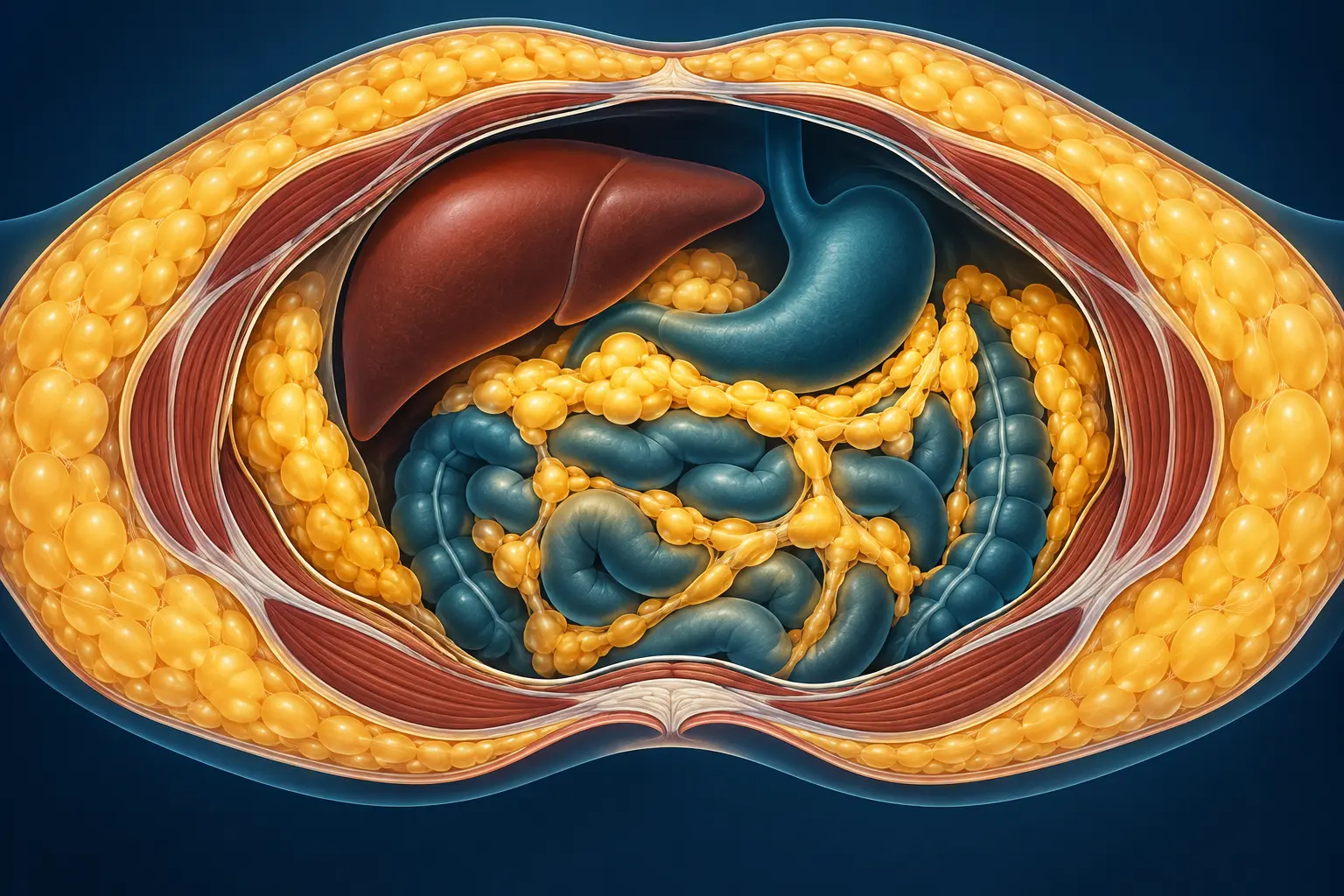
The same scale weight can hide different fat patterns
Two people with the same body weight or BMI can store fat in different places. One may carry more beneath the skin around the hips and thighs; another may carry more deep inside the abdomen. The second pattern can carry greater metabolic risk even when the bathroom scale looks similar.
That is why focusing only on kilograms can create false reassurance—or unnecessary alarm. Total fat mass matters, but its distribution, muscle mass, blood pressure, glucose, blood lipids, fitness, medicines, and family history add essential context.
Why visceral fat receives more medical attention
Visceral adipose tissue is metabolically active and is associated with insulin resistance, abnormal blood lipids, inflammation, fatty liver, type 2 diabetes, and cardiovascular risk. Its drainage and signaling relationship with the liver is one proposed reason it can be more harmful than many subcutaneous depots.
This does not make all subcutaneous fat harmless or all visceral fat immediately dangerous. Risk rises along a continuum and depends on the whole person. Gluteofemoral subcutaneous fat may have a different risk relationship from abdominal subcutaneous fat, illustrating why “fat is fat” is too simplistic.
How can visceral fat be measured?
CDC guidance notes that waist circumference helps account for belly fat and can help predict weight-related health risk. Technique matters: measure consistently, without pulling the tape tight, and interpret the result using guidance appropriate to sex, ancestry, health context, and country.

What influences where fat is stored?
Genetics, sex hormones, aging, menopause, energy surplus, alcohol intake, physical activity, sleep, stress, medicines, and some health conditions can influence fat distribution. People cannot choose their inherited pattern, but modifiable behaviors and appropriate medical care can change overall risk.
Can you target visceral or belly fat?
No exercise can selectively remove fat from the area being trained. Abdominal work strengthens muscle but does not guarantee local fat loss. When total fat mass decreases, visceral fat often responds to sustained lifestyle and weight-management interventions, but the exact sequence and rate vary.
Be cautious with products claiming to “melt belly fat,” “target deep fat,” or lower cortisol in a way that guarantees a smaller waist. A plausible ingredient mechanism is not proof of depot-specific fat loss in humans.
A practical plan for reducing abdominal risk
- Track more than weight. Add a consistent waist measurement and review the trend every few weeks.
- Use a sustainable energy deficit when fat loss is appropriate. Avoid extreme plans that cause repeated regain.
- Build an activity base. Combine regular aerobic activity, daily movement, and resistance training appropriate to ability.
- Prioritize food quality. Emphasize adequate protein and fiber, minimally processed foods, and an eating pattern that supports energy control.
- Protect sleep. Address persistent poor sleep, heavy snoring, or daytime sleepiness with a qualified professional.
- Limit harmful alcohol patterns. Alcohol adds energy and can affect liver and metabolic health.
- Check medical markers. Discuss blood pressure, glucose, lipids, liver health, medicines, and personal risk with a clinician.
Where do fat burners fit?
No fat burner should be presented as a treatment for visceral adiposity or cardiometabolic disease. Even if an ingredient affects energy expenditure or appetite, the evidence must show a meaningful human outcome at a comparable dose. Safety matters especially when high blood pressure, heart disease, diabetes, liver disease, medicines, or stimulant sensitivity are present.
Use our fat-burner safety guide before any product comparison, and read the Fat Burn Active evidence review for a formula-specific example.
Where Fat Burn Active fits
No supplement should be described as selectively removing visceral or subcutaneous fat without direct, dose-relevant finished-product evidence. Fat Burn Active is optional and cannot replace the training, nutrition, sleep, or medical care described above. Evidence about one ingredient does not establish the effect of the complete formula at the sold dose.
A supplement is not required to benefit from Subcutaneous Fat vs Visceral Fat: What Is the Difference?. If your foundations are already in place, use the independent Fat Burn Active review to judge whether the formula has a useful optional role. If it fits your expectations and stimulant tolerance, check current product details and ordering terms. We may receive a commission.
Frequently asked questions
Is a hard belly always visceral fat?
No. Appearance and feel cannot diagnose the amount of visceral fat. Bloating, posture, muscle tone, subcutaneous fat, and medical conditions can affect abdominal shape.
Can a thin person have visceral fat?
Yes. BMI and appearance do not fully describe fat distribution or metabolic health.
Which is easier to lose?
Responses differ, but visceral fat can decrease with sustained weight loss and physical activity. Individual depot changes cannot be predicted precisely.
Sources
- Pathophysiology of visceral adipose tissue in cardiometabolic disease
- Subcutaneous and visceral adipose tissue
- Visceral-to-subcutaneous fat ratio and cardiometabolic risk
- CDC: healthy weight and waist circumference
Evidence reviewed September 7, 2026. Educational information only; not medical advice.
A four-week review process
- Week 1 — establish the baseline. Keep normal routines, collect the measures above, and note unusual travel, illness, restaurant meals, hard training, poor sleep, or other events that can distort the result.
- Week 2 — choose one controlled change. Define a behavior you can actually measure, such as a meal structure, a walking range, or a training target. Avoid changing food, exercise, supplements, and sleep at the same time.
- Week 3 — check execution before outcome. Ask whether the planned behavior happened often enough. A plan cannot be judged fairly from perfect weekdays followed by unrecorded weekends or from data collected under changing conditions.
- Week 4 — compare averages and context. Review direction, size, consistency, hunger, recovery, and practical cost. Continue when the trend and experience are acceptable; simplify or adjust one variable when they are not.
How to avoid a false conclusion
Association is not always cause. A lower scale reading after a new food, supplement, or workout may reflect water, meal timing, or random variation. A higher reading does not prove fat gain. Look for a repeatable pattern, a plausible mechanism, and agreement between several measures. Consumer wearables and home body-composition devices are useful for trends but are not laboratory instruments.
What a useful decision looks like
A useful conclusion is specific and reversible: keep the current approach for another review period, reduce the size of the change, improve measurement consistency, or ask a qualified professional about an individual concern. It is not “this one tactic always works” or “nothing works.” Record why you made the decision and what result would cause you to reconsider it. That simple rule reduces hindsight bias and helps separate a genuine response from ordinary fluctuation.
When to adjust
Keep the method stable long enough to see a trend. Change one major variable at a time, document the change, and reassess the result rather than reacting to a single day. Stop and seek qualified medical guidance when symptoms, medicines, a diagnosed condition, pregnancy, disordered-eating concerns, or an unusually rapid unexplained change make self-directed experimentation inappropriate.