The abdomen is not one type of fat
Subcutaneous fat lies under the skin; visceral fat surrounds organs inside the abdominal cavity. They differ in location, metabolic behavior, and health relevance. A tape measure reflects the combined outline, not the amount in either compartment.
Regional change is individual. An area called “last” may simply hold more fat initially or produce a smaller visible difference per kilogram lost. Photos are also altered by angle, light, posture, clothing, and time of day.
What can temporarily mask waist change
These factors explain short-term noise, not an indefinite plateau. Persistent symptoms or unexplained abdominal enlargement deserve clinical review.

Use a whole-body plan, not a local punishment
A sustainable calorie deficit, adequate protein, resistance training, aerobic activity, sleep, and a workable food environment can reduce overall fat while protecting function. Abdominal exercises strengthen the trunk but do not command nearby adipocytes to release fuel.
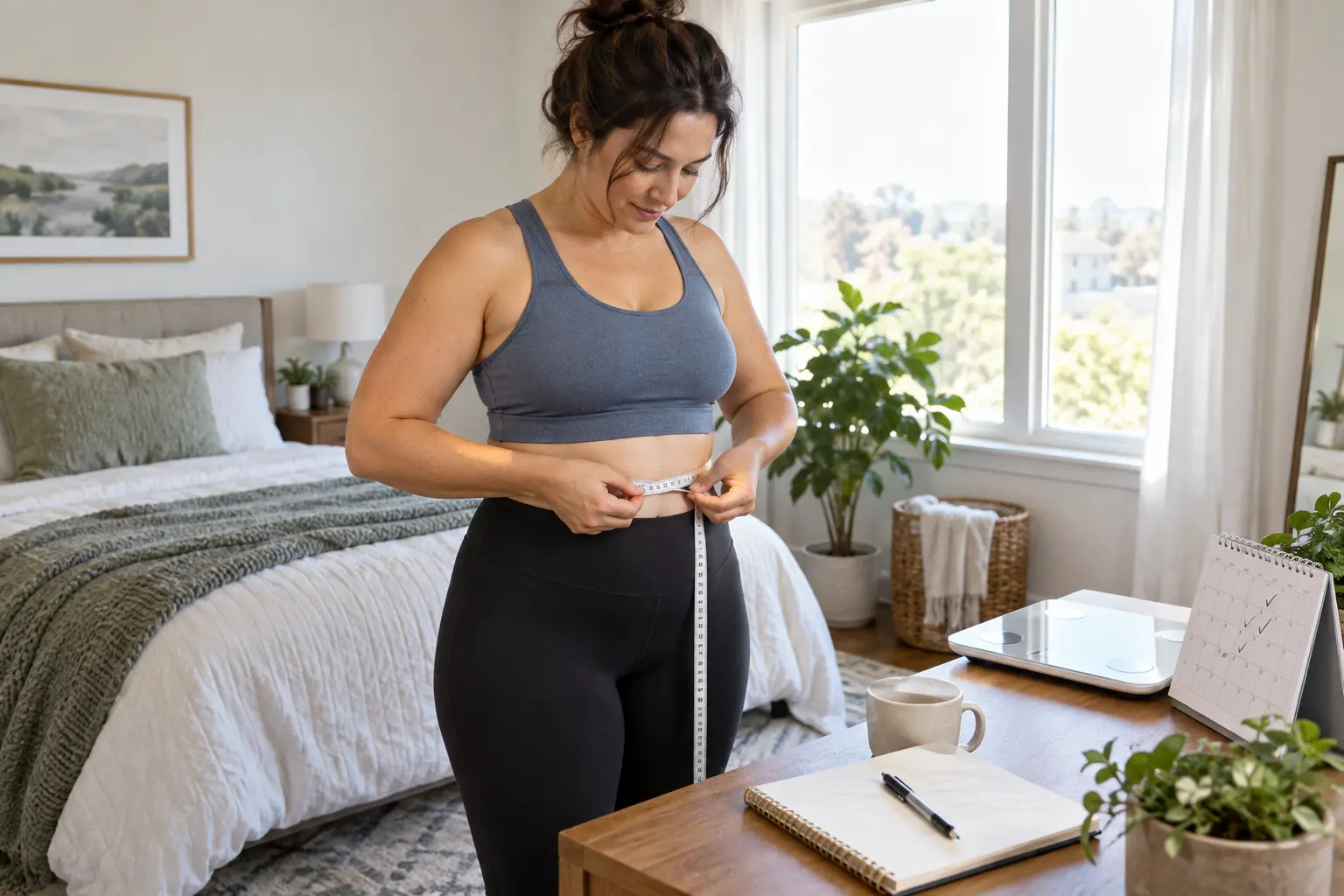
Measure waist at one defined point under similar conditions every two to four weeks. Pair it with seven-day average weight and consistent photos if emotionally appropriate. Review four or more documented weeks before changing the plan.
Example: weight changes before the tape
After six weeks, Noor’s average weight is lower and training is stable, but three waist readings look flat. The records show different tape positions and two measurements after restaurant weekends. Noor standardizes the site and morning conditions instead of cutting calories sharply. The next month shows a modest downward waist trend without dehydration or extra abdominal workouts.
A practical evidence-checking system
- Name the observation. Separate warmth, sweat, a scale change, waist change, energy expenditure, fat oxidation, and fat mass. They are not interchangeable outcomes.
- Check the time scale. Minutes of heat production cannot be projected into months of weight loss without evidence.
- Find the comparison. Ask what happened versus placebo, neutral temperature, the same workout, or the person’s own standardized baseline.
- Use absolute effects. A large percentage increase from a small baseline may still have little practical importance.
- Look for compensation. Hunger, sleep disruption, fatigue, lower spontaneous movement, and adaptation can offset a short metabolic change.
- Track the outcome that matters. Use multiweek average weight, a consistent waist measure, fitness, symptoms, and execution—not intensity of sensation.
Run one change at a time for long enough to interpret it. Keep ordinary meals, fluids, sleep, and movement reasonably stable. Record unusual heat, alcohol, illness, travel, menstrual changes, hard training, and constipation because they can alter measurements without matching fat change.
A useful experiment has a stop rule. End deliberate heat or cold exposure for dizziness, confusion, weakness, chest pain, fainting, severe headache, unusual shortness of breath, or persistent palpitations. People with cardiovascular, neurological, endocrine, kidney, pregnancy-related, or temperature-regulation concerns need individualized clinical advice.
Build a measurement dashboard
Choose one primary outcome and a few supporting measures. If the goal is fat loss, use a four-week trend in standardized morning weight plus a waist measurement taken every two to four weeks. Supporting measures can include meal-plan completion, steps, resistance sessions, sleep opportunity, hunger, and adverse symptoms. Sweat, warmth, tingling, and a single post-workout weight are context, not verdicts.
Use the same scale on a hard surface, similar clothing, and the same waist landmark. Do not tighten the tape to manufacture progress. Photos are optional and should use similar distance, posture, and lighting. If tracking worsens anxiety or restrictive behavior, reduce its frequency and seek appropriate support.
Read research without turning a mechanism into a promise
Start with the population: healthy young adults, people with obesity, trained athletes, animals, or cultured cells. Identify the intervention, dose, temperature, duration, and comparator. Then find the endpoint. Gene expression, tissue temperature, oxygen use, appetite rating, and kilograms of fat are different answers.
Check uncertainty, withdrawals, adverse events, funding, and whether the difference is clinically useful. A statistically significant laboratory signal may be too small or brief to matter. A tightly controlled chamber, cooling suit, scan, or biopsy does not prove that an uncontrolled home routine or retail supplement produces the same effect.
Choose the safer lever first
For most people, dependable levers remain a manageable calorie deficit, adequate nutrition, progressive activity, resistance training, sleep, and an environment that reduces repeated high-effort decisions. These actions also support fitness, strength, blood pressure, glucose control, mobility, and confidence.
Do not add extreme heat, cold, dehydration, or stimulant stacking to make a routine feel powerful. More discomfort does not strengthen evidence. If weight and waist remain unchanged across several documented weeks, audit intake, portions, weekends, movement, sleep, medicines, and health context. Change one plausible variable and set the next review date.
Use a simple decision rule at the review. Continue when the relevant trend improves and the routine remains tolerable. Adjust when execution is consistent but the intended outcome is absent. Stop when harms, cost, or complexity exceed the benefit. Seek professional assessment when symptoms, medicines, rapid unexplained change, disordered eating, or an underlying condition could alter interpretation. This prevents a dramatic sensation from overriding a quieter but more informative record.
Finally, distinguish “possible” from “useful.” Human physiology can produce heat through several pathways, and adipose tissue is biologically active. That does not mean every pathway is large enough, durable enough, or safe enough to become a practical weight-loss intervention. The correct conclusion can be scientifically interesting but clinically modest.
Where Fat Burn Active fits
Fat Burn Active is optional. Its stimulant and botanical ingredients may create alertness, warmth, sweating, or a temporary change in appetite, but those sensations do not demonstrate that the finished product reduces fat mass. Evidence for a mechanism or isolated ingredient cannot establish the effect of the complete formula at the sold dose.
Do not use a thermogenic supplement to chase sweat, heat, dehydration, or a lower post-workout scale reading. Count caffeine from every source and review sleep, anxiety, blood pressure, heart rhythm, medicines, and other supplements. Never combine it with deliberate overheating or use more than the current label directs.
Treat Fat Burn Active as an optional addition, not a substitute for Why Belly Fat Is Often the Last to Change. Review its listed ingredients and limitations in our product analysis. If the evidence, warnings, and cost fit your decision, verify the current formula and purchase options. We may earn a commission.
Frequently asked questions
Is belly fat always the last fat lost?
No. The order differs between people.
Do ab exercises burn belly fat?
They strengthen muscle but cannot select the nearby fat depot.
Can waist change while weight does not?
Yes, but confirm with repeated standardized measurements.
When should abdominal change be checked?
Rapid unexplained enlargement, pain, swelling, or persistent digestive symptoms need qualified care.
Sources
- Endotext: Adipose Tissue Distribution
- WHO: Waist Circumference and Waist–Hip Ratio
- NIDDK: Health Risks of Overweight
- Regional Fat Loss Review
- NIH ODS: Weight-Loss Supplements
Sources reviewed September 17, 2026. This article is general educational information, not medical advice, diagnosis, or treatment.