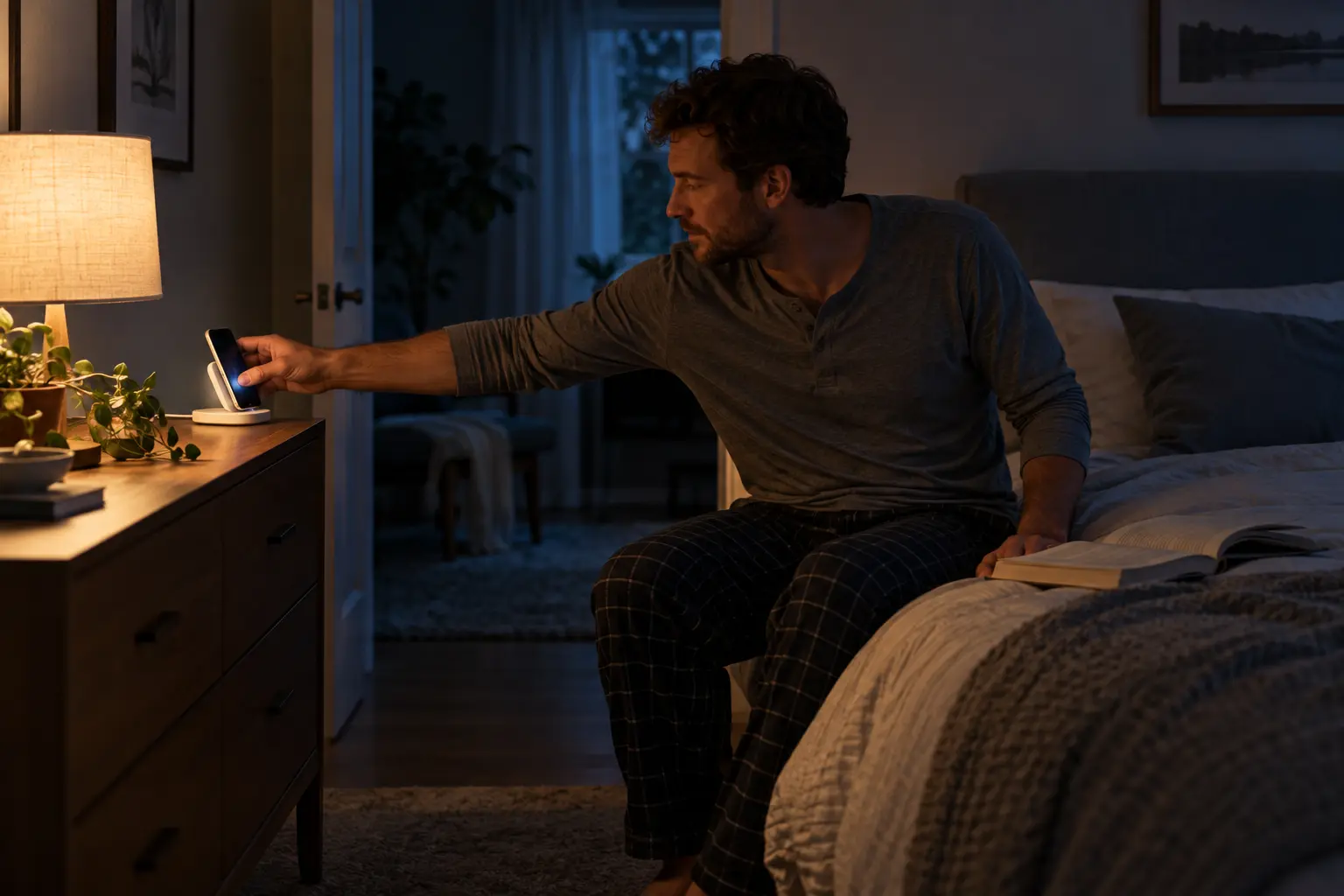
Four ways a screen can move bedtime
Association studies cannot always determine direction: people with insomnia may use devices because they are awake. Experimental light research supports biological plausibility, while real-world effects depend heavily on behavior and exposure.
Why night mode is not a complete solution
A warmer screen may reduce short-wavelength light, but it does not end a conversation, stop autoplay, remove work pressure, or return the minutes already spent awake. Brightness and proximity also remain relevant. Treat filters as a supporting control, not permission for unlimited bedtime use.
The practical question is not “Are screens bad?” It is “Which screen behavior repeatedly displaces my sleep?” A video call with family, an accessibility tool, and doomscrolling serve different purposes and need different solutions.
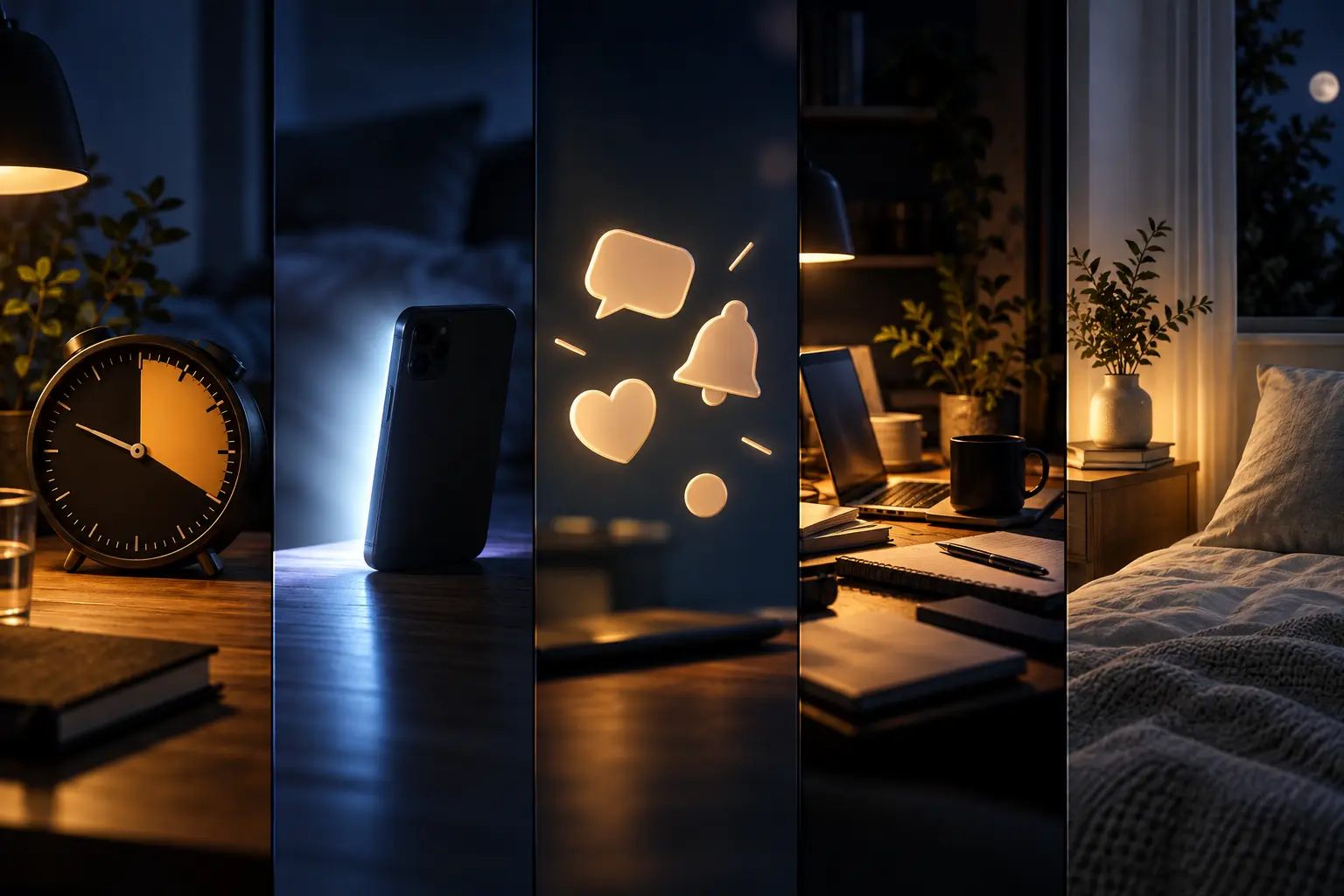
Run a seven-night screen-boundary test
- Record the last screen use and actual lights-out time for three nights.
- Identify the activity that most often overruns.
- Set a stopping alarm thirty to sixty minutes before intended sleep.
- Charge the phone beyond arm's reach and silence nonessential alerts.
- Replace the function: paper book, audio with screen off, shower, stretching, or a written task list.
- Compare sleep opportunity, sleep onset, awakenings, and next-day hunger.
If work requires late screens, lower ambient and screen brightness, finish the most activating tasks first, and create even a brief non-work transition.
How delayed sleep can affect weight management
A later bedtime can lengthen the eating window and reduce total sleep. Short sleep may increase food reward, fatigue, and eating opportunities, making a calorie target harder to maintain. This is a behavioral risk pathway, not proof that a phone directly creates body fat.
Do not compensate for a late night with severe restriction. Keep regular meals, use caffeine early enough to protect the next bedtime, and return to the normal schedule. Persistent insomnia is better addressed with qualified care, including evidence-based insomnia treatment, than with endless sleep-hygiene optimization.
Keep the weight claim proportional
These habits can change how difficult a weight-management plan feels, but none bypasses energy balance. A calmer evening may reduce automatic eating; an earlier bedtime may remove an eating opportunity; less alcohol may reduce both drink calories and next-day friction. Those are useful pathways, not guarantees that body fat will fall.
Separate an immediate response from a durable outcome. Feeling relaxed after breathing, sleepy after alcohol, or refreshed after sleeping late is not proof of better appetite control or weight loss. Judge the full pattern across ordinary weeks.
Use a seven-day behavior audit
- Record bedtime, estimated sleep onset, wake time, awakenings, and daytime sleepiness.
- Note evening screens, alcohol, caffeine, stressful events, and meal timing.
- At each unplanned eating episode, rate physical hunger and name the cue.
- Track the behavior you are testing, not every possible wellness metric.
- Compare weekly-average weight only when weighing is appropriate, and add waist or habit completion if useful.
- Change one pressure point for the next seven days and repeat.
The record should be brief enough to survive a difficult week. It is a decision aid, not a score of personal worth.
Interpret the experiment without overreacting
Choose one primary result before starting. It might be bedtime consistency, the number of automatic eating episodes, morning sleepiness, or completed alcohol-free evenings. Add one guardrail such as daytime anxiety, dizziness, hunger, or training quality. Predetermining the measures reduces the temptation to declare success from whichever number happens to improve.
Keep food intake, activity, medicines, and caffeine reasonably stable when possible. If several factors change together, record them and avoid assigning the outcome to meditation, breathing, a screen boundary, extra sleep, or alcohol reduction alone. Weight can also move temporarily with sodium, carbohydrate, hydration, constipation, menstrual-cycle timing, and meal contents.
At the end, choose among four decisions: keep the practice, simplify it, test a different pressure point, or seek qualified help. A neutral result is useful because it prevents endless effort on a weak lever. Do not intensify calorie restriction or exercise to make a behavioral experiment look successful.
Worked example: fix the first break in the evening
Jordan plans to stop snacking after dinner but repeatedly eats while scrolling at midnight. The first assumption is poor discipline. The audit shows a different chain: a small lunch, late work, two drinks, stimulating messages in bed, and less than six hours of sleep. A stricter snack ban would attack the last link.
Jordan instead prepares a complete lunch, chooses alcohol-free work nights, charges the phone outside the bedroom, and keeps a planned snack available if genuine hunger remains. Meditation or slow breathing can create a pause, but the food and sleep system carries most of the load. After two weeks, the useful outcomes are fewer automatic episodes, earlier sleep, and easier mornings—not a dramatic daily scale change.
Know when self-help is not enough
Persistent insomnia, loud snoring, witnessed breathing pauses, gasping, morning headaches, severe daytime sleepiness, or drowsy driving warrant medical assessment. Anxiety, depression, trauma, panic, or intrusive thoughts may need qualified mental-health care. Meditation and breathing are not emergency treatment.
Repeated episodes involving loss of control, secrecy, marked distress, vomiting, fasting, or compensatory exercise deserve eating-disorder assessment. If alcohol is difficult to reduce, withdrawal may be medically dangerous for a dependent person; seek professional help rather than stopping abruptly without guidance. Urgent symptoms or risk of harm require immediate local care.
Where Fat Burn Active fits
Fat Burn Active is optional and cannot replace sleep, treatment, coping skills, or a workable calorie target. A stimulant may temporarily change alertness or appetite while also worsening anxiety or delaying sleep. Ingredient evidence does not prove that the complete formula produces meaningful weight loss.
Once the practical steps in How Screen Time Delays Sleep are working, decide whether an optional supplement adds enough value. Start with the Fat Burn Active review; if the formula and limitations are acceptable, see current availability and official ordering details. We may receive a commission.
Frequently asked questions
Can one better night reduce appetite?
It may make the next day easier, but appetite varies and one night cannot establish a reliable effect. Look for a repeated pattern.
Should I track sleep with a wearable?
A wearable can show timing and trends, but consumer sleep stages are estimates. Behavior and symptoms matter more than chasing a perfect score.
Does relaxing burn calories?
Relaxation is not a meaningful calorie-burning strategy. Its value is reducing distress or improving decisions and sleep.
What should I change first?
Choose the earliest recurring pressure point with a realistic solution: inadequate meals, late stimulation, alcohol, an irregular schedule, or untreated symptoms.
Sources
- Effects of light on human circadian rhythms and sleep
- Light-emitting eReaders and circadian sleep
- Screen use in bed and insomnia study
- CDC: About sleep
- NHLBI: Healthy sleep habits
Sources reviewed September 15, 2026. This article is general educational information, not medical advice, diagnosis, or treatment.