
Sedentary time and inactivity are related but distinct
Sedentary behavior means waking time spent sitting, reclining, or lying with very low energy expenditure. Physical inactivity means not meeting activity recommendations. A person can complete a workout and still sit for most of the remaining day; another can miss formal guidelines yet move frequently at work.
This distinction matters because “I exercise” does not describe the other fifteen waking hours. Conversely, standing all day does not provide the cardiorespiratory and strength benefits of structured activity.
Weight is affected by total intake and expenditure over time. Sitting can lower movement opportunity, but a chair does not independently create fat. Food intake, occupation, sleep, medicines, and health remain part of the system.
What the evidence can and cannot establish
Observational studies associate more sedentary time with poorer health outcomes, although confounding and measurement differences complicate cause-and-effect claims. Experimental studies of breaking up sitting often focus on short-term glucose, insulin, blood pressure, discomfort, or energy expenditure rather than long-term fat loss.
That means a walking break can be worthwhile without being sold as a dramatic weight-loss technique. Its direct benefits may include movement opportunity, comfort, attention, and a small addition to daily expenditure. Repeated across a week, it helps build a less sedentary pattern.
No single universal sitting threshold guarantees safety or harm. Guidelines emphasize moving more and sitting less because replacing some sedentary time is broadly useful.
Replacement matters more than removal
Replacing thirty seated minutes with thirty minutes of sleep is not the same as replacing it with walking. Studies and marketing claims should name the replacement behavior.
Redesign the workday without harming the work
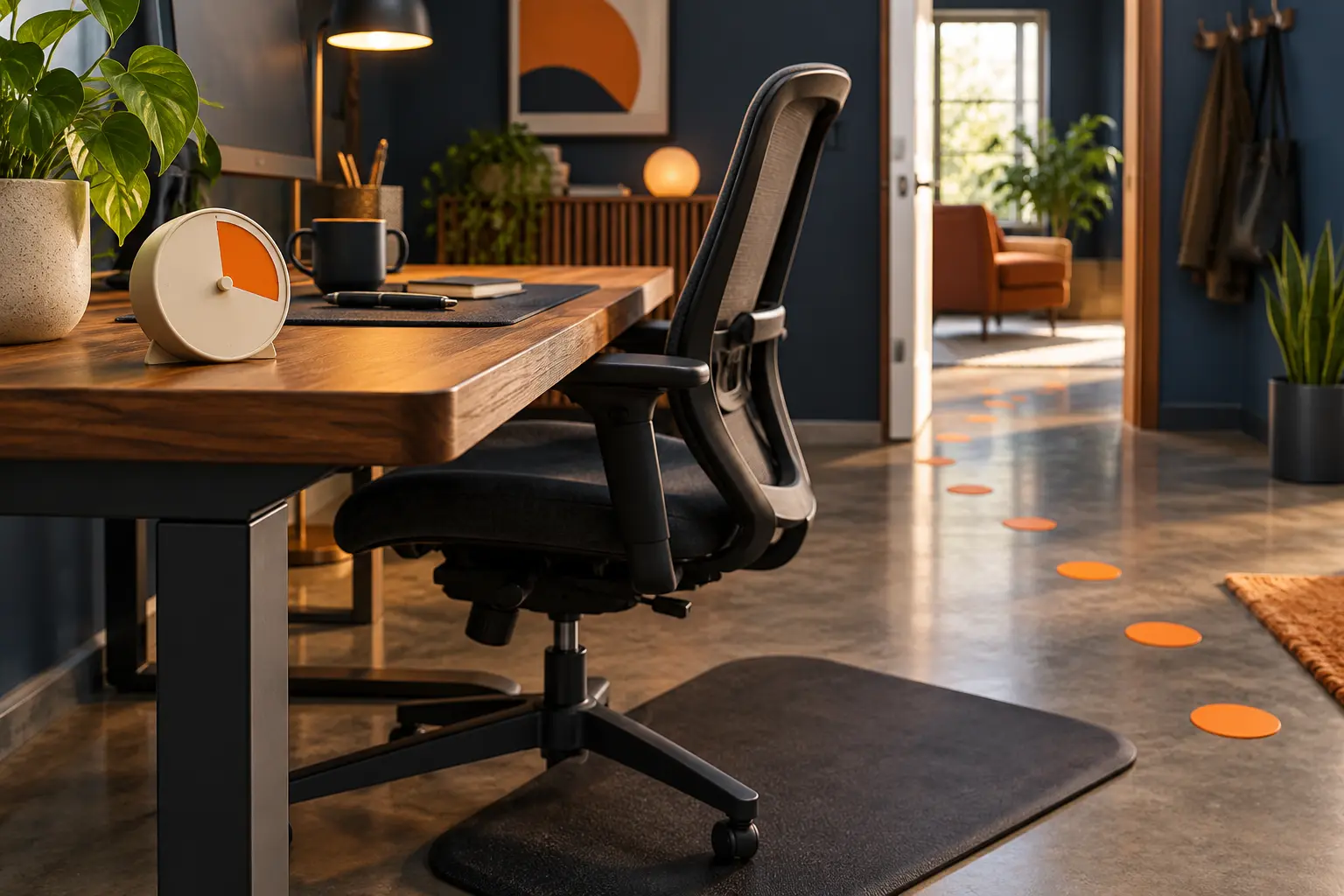
Start at natural boundaries: after a meeting, before refilling water, after lunch, or when completing a focused block. A two- to five-minute walk, a standing call, or a trip to a farther printer may be easier to repeat than a rigid hourly alarm.
Alternate posture rather than standing continuously. Prolonged standing can also cause discomfort. Adjust screen, keyboard, chair, and desk height, and use supportive footwear when relevant. A sit-stand desk is a tool, not a requirement.
If reminders become background noise, pair them with an action and review whether they changed behavior. Protect accessibility, privacy, job demands, and safety; not every worker can leave a station on command.
Use sitting changes inside a complete weight plan
Reducing sitting can raise daily movement, but estimated calories are too uncertain to eat back precisely. Combine movement breaks with appropriate meals, sleep, and weekly aerobic and resistance activity. If weight and waist remain stable, review the whole pattern instead of blaming one desk.
Track total sitting only if the device is consistent. Otherwise record the number of long blocks interrupted or the completion of planned breaks. Improvements in back comfort, afternoon energy, walking tolerance, or blood-glucose management may matter even when the scale does not change.
People using glucose-lowering medicines should discuss activity changes and monitoring with their clinician because exercise can affect glucose and medication needs.
Interpret the result without overclaiming
A useful audit separates three numbers: total waking sitting, the longest uninterrupted blocks, and purposeful activity. Changing any one can be progress. A worker might keep the same total desk hours but replace three long blocks with short walks; another may reduce sitting by standing without adding much walking. Those are different interventions and should not be described as equivalent.
Choose the outcome before judging the change. For comfort, posture variation and regular breaks may be central. For aerobic fitness, the break must be sufficiently active or complemented by exercise. For weight management, only the complete energy and behavior trend can show whether the change mattered.
This framing also prevents false reassurance. Meeting an exercise target does not make additional movement pointless, while a standing desk does not prove that weekly activity guidance is met.
Run a two-week movement experiment
- Record the baseline. For seven ordinary days, note steps or active minutes, sitting blocks, planned exercise, sleep, hunger, and weekly-average weight.
- Choose one prompt. Attach a small action to an existing cue: walk after lunch, stand during one call, use the stairs, or complete one household task.
- Keep the dose modest. Add something repeatable rather than trying to transform every hour.
- Compare like with like. Use the same device and similar days; treat calorie estimates as rough.
- Review the pattern. Keep the change if it improves movement without worsening pain, fatigue, work, or appetite.
This experiment cannot prove an exact calorie effect. It can answer the more useful question: did the environment produce more repeatable movement? Change one major variable at a time so the result remains interpretable.
Where Fat Burn Active fits
The direct solution to prolonged sitting is changing the environment and schedule. A thermogenic capsule cannot interrupt a sitting block or supply the health adaptations of movement.
Fat Burn Active is an optional stimulant-oriented thermogenic supplement, not a source of steps, muscular work, fitness, or a guaranteed calorie deficit. Feeling warmer, more alert, less hungry, or sweatier does not prove additional fat loss. Evidence for one ingredient also cannot establish the effect of the finished formula at the amount sold.
Once the practical steps in How Sitting Time Affects Weight Management are working, decide whether an optional supplement adds enough value. Start with the Fat Burn Active review; if the formula and limitations are acceptable, see current availability and official ordering details. We may receive a commission.
Safety and individual context
Increase activity gradually when you are deconditioned, pregnant, recently injured or operated on, or living with significant heart, lung, neurological, metabolic, or joint disease. A clinician or qualified rehabilitation professional can help adapt movement to symptoms, disability, medicines, and fall risk.
Stop and seek urgent care for chest pain, fainting, new neurological symptoms, severe or unusual breathlessness, or a rapid irregular heartbeat. Persistent pain, swelling, dizziness, or worsening function deserves assessment rather than a higher step target. Movement advice is educational and is not a diagnostic test.
Frequently asked questions
Can a standing desk cause weight loss?
Standing usually changes expenditure only modestly. It may help vary posture, but meaningful weight management still depends on the full intake and activity pattern.
Does exercise cancel sitting all day?
Exercise provides major benefits, but guidelines still recommend moving more and sitting less. Treat them as complementary goals.
How often should I get up?
No single interval fits everyone. Start with feasible breaks at task boundaries and gradually reduce prolonged uninterrupted blocks.
Sources
- US Physical Activity Guidelines
- WHO Guidelines on physical activity and sedentary behaviour
- Systematic review of sedentary-break interventions
- CDC: Physical Activity Basics
Sources reviewed September 8, 2026. This article is general educational information, not medical advice, diagnosis, or treatment.