Start where the work naturally pauses
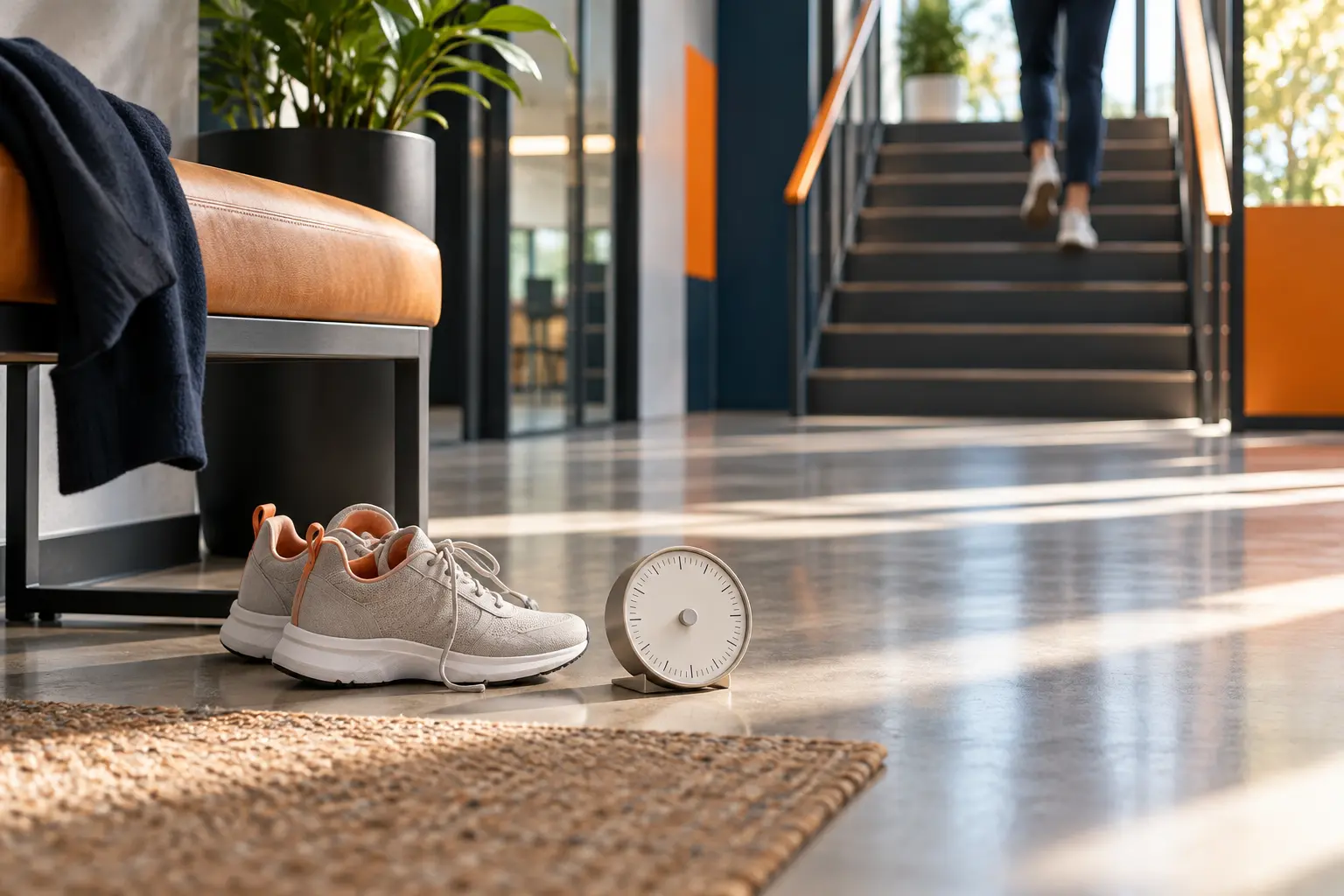
A reminder every thirty minutes can fail when calls, customer queues, laboratory procedures, driving, or deep work cannot be interrupted. Instead, identify boundaries already present: after a meeting, before lunch, after sending a report, between clients, or when refilling water.
Select two boundaries and define an exact route. Walk to the end of the corridor, around the building, to another floor, or through an accessible indoor loop. If leaving the desk is not possible, use an appropriate standing, wheeling, or seated movement alternative.
The first target is reliability. Two completed breaks on five workdays provide more information than an ambitious schedule abandoned on Tuesday.
A four-level progression
These levels are examples, not prescriptions. Progress one variable—frequency, duration, pace, or stairs—at a time. The talk test is more personal than a universal speed: moderate effort allows conversation but makes breathing faster.
What short breaks are likely to do
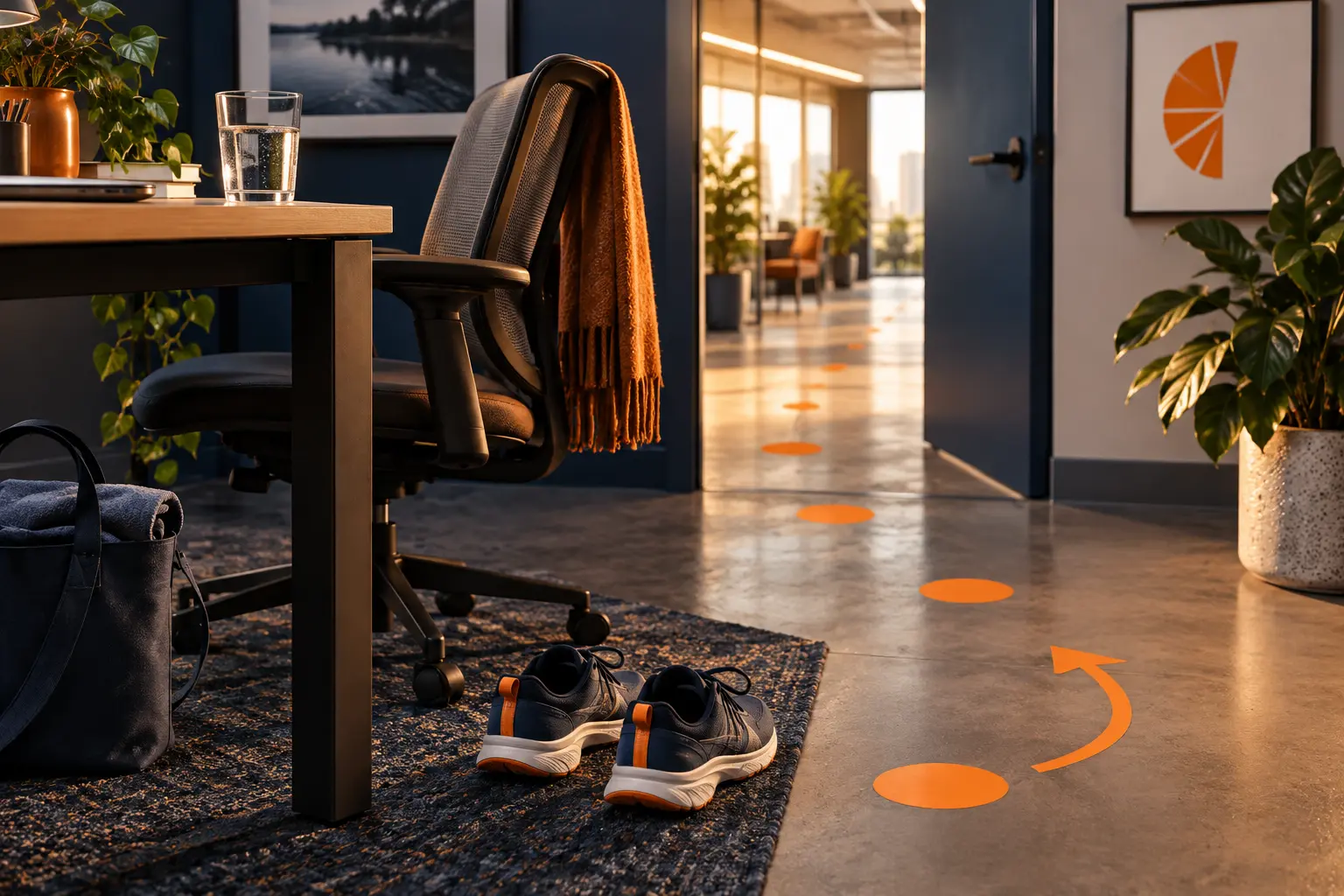
Walking breaks replace low-movement time with muscular activity. Acute studies suggest that breaking up sitting can influence post-meal glucose and insulin responses in some contexts. A break may also reduce stiffness, change visual focus, and create a transition between tasks.
What it cannot promise is a specific amount of fat loss. Studies vary in participants, break timing, intensity, meals, and outcomes. A few minutes expend some energy, but watches and online calculators cannot measure it precisely.
Evaluate both health behavior and weight-management outcomes: completed breaks, total steps, comfort, concentration, weekly-average weight, waist, hunger, and whether the routine displaces planned exercise or sleep.
Solve the barrier instead of blaming motivation
Employers can support movement with realistic break policies and accessible routes. Workers should not be expected to ignore safety procedures or lose required coverage.
Use post-meal walking carefully
A short easy walk after a meal can be a convenient cue and has been studied for postprandial glucose. It does not neutralize the meal or give permission to disregard portions. The effect also depends on the person, meal, timing, intensity, and medication context.
People with diabetes who use insulin or medicines that can cause hypoglycemia need individualized guidance about activity, food, monitoring, and warning symptoms. Carry prescribed treatment and identification as advised. Anyone who becomes dizzy, shaky, confused, or unusually weak should stop and follow their clinical plan.
For others, comfort is enough: begin easy after a large meal and choose a different time if reflux or gastrointestinal symptoms worsen.
Interpret the result without overclaiming
Review the routine on Friday using three questions: How many planned breaks happened? Which cue worked without disrupting work? Did any route or pace create symptoms? Keep the strongest cue, modify the unreliable one, and add duration only after the schedule is stable.
Do not compensate for missed breaks with an exhausting evening session. The goal is to change the workday pattern, not to repay a movement debt. Likewise, a high step count from one weekend hike does not show that prolonged weekday sitting was interrupted.
If weight management is the goal, keep food decisions separate from the break counter. Walking may support expenditure and appetite differently across people; it does not earn a precisely calculated snack. Use the same tracker for trend comparison, then let several weeks of weight, waist, and adherence data guide the next adjustment.
Keep a fallback for unusually busy days: one short route after lunch and one before finishing work. A minimum plan protects continuity without turning a missed target into failure. Return to the normal schedule when constraints ease.
Run a two-week movement experiment
- Record the baseline. For seven ordinary days, note steps or active minutes, sitting blocks, planned exercise, sleep, hunger, and weekly-average weight.
- Choose one prompt. Attach a small action to an existing cue: walk after lunch, stand during one call, use the stairs, or complete one household task.
- Keep the dose modest. Add something repeatable rather than trying to transform every hour.
- Compare like with like. Use the same device and similar days; treat calorie estimates as rough.
- Review the pattern. Keep the change if it improves movement without worsening pain, fatigue, work, or appetite.
This experiment cannot prove an exact calorie effect. It can answer the more useful question: did the environment produce more repeatable movement? Change one major variable at a time so the result remains interpretable.
Where Fat Burn Active fits
A product cannot create a work break or the muscular activity of walking. Build the routine first; only then decide whether an optional supplement has a separate, evidence-supported job.
Fat Burn Active is an optional stimulant-oriented thermogenic supplement, not a source of steps, muscular work, fitness, or a guaranteed calorie deficit. Feeling warmer, more alert, less hungry, or sweatier does not prove additional fat loss. Evidence for one ingredient also cannot establish the effect of the finished formula at the amount sold.
A supplement is not required to benefit from Walking Breaks for Desk Workers: A Practical Plan. If your foundations are already in place, use the independent Fat Burn Active review to judge whether the formula has a useful optional role. If it fits your expectations and stimulant tolerance, check current product details and ordering terms. We may receive a commission.
Safety and individual context
Increase activity gradually when you are deconditioned, pregnant, recently injured or operated on, or living with significant heart, lung, neurological, metabolic, or joint disease. A clinician or qualified rehabilitation professional can help adapt movement to symptoms, disability, medicines, and fall risk.
Stop and seek urgent care for chest pain, fainting, new neurological symptoms, severe or unusual breathlessness, or a rapid irregular heartbeat. Persistent pain, swelling, dizziness, or worsening function deserves assessment rather than a higher step target. Movement advice is educational and is not a diagnostic test.
Frequently asked questions
Are two-minute walks worthwhile?
Yes, as a practical way to replace sitting and build a repeatable pattern. Do not translate them into a guaranteed weight-loss number.
Should every break be brisk?
No. Light walking can interrupt sitting. Add brisk periods only when appropriate and recoverable.
Can I count walking breaks as exercise?
They count as physical activity; sufficiently intense minutes may contribute toward aerobic guidance, while easy movement still has value.
Sources
- US Physical Activity Guidelines
- WHO Guidelines on physical activity and sedentary behaviour
- Review: interrupting sitting with activity
- CDC walking guidance
Sources reviewed September 8, 2026. This article is general educational information, not medical advice, diagnosis, or treatment.