The definition marketing usually leaves out
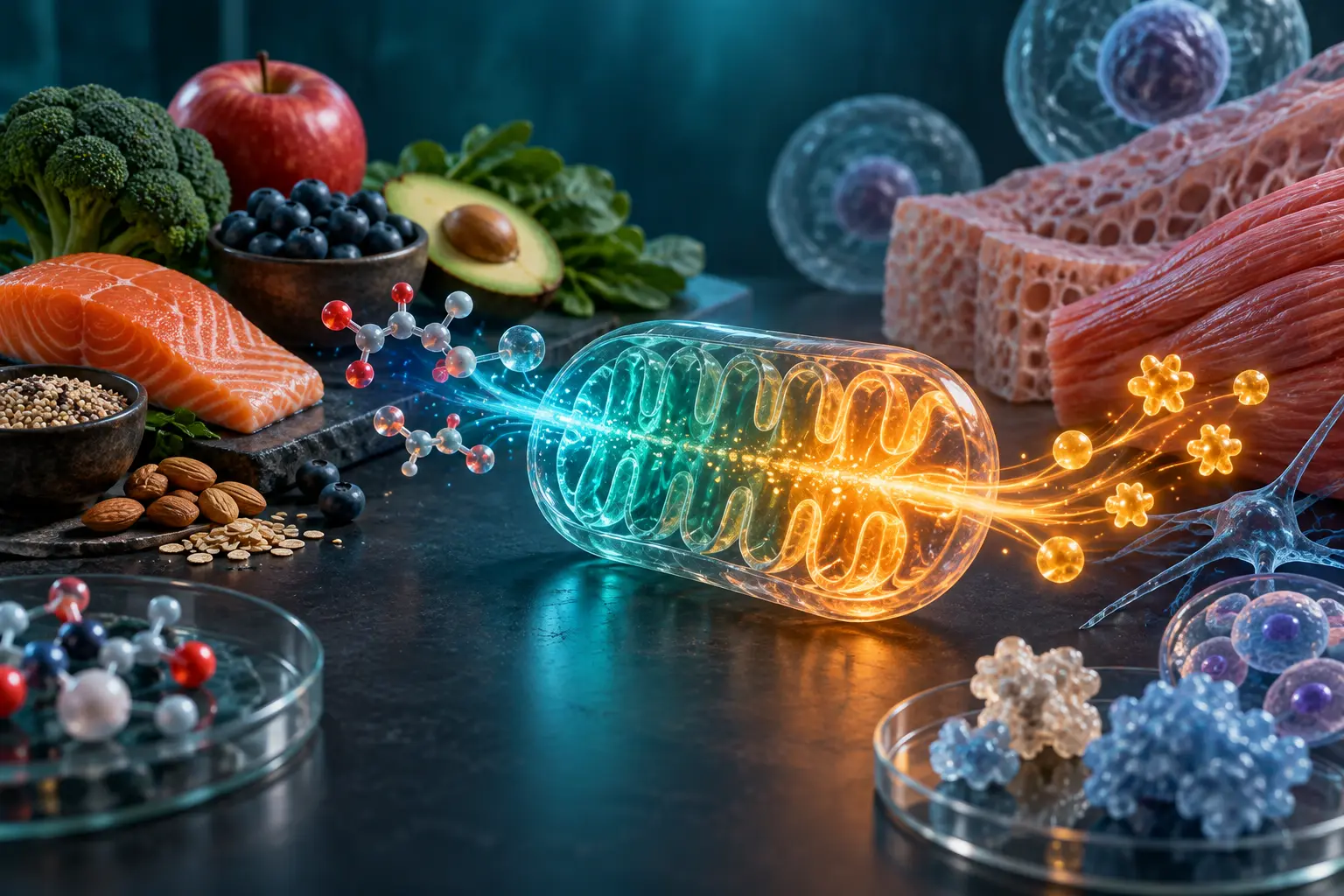
Popular weight-loss language uses metabolism as shorthand for calories burned. Biology uses it more broadly: thousands of enzyme-guided reactions transform nutrients, synthesize proteins and membranes, manage fuels, remove waste, and keep temperature, acidity, and other conditions compatible with life.
Digestion makes nutrients available, but metabolism continues inside cells and organs. The liver processes and distributes fuels; muscle stores and uses glycogen and fatty acids; adipose tissue stores and releases energy; the brain and other organs continuously require fuel. Hormones and the nervous system coordinate these processes.
A person with a “fast metabolism” usually means someone who has higher daily energy expenditure than expected or can eat more without gaining weight. That observation does not describe every metabolic pathway or reveal why the difference exists.
Catabolism and anabolism work together
These processes occur at the same time in different tissues. Eating does not switch fat burning entirely off, and fasting does not mean every tissue uses only body fat. The body shifts mixtures of fuels according to availability and demand.
This is why an ingredient that affects one laboratory pathway cannot automatically be described as causing body-fat loss. A pathway may not be the rate-limiting step, and the finished product, dose, human outcome, and duration still need evidence.

Metabolism versus metabolic rate
Metabolic rate describes energy used over time. Resting or basal expenditure covers the large background cost of maintaining tissues and vital functions. Total daily expenditure adds the thermic effect of food, non-exercise movement, and planned exercise.
Body size and fat-free mass explain much of the variation in resting expenditure. Age, sex, genetics, health, temperature, and hormones contribute. Total expenditure can vary more from day to day because movement and exercise change.
A prediction equation estimates these costs from population data. Indirect calorimetry estimates energy expenditure from oxygen consumption and carbon-dioxide production under controlled conditions. Neither method turns metabolism into one permanent personal number.
How metabolism relates to body weight
Body weight changes reflect the long-term relationship between intake and expenditure, while short-term readings also contain water, glycogen, food, and digestive contents. Metabolism participates on both sides: it determines how food is processed and contributes to energy expenditure, but appetite, environment, behavior, medicine, and illness influence the pattern.
As weight decreases, a smaller body generally costs less energy to maintain and move. People may also become hungrier or move less without noticing. Adaptive thermogenesis can reduce expenditure beyond that predicted from body composition, although magnitude varies and does not mean metabolism is broken.
A plateau therefore needs decomposition. Confirm the trend, review intake and movement, recalculate from current weight, examine sleep and health, and alter one lever. A generic metabolism booster does not answer those questions.
What you can and cannot influence
You cannot choose your genetics, erase age, or make vital organs consume unlimited energy. You can influence daily movement, formal exercise, food intake, body composition over time, sleep opportunities, and whether symptoms or medicines receive appropriate review.
Resistance training can help preserve or build muscle and function. More muscle may raise resting needs modestly, but the larger benefit is capacity: training, mobility, and maintaining activity during weight loss. Protein has a higher thermic effect than fat or carbohydrate and can support fullness and lean tissue, but it does not create an unlimited metabolic advantage.
Cold exposure, spicy foods, caffeine, and meal frequency are often marketed as switches. Any acute change must be separated from sustained body-fat outcomes, tolerance, safety, and compensation elsewhere in the day.
A metabolism claim checklist
- Which process is named: resting expenditure, thermogenesis, fat oxidation, appetite, or another pathway?
- Was the effect measured in humans or inferred from cells or animals?
- How large and how long was the effect?
- Did the study measure body fat, or only a temporary mechanism?
- Does the product disclose a comparable form and dose?
- Could sleep, hunger, tolerance, reduced movement, or added intake offset it?
If a claim cannot answer these questions, treat it as a marketing hypothesis rather than a practical weight-loss conclusion.
Also ask what the claim would change in practice. A tiny laboratory effect may be detectable yet too small or brief to influence weekly energy balance. Relevant evidence should connect the mechanism with a meaningful human outcome, a realistic dose, and a duration long enough to matter.
Where Fat Burn Active fits
Fat Burn Active is promoted with metabolism language, but a broad biological term does not establish a clinically meaningful weight-loss effect. Fat Burn Active is optional. It cannot replace an energy deficit, nutritious meals, daily movement, resistance training, sleep, or medical care. A short-term change in alertness, appetite, heart rate, warmth, or sweating does not prove a meaningful change in body fat or resting metabolism.
Once the practical steps in What Metabolism Actually Means are working, decide whether an optional supplement adds enough value. Start with the Fat Burn Active review; if the formula and limitations are acceptable, see current availability and official ordering details. We may receive a commission.
Safety and clinical context
Do not diagnose a thyroid, hormonal, or metabolic disorder from a calculator, plateau, body temperature, or social-media symptom list. Unexplained weight change, persistent fatigue, cold intolerance, swelling, fainting, chest symptoms, marked weakness, increased thirst or urination, menstrual change, or symptoms beginning after a medicine change deserve qualified assessment.
Calorie restriction requires individual guidance during pregnancy or breastfeeding, adolescence, frailty, eating-disorder recovery, and with diabetes or significant cardiovascular, kidney, liver, gastrointestinal, or endocrine disease. Do not alter prescribed treatment or use a stimulant as a diagnostic test.
Bring a clinician a concise timeline: when weight, appetite, energy, sleep, bowel habits, temperature tolerance, training capacity, and medicines changed. Include supplements and caffeine. That record is more useful than saying only that metabolism feels slow. Seek urgent care for severe or rapidly worsening symptoms. General educational information cannot determine a safe calorie intake, interpret laboratory results, or exclude a medical cause for an individual.
Frequently asked questions
Can one food or supplement boost metabolism?
Digestion and some stimulants can change expenditure briefly, but no food or over-the-counter product reliably overrides the whole pattern of body size, movement, intake, adaptation, and time.
Is a calculator a measurement?
No. Prediction equations are useful starting estimates. Indirect calorimetry measures gas exchange under controlled conditions, while real-world outcomes still require trend data.
Does a plateau prove metabolic damage?
No. Water variation, intake error, reduced movement, a smaller body, adaptation, medicines, and health conditions can all contribute. Diagnose the system before changing it.
Sources
- Endotext: Control of Energy Expenditure in Humans
- Review: Control of energy expenditure in humans
- Review of adult resting metabolic rate variation
- NIDDK: Factors Affecting Weight and Health
Sources reviewed September 8, 2026. This article is general educational information, not medical advice, diagnosis, or treatment.