
The difference in one table
Terminology is not perfectly consistent across papers and websites. Some use resting energy expenditure interchangeably with RMR, and calculators may label an equation “BMR” even when it predicts resting expenditure. Read the protocol, not only the acronym.
Why testing conditions matter
Resting expenditure responds to recent activity, food, caffeine, nicotine, stress, illness, temperature, posture, and sleep. A strict basal measurement attempts to minimize these influences: the person is awake, physically and mentally rested, fasted, and lying quietly in a comfortable environment.
RMR protocols still require rest and standardization but are designed to be feasible. A test performed soon after rushing to a clinic, drinking coffee, or exercising can be higher than a properly controlled result. The device also needs calibration and a steady measurement period.
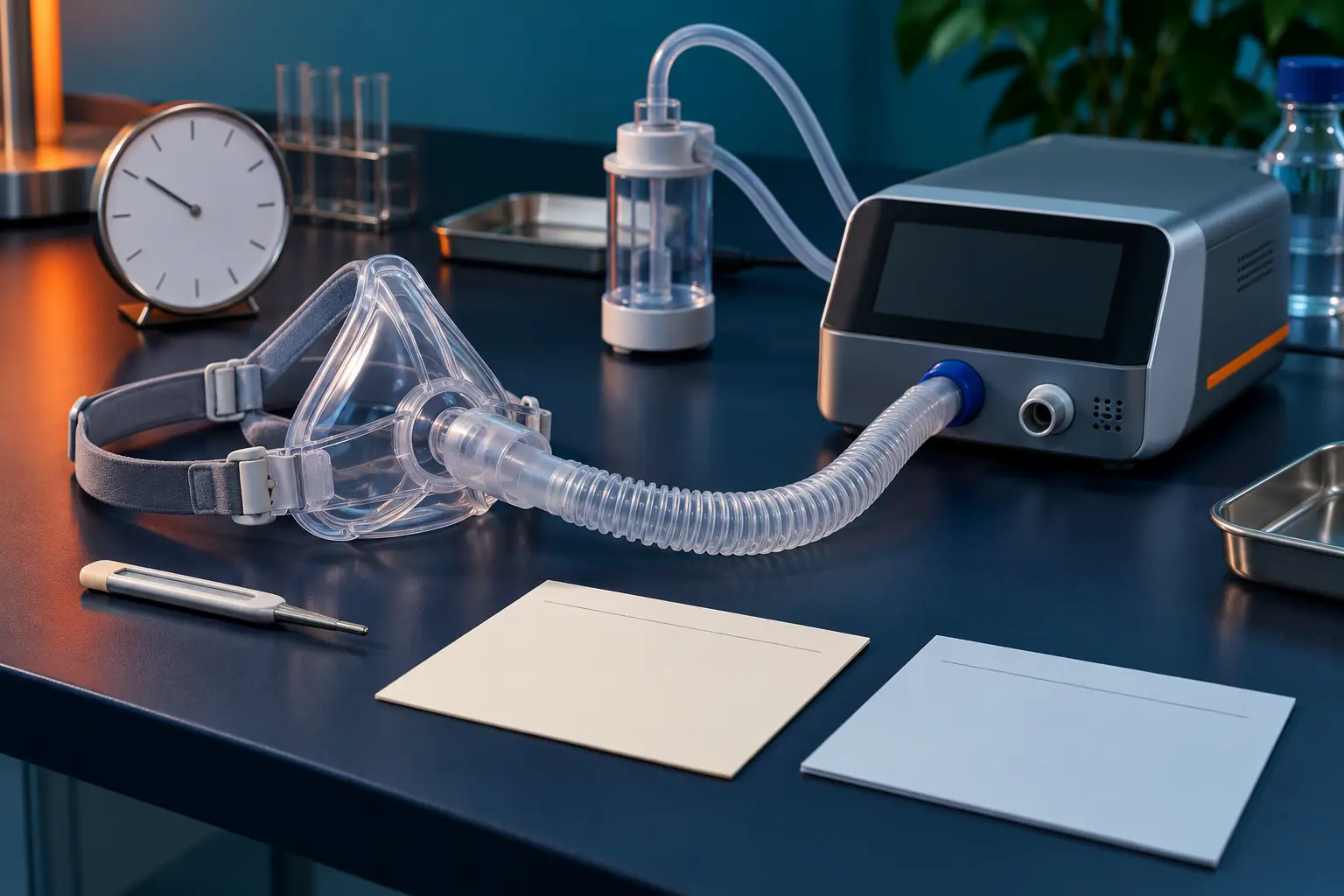
Because BMR conditions are difficult to reproduce outside research, RMR is more commonly measured. That does not make it a casual smartwatch reading. Consumer devices estimate expenditure from algorithms; indirect calorimetry uses respiratory gas exchange.
Equations are useful, not exact
Common equations use weight, height, age, and sex to predict resting needs. They perform reasonably for groups but can miss an individual because they do not directly measure body composition, organ size, genetics, health, or recent energy restriction.
Do not subtract food from BMR as if BMR were maintenance. Daily living also uses energy. A practical process estimates total expenditure from resting needs and activity, selects a moderate change, and calibrates against several weeks of average weight and waist.
If two calculators disagree, do not average them to produce false precision. Choose one reputable equation or the NIDDK Body Weight Planner, document the inputs, and keep the same method during the first observation period.
Which number should you use?
- For education: use BMR to understand the minimum background cost of living.
- For clinical or laboratory measurement: use the term that matches the actual protocol.
- For meal planning: estimate TDEE, not BMR alone.
- For troubleshooting: compare the predicted result with a multi-week real-world trend.
- For retesting: repeat similar preparation, device, time, posture, and conditions.
A measured RMR can reduce one uncertainty, but it cannot measure free-living movement or future intake. Someone can have a typical RMR and still experience a plateau from reduced steps, portion drift, water retention, or adaptation.
Mistakes that create bad calorie targets
Eating at or below BMR is not a universal requirement for fat loss and is not automatically safe. The body needs energy for movement, digestion, work, training, and recovery beyond resting functions. A target must preserve adequate nutrition and fit the person's health context.
Another mistake is treating lean mass as an infinite metabolism hack. Fat-free mass is an important determinant of resting expenditure, but organs and tissues have different metabolic rates, and adding muscle does not permit unlimited intake. Train for strength, function, and body composition—not a dramatic calculator bonus.
Finally, a low reading is not a diagnosis. Measurement error, recent dieting, preparation, body composition, and health conditions need context. Persistent symptoms deserve clinical review.
A better calibration workflow
Begin with one estimate of total expenditure. Choose a moderate food or movement adjustment and record the start date. For two to four weeks, collect comparable morning weights, weekly averages, waist, steps, training, hunger, and adherence.
If the trend matches the goal and function remains acceptable, the estimate is useful even if the true RMR is unknown. If progress is absent, audit intake and movement before ordering repeated tests. If the plan produces marked fatigue or other concerning symptoms, stop tightening the target and seek qualified help.
Recalculate after meaningful weight change. A lower requirement after weight loss is expected and should not be described as damage.
When a measured RMR can help
Measurement may help when a clinician or dietitian needs to reduce uncertainty after repeated, documented mismatches between predicted needs and outcomes. It is less useful when preparation is poor or the result will not change the plan. Ask how the test is standardized, whether the device is calibrated, and how resting expenditure will be translated into total daily needs. Interpret one result beside body composition, recent energy intake, symptoms, medicines, and the actual weight trend.
Where Fat Burn Active fits
A thermogenic supplement does not become more effective because a calculator labels its estimate BMR or RMR. Fat Burn Active is optional. It cannot replace an energy deficit, nutritious meals, daily movement, resistance training, sleep, or medical care. A short-term change in alertness, appetite, heart rate, warmth, or sweating does not prove a meaningful change in body fat or resting metabolism.
A supplement is not required to benefit from Basal Metabolic Rate vs Resting Metabolic Rate. If your foundations are already in place, use the independent Fat Burn Active review to judge whether the formula has a useful optional role. If it fits your expectations and stimulant tolerance, check current product details and ordering terms. We may receive a commission.
Safety and clinical context
Do not diagnose a thyroid, hormonal, or metabolic disorder from a calculator, plateau, body temperature, or social-media symptom list. Unexplained weight change, persistent fatigue, cold intolerance, swelling, fainting, chest symptoms, marked weakness, increased thirst or urination, menstrual change, or symptoms beginning after a medicine change deserve qualified assessment.
Calorie restriction requires individual guidance during pregnancy or breastfeeding, adolescence, frailty, eating-disorder recovery, and with diabetes or significant cardiovascular, kidney, liver, gastrointestinal, or endocrine disease. Do not alter prescribed treatment or use a stimulant as a diagnostic test.
Bring a clinician a concise timeline: when weight, appetite, energy, sleep, bowel habits, temperature tolerance, training capacity, and medicines changed. Include supplements and caffeine. That record is more useful than saying only that metabolism feels slow. Seek urgent care for severe or rapidly worsening symptoms. General educational information cannot determine a safe calorie intake, interpret laboratory results, or exclude a medical cause for an individual.
Frequently asked questions
Can one food or supplement boost metabolism?
Digestion and some stimulants can change expenditure briefly, but no food or over-the-counter product reliably overrides the whole pattern of body size, movement, intake, adaptation, and time.
Is a calculator a measurement?
No. Prediction equations are useful starting estimates. Indirect calorimetry measures gas exchange under controlled conditions, while real-world outcomes still require trend data.
Does a plateau prove metabolic damage?
No. Water variation, intake error, reduced movement, a smaller body, adaptation, medicines, and health conditions can all contribute. Diagnose the system before changing it.
Sources
- Review of adult resting metabolic rate variation
- Study of prediction-equation limitations
- Endotext: Control of Energy Expenditure in Humans
- NIDDK Body Weight Planner
Sources reviewed September 8, 2026. This article is general educational information, not medical advice, diagnosis, or treatment.