Create a personal baseline
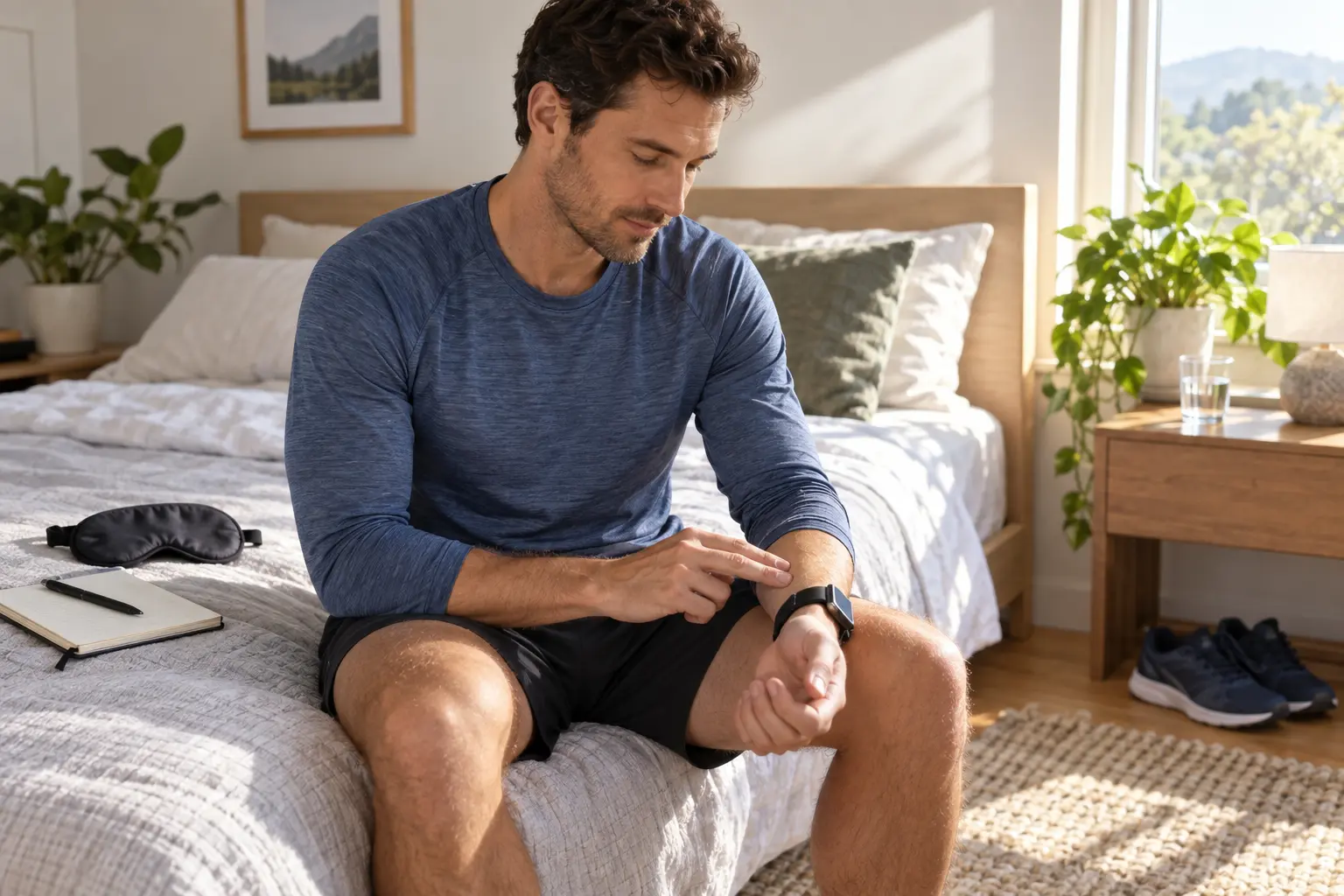
- Measure after waking, before caffeine, food, or activity, in the same position.
- Use the same device or manual method and allow a quiet settling period.
- Collect at least a normal week rather than choosing one favorable value.
- Record illness, alcohol, heat, travel, hard sessions, and medicines.
- Respond to sustained change plus symptoms or performance—not one isolated point.
Use a traffic-light decision, not a diagnosis
A usual reading with normal symptoms supports the planned day. A modest unusual rise plus poor sleep or soreness may justify an easier session and recheck. A sustained change, marked symptoms, or an irregular rhythm requires appropriate clinical assessment. Universal thresholds are less useful than a personal baseline, but symptoms always outrank the spreadsheet.
Example: Ava's morning value rises after travel and a hot evening session. She replaces intervals with easy walking, hydrates normally, and reviews sleep and temperature. The trend settles. If it had remained abnormal or included chest symptoms, she would stop self-experimenting and seek care.
Run a two-week sleep and recovery audit
Use a two-week sleep-and-recovery audit before changing the diet or training plan.
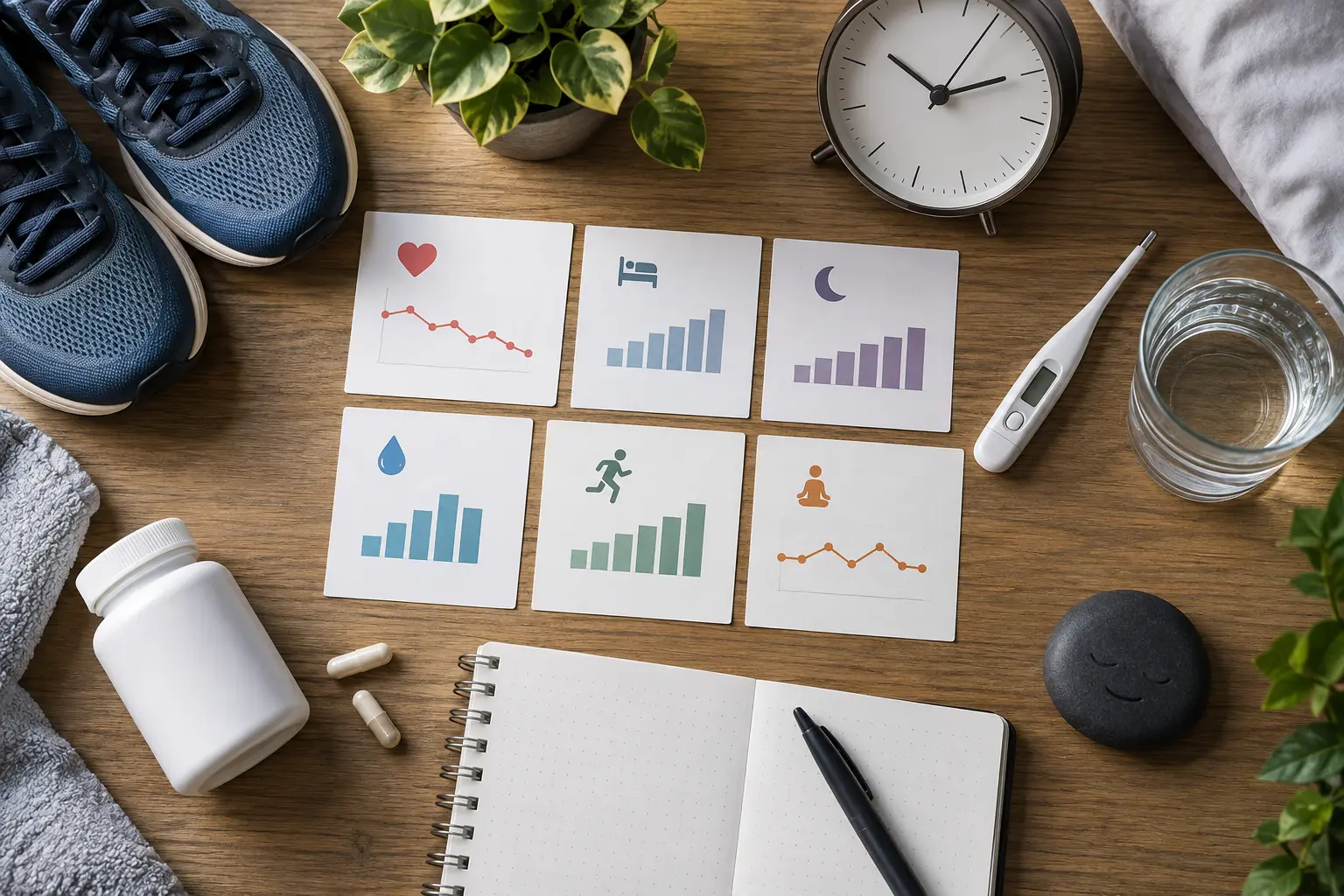
- Set the question. Choose one outcome: evening eating, bedtime consistency, next-day movement, training recovery, or morning resting heart rate.
- Record the context. Note sleep opportunity, wake time, caffeine and alcohol timing, exercise end time and intensity, evening meals, stress, illness, medicines, and unusual heat or travel.
- Standardize one measurement. Use the same device and conditions. Compare weekly patterns rather than reacting to one night or one heart-rate value.
- Change one lever. Move caffeine earlier, finish a hard session sooner, prepare a planned snack, shorten screen use, or reduce training load. Keep other major variables reasonably steady.
- Review function. Compare hunger, cravings, alertness, mood, performance, ordinary movement, symptoms, and weight trend. A useful change should improve the complete day, not only one dashboard score.
Two weeks cannot diagnose a sleep disorder or prove causality, but it can expose repeatable friction. Persistent insomnia, loud snoring with breathing pauses, severe daytime sleepiness, or unexplained recovery decline deserves clinical assessment rather than another lifestyle experiment.
Build a minimum evening system
Build the evening backward from a realistic wake time. Protect enough time in bed, then create a short sequence that works on busy days: finish the final substantial meal, prepare tomorrow's first meal or snack, complete necessary tasks, dim stimulation, and use a repeatable pre-sleep cue. The routine should reduce decisions, not become another perfection test.
If the routine repeatedly fails, simplify it to two anchors. For example, close the kitchen after a planned snack and place the phone outside the bed. Add refinements only after the minimum version survives weekends, stress, and travel.
Interpret a pattern without overreacting
Separate the behavior from the outcome. Completing a bedtime routine does not guarantee immediate sleep, and achieving a step target does not prove recovery. Record what you controlled—meal timing, exercise dose, caffeine cutoff, wind-down, and measurement conditions—then observe sleep, appetite, movement, performance, and symptoms without grading yourself.
Use a personal baseline rather than a universal perfect value. Compare workdays with similar workdays and training days with similar training days. Weekends, travel, menstrual-cycle changes, hot weather, alcohol, illness, and a new medicine can shift several signals together. Mark those exposures instead of deleting an inconvenient result.
A three-level response plan
Do not make five corrections at once. Changing bedtime, calories, training, caffeine, and supplements together may improve the next day but hides the cause. Choose the safest high-probability lever, define when it will be reviewed, and keep a fallback for difficult evenings.
Measure the cost of the solution
A routine is not sustainable if it requires declining every social event, training while ill, suppressing normal hunger, or checking a device throughout the night. The solution should preserve flexibility and improve daytime function. If tracking itself increases anxiety or compulsive behavior, reduce the measurement frequency or stop it. For shift workers, caregivers, parents of young children, and people with chronic illness, the best plan may focus on protecting opportunities rather than producing a textbook schedule.
At the end of two weeks, keep only the steps that clearly reduced friction. A shorter routine performed consistently is more useful than a complicated protocol abandoned after three days.
Know when the signal needs medical context
Fatigue is nonspecific. It can reflect insufficient sleep, an aggressive calorie deficit, excessive training, anemia, thyroid disease, infection, depression, sleep apnea, pregnancy, medicine effects, dehydration, or another condition. A lower step count or higher morning pulse cannot identify the cause.
Seek urgent care for chest pain, fainting, severe or unusual breathlessness, a sustained irregular heartbeat, new neurological symptoms, or a very abnormal pulse with symptoms. Stop exercise during acute illness or concerning symptoms. People with known cardiovascular disease, rhythm disorders, pregnancy, significant sleep disorders, or clinician-directed restrictions need individualized advice.
Where Fat Burn Active fits
Fat Burn Active is optional and cannot replace sleep opportunity, treatment of a sleep disorder, adequate nutrition, recovery, or a suitable training schedule. Stimulation can temporarily mask fatigue while delaying sleep, raising perceived alertness, or changing resting heart rate. That can make the original problem harder to interpret.
Before considering it, review the current label, total caffeine from coffee, tea, energy drinks and medicines, timing, blood pressure, heart rhythm, anxiety, hydration, and sleep. Do not use extra capsules to compensate for a poor night, cravings, low steps, or a missed workout.
For Resting Heart Rate as a Recovery Signal, health assessment comes before a supplement purchase. If Fat Burn Active is being considered, start with who should avoid the formula, then use the independent review to decide whether any further step is reasonable.
Frequently asked questions
What is a normal resting heart rate?
Ranges vary with age, fitness, medicines, health, and measurement; use clinical guidance and personal context.
Does a higher value mean overtraining?
No. It is nonspecific and must be interpreted with other evidence.
Can a wearable diagnose an arrhythmia?
Consumer alerts are not a complete diagnosis; concerning readings or symptoms need medical assessment.
Sources
- American Heart Association: All About Heart Rate
- MedlinePlus: Pulse
- ECSS and ACSM Overtraining Consensus
- CDC: About Sleep
- NIDDK: Staying Active at Any Size
Sources reviewed September 17, 2026. This article is general educational information, not medical advice, diagnosis, or treatment.