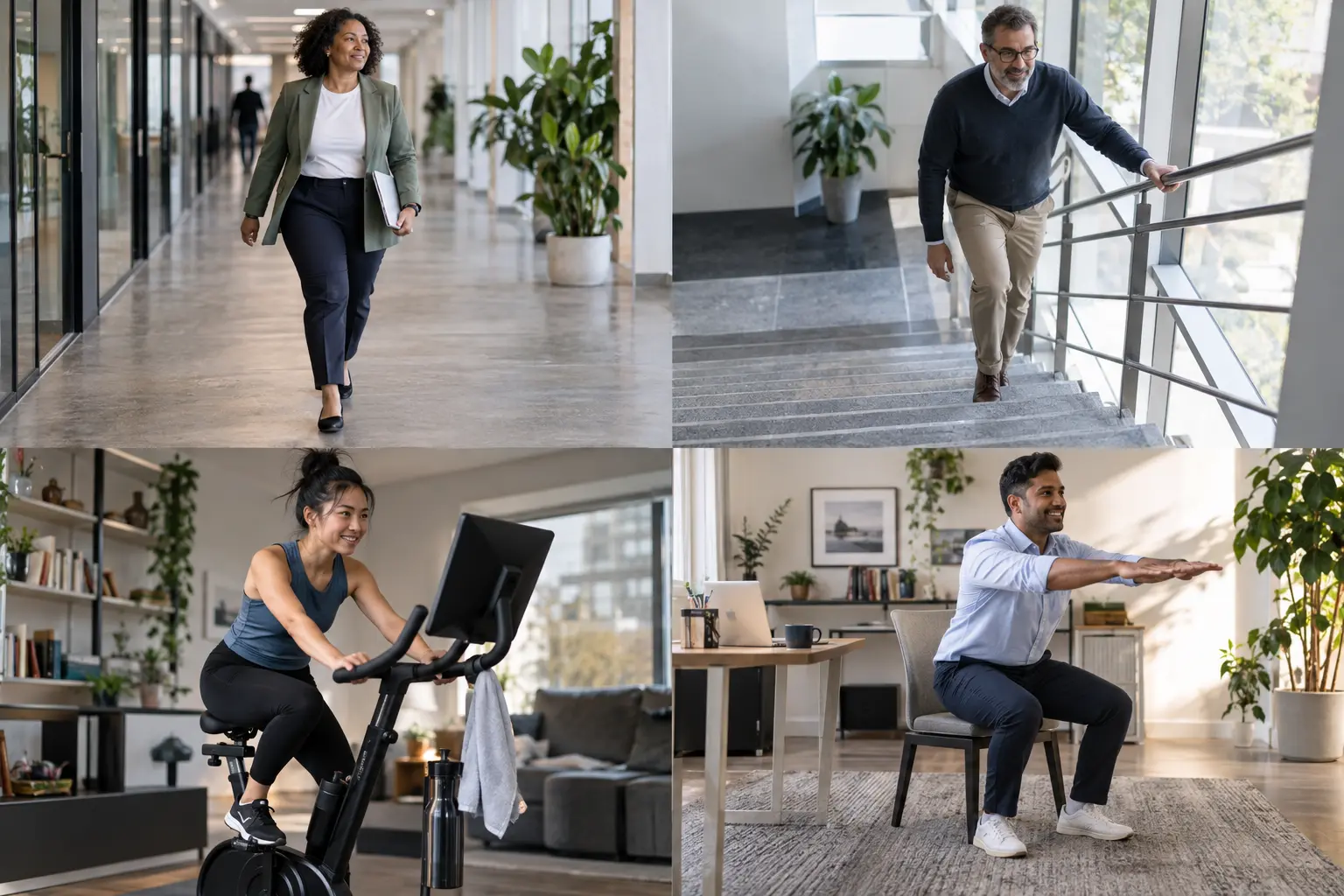
An activity snack needs a clear dose
The term often describes isolated bouts lasting seconds to several minutes, sometimes vigorous and sometimes moderate. Research protocols may use repeated stair climbing or cycling bursts with long recovery. That is different from casually standing once per hour.
Define movement, duration, intensity, frequency, and recovery. Without those details, two “exercise snack” programs may deliver very different loads and outcomes.
What short-bout evidence supports
Systematic reviews suggest repeated exercise snacks can improve cardiorespiratory fitness in inactive adults, with effects on other cardiometabolic measures varying. Separately, interrupting sitting with light or moderate activity can improve acute post-meal glucose or insulin responses in some groups.
Neither result proves large weight loss. Trials are often short, protocols differ, and participants may receive supervision. Real-world adherence determines whether the laboratory idea becomes meaningful activity.

Build a menu instead of repeating one movement
Use three cues and protect recovery
Choose after the first work block, after lunch, and before shutting down. Start with one minute at each cue for a week. Then lengthen only one bout. Hard snacks should not be scattered thoughtlessly around strength training, physical work, or poor sleep.
If breathlessness stays severe, technique breaks, or joints hurt, reduce intensity. Short duration does not make maximal effort automatically safe.
Personalize the routine
Activity snacks do not need special equipment. A corridor, safe staircase, stationary bike, sturdy chair, or small clear floor area may be enough. Prepare the space so starting takes seconds.
Keep vigorous bouts away from situations where sweat, dizziness, or delayed recovery creates a work or safety problem. Moderate options are often more portable and repeatable across demanding days, meetings, travel, and changing energy levels. The plan should also respect colleagues, shared spaces, clothing, and privacy.
Interpret a small change correctly
A movement strategy can improve glucose response, fitness, mood, mobility, or sedentary time without producing visible weight loss. Those outcomes still matter. Conversely, a short-term scale drop after a hot or long session may reflect fluid rather than fat. Match the measurement to the claim.
Distinguish replacing from adding. Walking to transit replaces sitting in a car; a post-meal walk replaces sitting after food; an activity snack may be added to the same workday. The effect on total activity differs. Also record whether the new behavior reduces a later workout, increases hunger, or improves the consistency of meals and sleep.
Do not infer causation from one good day. Compare at least two ordinary weeks with the baseline and include days when work becomes difficult. Hold other major changes reasonably stable. If food intake, medication, sleep, and training all change together, the result cannot be assigned to one walking habit.
Finally, judge friction. Travel time, weather, clothing, privacy, disability access, family duties, and neighborhood safety determine whether an evidence-based idea is usable. A modest action completed repeatedly can create more benefit than a theoretically stronger protocol that is abandoned.
Measure behavior before estimating calories
Use a seven-day baseline that includes workdays and weekends. Record completed bouts, duration, steps or active minutes, symptoms, sleep, hunger, and whether movement replaced sitting or displaced another activity. A phone or watch can make the record easier, but its calorie figure is an estimate rather than an exact food allowance.
Weight management depends on the full weekly energy pattern. Added movement may increase expenditure, but appetite, fatigue, transport choices, and later sitting can change in response. Use weekly-average weight and periodic waist measurements under consistent conditions. Do not interpret one post-exercise weigh-in as fat change.
A four-week integration system
- Find the anchor. Choose an event that already happens: leaving home, finishing lunch, ending a call, or closing work.
- Set a minimum. Define the smallest useful action that survives a busy day.
- Remove friction. Prepare shoes, clothing, route, equipment, lighting, and a weather alternative.
- Change one variable. Add frequency before increasing duration and intensity together.
- Review the response. Check completion, pain, fatigue, appetite, sleep, and total weekly movement.
- Keep a fallback. When the original plan fails, use a shorter indoor or accessible version rather than compensating later.
The objective is not a perfect streak. It is a system that restarts at the next normal opportunity without punishment.
Example: make the plan survive Wednesday
Maya designs a forty-minute daily walk, completes it twice, then loses the routine when meetings run late. She replaces the single target with three anchors: part of the commute on foot, five minutes after lunch, and a short movement block while dinner cooks. On quiet days she can still take the longer walk.
The smaller plan looks less impressive on paper but produces more weekly movement. She tracks completion and recovery, not calories “earned.” When a late meeting removes one anchor, the others remain; she does not double the following day's workload.
Safety and individual context
Increase activity gradually after inactivity, illness, injury, or surgery. Route safety, weather, heat, cold, air quality, visibility, traffic, footwear, balance, and access are part of the intervention. Stop for chest pressure, fainting, new neurological symptoms, severe unusual breathlessness, or a rapid irregular heartbeat and seek appropriate care.
People with diabetes using insulin or medicines that can cause hypoglycemia need individualized advice about meal timing, activity, monitoring, and treatment. Pregnancy and significant heart, lung, neurological, or joint conditions may also change the safest dose. Pain that alters movement or causes persistent swelling deserves assessment.
Where Fat Burn Active fits
Fat Burn Active is optional. It cannot create a safe route, a schedule, muscular work, or cardiovascular fitness. Stimulation, sweating, warmth, or a higher heart rate does not prove additional fat loss. Evidence for one ingredient also does not establish the effect of the complete formula.
Once the practical steps in Short Activity Snacks Throughout the Day are working, decide whether an optional supplement adds enough value. Start with the Fat Burn Active review; if the formula and limitations are acceptable, see current availability and official ordering details. We may receive a commission.
Frequently asked questions
Do short bouts count?
Yes. Short bouts add physical activity and may replace sitting. Their benefit depends on frequency, intensity, and the full weekly pattern.
Should I eat back movement calories?
Not automatically. Device estimates contain substantial error. Review food, activity, hunger, and multiweek trends together.
Must every bout be brisk?
No. Easy movement can interrupt sitting and support recovery; harder work can be added when appropriate.
What if I miss a planned bout?
Resume at the next anchor. Avoid a punishing catch-up session that increases pain, fatigue, or hunger.
Sources
- Exercise Snacks Systematic Review
- WHO Physical Activity Guidelines
- US Physical Activity Guidelines
- Breaking Up Sitting Review
- CDC: Measuring Activity Intensity
Sources reviewed September 15, 2026. This article is general educational information, not medical advice, diagnosis, or treatment.