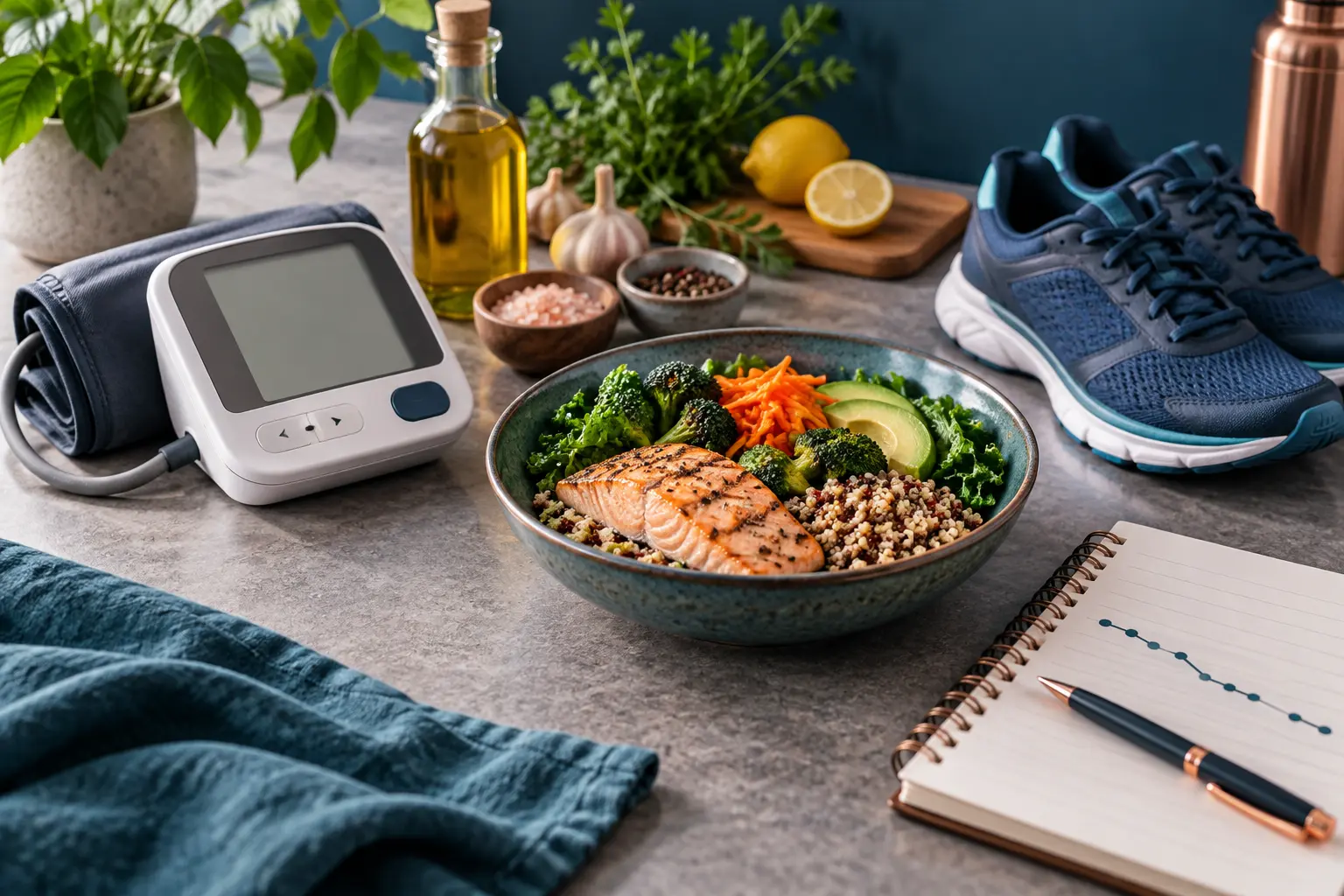
A silent condition needs visible data
A clinic reading can be affected by stress, pain, caffeine, talking, recent activity, or cuff fit. Conversely, feeling well does not prove pressure is controlled. Confirm diagnosis and goals with a clinician, then use a validated upper-arm device and standardized technique when home monitoring is recommended.
Measure blood pressure correctly
Avoid exercise, smoking, and caffeine shortly beforehand; empty the bladder, sit quietly with back supported and feet flat, support the arm at heart level, use the correct cuff size, and do not talk. Follow the schedule provided and record readings rather than reacting to one number.
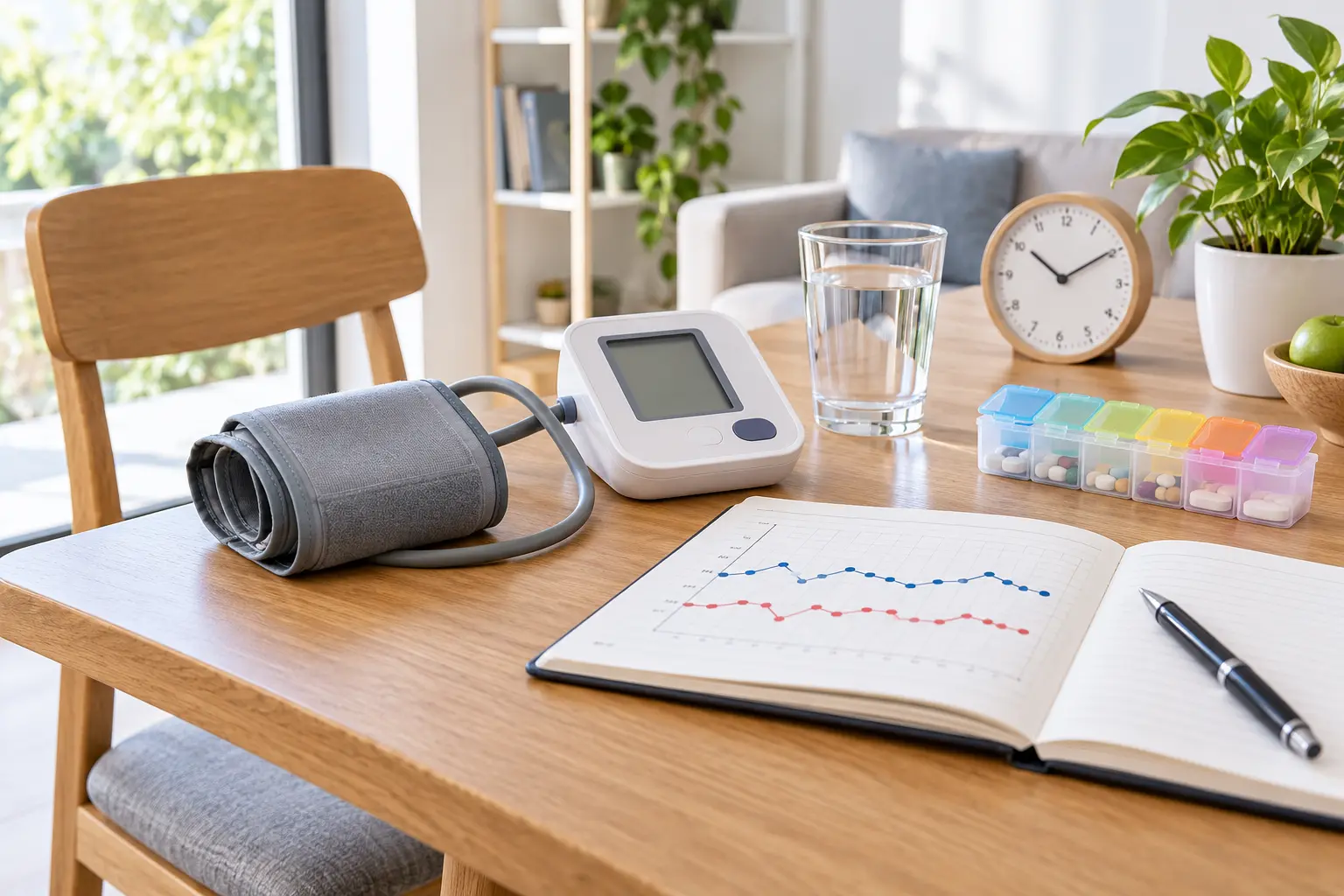
Use complementary levers
Build meals around vegetables, fruit, legumes, whole grains, nuts, appropriate dairy or alternatives, and lean protein while reducing heavily salted packaged food. Progress toward aerobic movement and resistance training according to ability. Sleep apnea, alcohol, pain, and medicine adherence can matter as much as the salt shaker.
Weight loss can change treatment needs
As weight, diet, alcohol, and activity change, pressure may fall. Dizziness, faintness, or unusually low readings require timely advice; do not independently skip doses. Severe pressure with chest pain, shortness of breath, neurological symptoms, or confusion needs urgent care.
Frequently asked questions
How quickly can pressure improve?
Some lifestyle effects appear before large weight loss, while response varies.
Must I eliminate salt?
No; the useful target is an individualized sodium pattern and overall diet.
Are stimulants safe with hypertension?
They may raise pressure or heart rate and require professional review.
Do not diagnose the cause from body weight
Weight change is a nonspecific signal. Symptoms, history, examination, and appropriately selected tests determine whether a medical condition is present. A supplement quiz, wearable, home glucose reading, or social-media checklist cannot establish the diagnosis. At the same time, unexplained symptoms should not be dismissed as a lack of discipline.
Prepare for a medical appointment by recording the timeline, medicines and supplements, menstrual or reproductive changes when relevant, sleep, appetite, activity, and a short sample of ordinary meals. This creates a clearer clinical question than asking for every available hormone test.
Use a low-noise progress dashboard
Decide the review date before changing the plan. A single scale jump is too noisy; waiting indefinitely is equally unhelpful. Two to four weeks is often enough to judge execution and direction, while medical treatment and symptom recovery may require a different timeline set with the treating professional.
A four-week practical experiment
- Establish the baseline. Keep normal routines for seven days and record the dashboard above, including weekends.
- Name the limiting problem. Choose one: irregular meals, low protein or fiber, liquid calories, sleep disruption, low movement, poor training recovery, or an untreated symptom.
- Change one controllable behavior. Make it concrete enough to count, such as three planned lunches, two strength sessions, or a daily walking range.
- Review the whole result. Compare averages, hunger, energy, symptoms, and practical cost. Continue, adjust, or seek care based on evidence—not frustration.
How to evaluate hormone and fat-burner claims
Ask whether the evidence shows a meaningful outcome in people with the same condition, not only a change in a cell, animal, hormone level, or short laboratory measurement. Check the dose, duration, comparison group, withdrawals, funding, and adverse events. “Balances hormones,” “supports adrenal health,” and “boosts metabolism” are not measurable promises unless the seller defines what changed and by how much.
Stimulant supplements can complicate the picture by altering sleep, heart rate, anxiety, appetite, or blood pressure. They do not replace diagnosis or condition-specific treatment. Read our Fat Burn Active evidence and safety review before treating an affiliate product as a solution to a medical cause of weight change.
When the plan should change
Change course if restriction triggers bingeing, obsessive tracking, dizziness, fainting, persistent weakness, worsening sleep, menstrual disturbance, or rapid unexplained change. People who are pregnant or breastfeeding, adolescents, older adults at risk of muscle loss, and anyone using glucose-lowering, thyroid, blood-pressure, or psychiatric medicines need individualized guidance.
The durable rule is simple: use the least aggressive change supported by the evidence, preserve muscle and nutrition, define an exit point, and escalate persistent symptoms to qualified care. This is slower than a hormone-reset promise, but it produces decisions that can be checked and reversed.
Coordinate two trends without overreacting
Record morning or evening pressure exactly as advised and keep a separate weekly weight average. Add notes for missed doses, pain, illness, alcohol, unusually salty meals, poor sleep, and exercise. A lower weight with dizziness and falling pressure needs medication review, not celebration or skipped tablets. A single high reading after stress should be repeated using correct technique, while readings with emergency symptoms require urgent action. Two clean trends give the clinician more useful evidence than isolated numbers.
Separate three questions that are often mixed together
1. Is a medical condition present and adequately treated?
This is a diagnostic and treatment question. It depends on history, examination, properly selected tests, and follow-up—not on whether a particular diet produced fast weight loss. Do not use short-term scale response to confirm or exclude an endocrine condition.
2. Is the current weight strategy creating a real, sustainable change?
This is a trend question. Compare consistent weight averages, waist or clothing fit, movement, food pattern, and adherence across enough time. Water, glycogen, bowel contents, sodium, and the menstrual cycle can conceal a change temporarily. A plateau should be confirmed before calories or exercise are adjusted.
3. Is the strategy improving health and daily life?
Track the outcome that matters for the condition: glucose measures, cycle regularity, symptom control, strength, sleep, blood pressure, lipids, mobility, fertility goals, or medication tolerance as appropriate. Weight can be one result without becoming the only definition of success.
A safer hierarchy of action
- Address red flags and treatment first. Stabilize urgent symptoms and use prescribed medicines correctly.
- Protect fundamentals. Regular nourishing meals, protein and fiber, sleep opportunity, daily movement, and resistance exercise create the base.
- Calibrate the energy gap. When weight loss is an appropriate goal, use a modest change verified against the trend.
- Add complexity only for a reason. Specialized diets, intensive tracking, tests, or supplements need a defined question and stopping rule.
What success looks like after twelve weeks
Success is not limited to a dramatic before-and-after photo. It may be a modest downward trend, a smaller waist, improved strength, fewer unplanned eating episodes, more stable glucose, better sleep, controlled symptoms, or a treatment plan that finally fits the diagnosis. If nothing meaningful improves despite reliable execution, bring the record to a clinician or dietitian and reconsider the hypothesis. Repeating a stricter version of the same unsuccessful plan is not evidence-based persistence.
Sources
- American Heart Association high blood pressure
- NHLBI DASH plan
- CDC measuring blood pressure
- AHA: weight and blood pressure
Evidence reviewed September 8, 2026. Educational information only; not medical advice.