They solve different problems
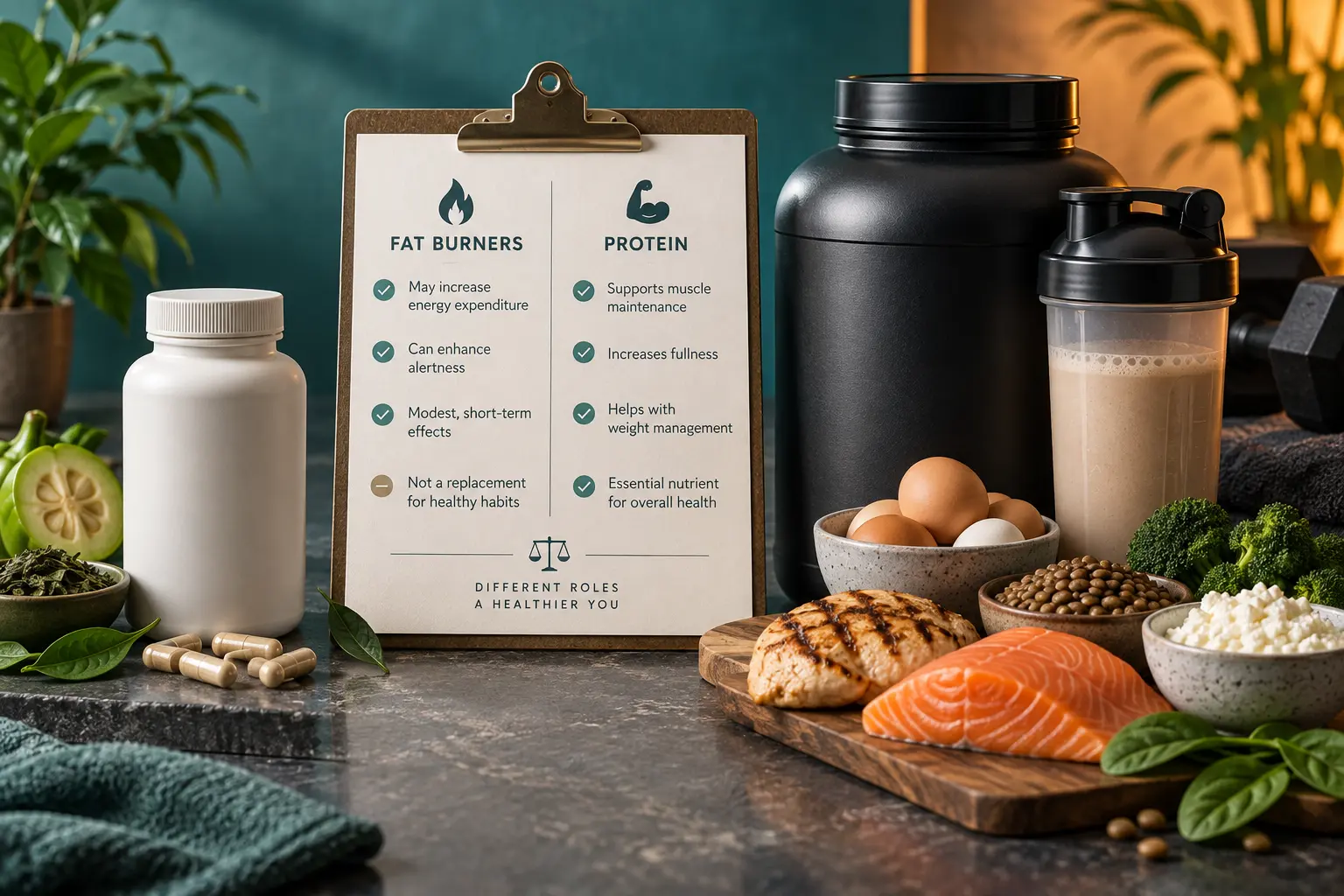
Protein is an essential nutrient; “fat burner” is a marketing category. That does not make every protein powder necessary or every formula suitable. Whole foods can supply protein with fiber, micronutrients, and chewing volume, while a powder can be convenient when appetite, time, cooking access, or portability makes food difficult.
Protein helps only when the full diet works
A shake added on top of usual intake can increase calories. Used as a planned replacement for a lower-protein snack or as part of a calorie-controlled meal, it may make the diet easier to follow. During an energy deficit, adequate protein and resistance exercise are relevant to preserving fat-free mass; a powder is only one way to reach the target.
Fat burners do not supply the structural material needed for muscle. Stimulants may improve alertness or training effort in some situations, but sleep disruption can undermine recovery, hunger control, and performance. Compare weekly intake, training quality, and sleep—not the intensity of the first dose.
Worked example: the afternoon hunger problem
A dieter regularly reaches 4 p.m. with little protein at lunch and buys a thermogenic for cravings. The stimulant reduces hunger briefly but delays sleep. A more direct test is to add a planned protein-rich lunch or a measured shake with fruit, then track hunger, total intake, digestion, and evening eating for two weeks.
If protein intake was already adequate and the shake simply adds calories, it is not solving the problem. If hunger improves and the plan becomes easier without excess calories, the benefit came from meal structure and protein delivery—not from a special fat-burning property.
Use a job-first comparison system
- Name the job. Choose one primary problem: inadequate protein, low fiber, unpredictable meals, poor training output, or a medical need—not simply “lose weight.”
- Define the outcome. Select a measure that matches the job, such as daily protein, bowel comfort, meal calories, workout performance, weekly average weight, waist, sleep, or adverse effects.
- Audit the exact product. Record serving size, every active amount, full daily schedule, calories and nutrients where relevant, warnings, and all caffeine sources. A category label is not a dose.
- Match evidence layers. Separate ingredient research, studies of comparable products, and trials of the exact finished product. A mechanism or noticeable sensation is not a meaningful weight-loss outcome.
- Compare with neither. Food, training, sleep, routine design, or clinical care may solve the problem more directly.
- Set an exit rule. Stop for concerning symptoms or when a defined trial produces no worthwhile benefit.
Change one variable at a time and keep the baseline as stable as practical. Record both benefit and burden: cost, preparation, gastrointestinal effects, sleep, anxiety, food quality, and complexity. A personal trial cannot establish causation or rule out uncommon harms, but it can reveal when a product adds work without solving the stated problem.
Compare labels without category shortcuts
Front-label language such as “thermogenic,” “high protein,” “meal replacement,” or “performance” can hide major differences. Copy the complete Supplement Facts or Nutrition Facts panel, ingredient forms, proprietary blends, directions, allergen statements, and warnings. For stimulant products, add caffeine from coffee, tea, energy drinks, pre-workouts, medicines, guarana, and other botanicals.
Then ask whether the study population, dose, duration, comparison group, and outcome match the claim. Short changes in alertness, hunger ratings, fat oxidation, or energy expenditure should not be projected into months of fat loss. If amounts or finished-product trials are missing, keep the conclusion limited.
Use a simple evidence ledger with four columns: the claim, the exact exposure, the most relevant human evidence, and the remaining uncertainty. Add a fifth column for harms and inconvenience. Record absolute changes whenever possible instead of percentages without a baseline. Note who funded a study, how many people finished it, how long it lasted, and whether the comparison group received the same food and activity support. Do not average unrelated outcomes into a personal score. A product can improve one narrow measure while being neutral or worse for the outcome that matters to you.
Set a review date before starting. Keep meals, activity, sleep opportunity, and other supplements reasonably stable, and do not change the dose to chase a sensation. At review, ask whether the predefined benefit appeared, whether it was large enough to matter, and whether any burden offset it. If the answer is unclear, uncertainty is the result; it is not permission to keep buying indefinitely.
Put the trade-offs on one page

Where Fat Burn Active fits
If the actual problem is low protein intake or muscle retention, Fat Burn Active is the wrong tool for that job. It does not replace protein-containing foods or a suitable protein supplement.
Fat Burn Active remains an optional stimulant-containing supplement, not a substitute for adequate nutrition, an effective training plan, or medical care. Its public information does not establish that the finished formula produces clinically meaningful fat loss. Read our independent Fat Burn Active review for the label, evidence, dose, and safety limitations.
Fat Burn Active is relevant to Fat Burners vs Protein Supplements for Weight Management because its official listing identifies standardized plant extracts, caffeine sources, vitamins, and zinc in one formula. First read our independent review. If the formula, stimulant profile, evidence limits, and warnings fit your situation, check the current formula and purchase options on the official Fat Burn Active website. We may receive a commission at no additional cost.
Safety can decide the comparison
Do not stack products merely because their marketing categories differ. Review pregnancy or breastfeeding, age, allergies, eating-disorder history, caffeine sensitivity, sleep, and cardiovascular, kidney, liver, digestive, endocrine, or psychiatric conditions. A clinician or pharmacist should check interactions when medicines or concentrated botanicals are involved.
Stop use and seek appropriate care for chest pain, fainting, serious breathing difficulty, a severe allergic reaction, confusion, repeated vomiting, or a sustained racing or irregular heartbeat. Insomnia, palpitations, tremor, anxiety, nausea, constipation, diarrhea, and excessive sweating are adverse effects, not evidence that fat loss is occurring.
Frequently asked questions
Is protein powder a fat burner?
No. It is a concentrated protein source with calories, not a thermogenic product.
Can protein make weight loss easier?
It may support fullness and lean-mass retention when the overall diet and training plan are appropriate.
Can I use both?
Possibly, but stacking adds cost and may add stimulant risk without addressing a clear need. Review the whole plan first.
Is food better than powder?
Food often supplies more nutrients and texture; powder can be a convenient way to close a defined protein gap.
Sources
- NIH ODS: Dietary Supplements for Weight Loss
- USDA MyPlate: Protein Foods
- Protein intake and lean mass during energy deficit
- Protein supplementation and resistance training meta-analysis
- FDA: Dietary Supplements Questions and Answers
Sources reviewed September 16, 2026. This article is general educational information, not medical advice, diagnosis, or treatment.