
This page evaluates the whole pattern
Our guide Protein for Fat Loss: How Much Do You Need? focuses on target setting. This page examines the broader tradeoff: what a high-protein pattern may improve, when returns diminish, what foods it displaces, and which safety questions matter.
“High protein” is relative. A diet can be described as grams per day, grams per kilogram of body weight, or percentage of energy. Percentages can look high on a low-calorie diet even when absolute intake is moderate.
The most defensible benefits
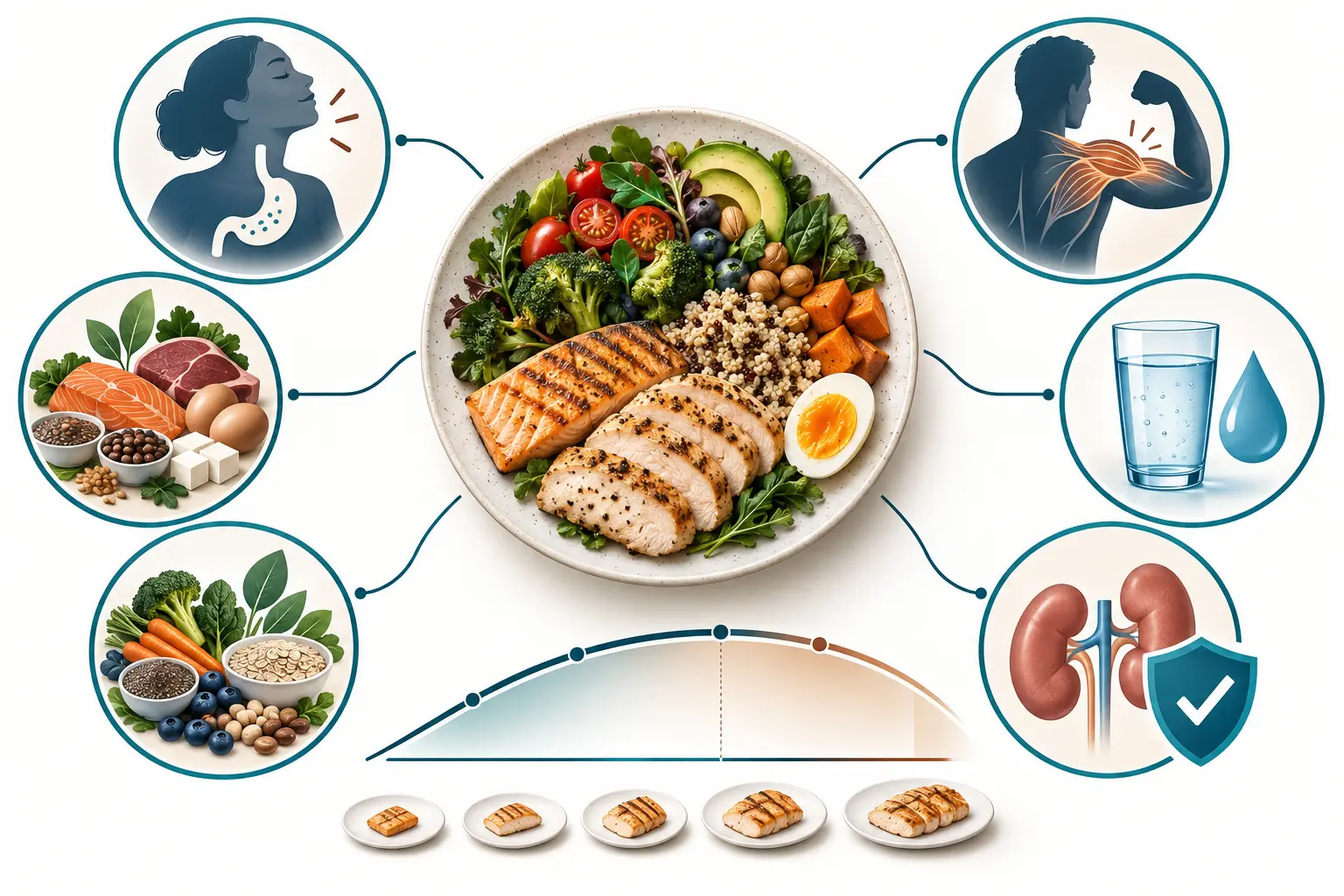
Protein often improves fullness compared with lower-protein meals, has a higher thermic effect than carbohydrate or fat, and supplies amino acids needed for tissue maintenance. During a calorie deficit, adequate protein plus resistance training can reduce—but not eliminate—loss of lean tissue.
For meal-level examples, see the protein-forward dinner formula and adjust its calorie ceiling to your needs.
These benefits are meaningful without exaggeration. Protein does not selectively burn abdominal fat, and a higher thermic effect does not cancel calories. Weight outcomes still reflect total intake, activity, and adherence.
Food sources change the health context
Fish, yogurt, eggs, poultry, lean meat, legumes, tofu, tempeh, and other foods bring different fats, fiber, sodium, micronutrients, cost, and environmental considerations. A high-protein diet based mainly on processed meat is not equivalent to one combining legumes, fish, dairy or alternatives, and vegetables.
Use a varied rotation. Plant proteins can contribute fiber; animal foods may offer concentrated protein and particular micronutrients. Cultural foods can fit without a standardized bodybuilding menu.
Distribute rather than back-load
Putting nearly all protein at dinner leaves earlier meals less useful for fullness and training support. Place a recognizable source at two or three main meals. Exact equality is unnecessary, but a protein-poor breakfast and lunch followed by an enormous steak is not the only route.
Build the rest of the plate with vegetables, fruit, legumes, or whole grains as appropriate, plus enough dietary fat. Protein adequacy does not excuse low fiber or micronutrient gaps.
Where added protein stops helping
Example: add by substitution, not accumulation
Maya's breakfast is toast and sweet coffee, and she is hungry by 10 a.m. She adds yogurt, eggs, and a protein shake while keeping everything else. Protein rises, but so does energy. In the better experiment, yogurt replaces part of the toast-and-drink combination and fruit adds fiber.
She tracks later hunger and total intake. If a regular food meal works, the shake has no mandatory role. A product should solve convenience, not create a second breakfast.
Kidney and medical safety need nuance
Healthy adults often tolerate protein intakes above the minimum requirement, but this does not establish unlimited safety for every person or every dose. Chronic kidney disease can require individualized protein management. Kidney stones, liver disease, gout, pregnancy, and medicines can also change advice.
Do not use a normal feeling as a substitute for laboratory or clinical assessment. People with known kidney disease should follow their renal clinician rather than a generic high-protein calculator.
Monitor the complete diet
Track strength, hunger, digestion, hydration, weight and waist trends, food cost, and the foods displaced. Where medically relevant, review kidney function, lipids, blood pressure, and glucose with a clinician. A rising LDL response may relate to saturated-fat sources rather than protein itself.
Reduce the target if meals become monotonous, constipation worsens, or the plan depends on multiple expensive products. The lowest intake that accomplishes the goal is usually easier to sustain than maximal dosing.
Turn the evidence into a personal rule
Use current body size, goal, age, and training when setting intake; do not copy a professional athlete's menu. Recalculate after major weight change, and count protein from grains, legumes, and mixed foods as well as obvious animal foods or powders. Precision beyond what changes a meal is rarely useful.
Choose by constraints, not diet identity
Before choosing a label, rank the constraints that decide whether the plan can work: hunger, cooking time, budget, family meals, work schedule, training, gastrointestinal tolerance, medicines, and foods you genuinely enjoy. Then ask which pattern meets those constraints with the fewest rigid rules. A diet that looks ideal in a study can fail when its shopping, preparation, or social burden is too high.
Write three non-negotiables, such as adequate protein, vegetables at two meals, and one flexible family dinner. Add two warning signs, such as worsening binge urges or persistent fatigue. This turns a diet debate into a personal operating plan. Reassess when health, activity, finances, or schedule changes. Changing the plan after new evidence is adaptation, not failure.
Use a four-week diet-pattern scorecard
- Define the pattern. Write what you will eat more often, what you will limit, and how meals will be built.
- Measure the baseline. Record weight averages, waist, hunger, digestion, energy, training, sleep, and relevant clinical markers.
- Change one pattern. Do not add fasting, supplements, and a new exercise program simultaneously.
- Check execution weekly. Include drinks, restaurant meals, weekends, and foods eaten while cooking.
- Judge the whole result. Review adherence, nutrition, symptoms, cost, social fit, and trends—not one scale reading.
- Adjust the smallest useful lever. Change portions, food quality, or structure before making the diet more extreme.
Four weeks can reveal feasibility and early direction, but it cannot settle long-term safety or superiority. Continue only when the pattern remains nutritionally adequate and repeatable.
Where Fat Burn Active fits
Fat Burn Active is optional. It cannot make an unsuitable diet sustainable, replace protein or micronutrients, or create a reliable deficit when portions remain too large. Ingredient studies do not prove the effect of the complete formula, and feeling stimulated is not evidence of body-fat loss.
Choose a protein pattern that fits your total diet, medical context, budget, and preferences. If kidney disease or another relevant condition is present, obtain individualized advice rather than copying an online target. A stimulant supplement does not solve an inadequate or uncomfortable eating plan; build a sustainable food routine first.
Frequently asked questions
Which diet loses weight fastest?
Early scale changes can differ because glycogen, water, sodium, and food mass change. Sustainable fat loss depends more on the maintained energy gap than a dramatic first week.
Must I count calories?
No, but portions and energy density still matter. A plate method, repeat meals, or measured energy-dense additions can provide structure without continuous logging.
When should I involve a clinician?
Seek individual guidance for diabetes medicines, kidney or liver disease, pregnancy, eating-disorder history, gastrointestinal disease, rapid unexplained change, or significant symptoms.
Can one diet suit everyone in a family?
The shared foods may work, while portions, protein, energy, texture, and medical needs differ. Keep a common meal base and personalize additions.
Sources
- Protein Intake and Weight Loss Review
- Higher Protein and Lean-Mass Retention Meta-Analysis
- National Academies: Dietary Reference Intakes
- NIDDK: Eating Right for Chronic Kidney Disease
Sources reviewed September 15, 2026. This article is general educational information, not medical advice, diagnosis, or treatment.