Standardization answers different questions
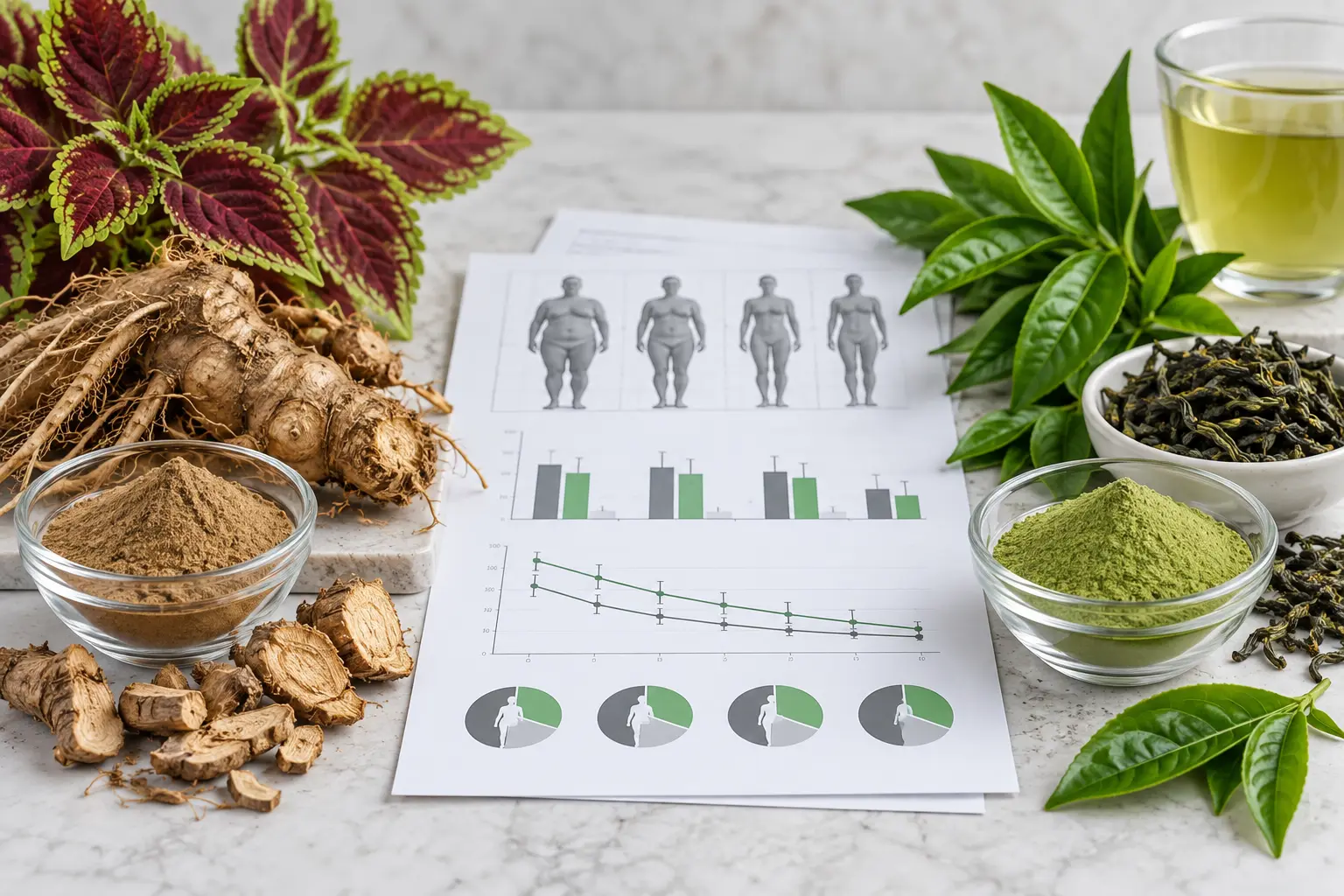
Forskolin is a constituent of Coleus forskohlii extracts. A label should provide extract mass and forskolin percentage. Green tea extract should provide catechins or EGCG plus caffeine, because a catechin percentage does not reveal stimulant exposure.
Example: 250 mg coleus at 10% calculates to 25 mg forskolin; 250 mg green tea at 40% EGCG calculates to 100 mg EGCG. These arithmetic yields are not equivalent biological doses and cannot be compared by which number is larger.
Mechanism does not settle the contest
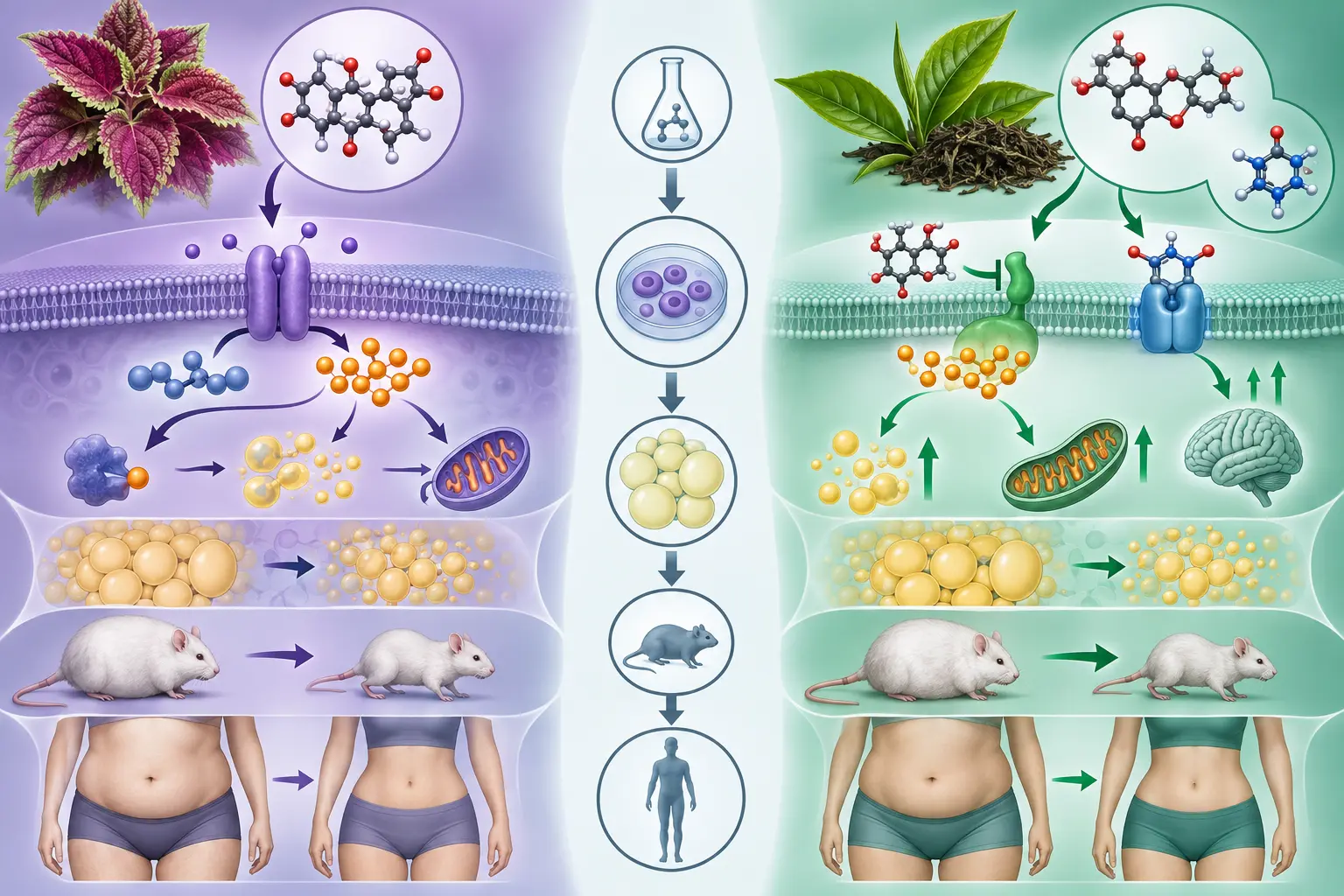
Forskolin is discussed through adenylate cyclase and cyclic-AMP signaling, leading to hypotheses about lipolysis or body composition. Green tea catechins and caffeine are discussed through sympathetic signaling, oxidation, and expenditure. These pathways are reasons to run trials, not substitutes for them.
Liberating fatty acids, changing oxidation briefly, or raising a signaling molecule does not establish net loss of stored fat. Intake, re-storage, activity, compensation, and duration still determine the outcome.
One evidence base is larger, not decisive
Forskolin trials are few, small, and inconsistent across populations and outcomes. A change in one body-composition measure without reliable weight loss needs cautious interpretation and replication.
Green tea reviews include more participants and preparations but often find small or non-clinically-important average effects. Variation in catechins, caffeine, ethnicity, habitual exposure, diet, and duration complicates pooling. The right conclusion is not “green tea works”; it is “green tea's limited effect is better mapped.”
The practical decision may be about stimulation
Forskolin is not a caffeine substitute with proven equal effectiveness. Green tea extract may introduce caffeine and concentrated-catechin safety considerations. Someone avoiding stimulants must verify all-source caffeine; someone using blood-pressure, anticoagulant, diabetes, or other relevant medicines needs professional review of either label.
Reject proprietary blends and formulas that cite only pathway diagrams. Prefer a characterized dose, direct human outcome evidence, conservative claims, and a measurable reason to use the product—or use neither.
Use a five-field decision card
Write the job first: appetite support, alertness, workout readiness, or a small thermogenic effect. Then compare five fields: the exact intervention, outcome evidence, likely size of benefit, personal risk, and practical cost. A candidate cannot win a field when its dose or preparation is unknown. Mark it “not comparable” instead of awarding points for popularity.
Set a stopping rule before purchase. Examples include worse sleep, palpitations, persistent digestive symptoms, no measurable improvement in the intended behavior, or a label that differs from the saved version. Reassess after a defined period while keeping food, activity, and other stimulant exposure reasonably stable. This personal record cannot prove efficacy, but it prevents a changing routine from being credited to one capsule.
Compare the sold labels, not ingredient names
- Confirm serving size and maximum daily servings.
- Record chemical form or botanical species, plant part, extract ratio, and standardization.
- Calculate the active yield only when both extract mass and percentage are disclosed.
- Add caffeine and stimulant-like ingredients from every product, drink, food, and relevant medicine.
- Separate ingredient studies from research on the complete sold formula.
- Compare delivered cost per full day and the option of using neither.
A study match requires the same intervention, a comparable dose, a relevant population, and the outcome being claimed. Mechanism, warmth, alertness, appetite sensation, energy expenditure, body weight, and fat mass are different endpoints. Never convert a brief physiological signal into a guaranteed long-term result.
Safety can decide the comparison before efficacy
Review blood pressure, heart rhythm, anxiety, sleep, gastrointestinal health, liver or kidney disease, glucose management, pregnancy or breastfeeding, surgery, age, eating-disorder history, medicines, and other supplements. “Natural” does not mean interaction-free. A familiar food source does not establish that a concentrated extract is suitable.
Seek qualified medical or pharmacy advice when a condition or medicine makes the choice uncertain. Stop and obtain urgent care for chest pain, fainting, severe shortness of breath, serious allergic symptoms, seizure, or a sustained rapid or irregular heartbeat. Jitters, sweating, nausea, headache, insomnia, or bowel changes are adverse effects, not evidence of fat loss.
Where Fat Burn Active fits
Fat Burn Active discloses standardized coleus and green tea extract. The calculated constituent amounts allow separate evidence checks, but they do not prove synergy or a finished-product outcome.
Fat Burn Active is optional; no supplement is required for fat loss. Its current formula must be judged as a combination, not as the winner of any isolated-ingredient comparison. Read our independent Fat Burn Active review, verify the current label and all-source caffeine, and compare the product with the option of using neither.
Fat Burn Active is relevant to Forskolin vs Green Tea Extract because its official listing identifies standardized plant extracts, caffeine sources, vitamins, and zinc in one formula. First read our independent review. If the formula, stimulant profile, evidence limits, and warnings fit your situation, check the current formula and purchase options on the official Fat Burn Active website. We may receive a commission at no additional cost.
Worked comparison: two standardized extracts
A formula lists 250 mg coleus extract standardized to 10% forskolin and 250 mg green tea extract standardized to 40% EGCG. The first yields a calculated 25 mg forskolin and the second 100 mg EGCG. Equal extract weights and unequal constituent yields still do not create a meaningful strength ranking. The compounds act differently, trials use different outcomes, and green tea may add undisclosed caffeine.
For each column, write the matched human trial, intervention form, daily dose, duration, population, comparator, absolute outcome, uncertainty, adverse events, and funding. If no close match exists, rate dose relevance unknown. Do not fill the gap with an animal pathway or a study of a different branded material.
Why evidence volume changes confidence, not effect size
A larger literature can reveal inconsistency, subgroup effects, publication bias, and safety signals more clearly. It does not guarantee a large benefit. Green tea's broader research base helps define its limitations. Forskolin's sparse literature leaves wider uncertainty; that uncertainty is not hidden potential that should be scored positively.
Compare the size and precision of outcomes, not citation counts. A statistically significant group difference can remain too small to matter in daily life, while a null small trial may be too imprecise to rule out every effect. Both require proportionate language.
Four questions for the manufacturer
- What exact daily amount of forskolin, EGCG, catechins, and all-source caffeine is supplied?
- Which finished-product human trial matches the current formula?
- How is identity and constituent content verified for each lot?
- What warnings and medicine-interaction guidance apply?
If answers refer only to ingredient trademarks or “clinically studied doses,” request the underlying specification and study. A recognizable brand cannot substitute for a transparent daily calculation.
Frequently asked questions
Is forskolin stimulant-free?
Forskolin is not caffeine, but the complete product may contain stimulants.
Which has more research?
Green tea extract has a larger human literature, though average weight effects remain limited.
Can the two be combined?
Combination requires its own evidence and interaction review; two mechanisms do not prove added benefit.
Sources
- NIH ODS: Weight-Loss Supplements
- Forskolin trial in overweight men
- Forskolin trial in overweight women
- Cochrane review: Green tea for weight loss and maintenance
Sources reviewed September 14, 2026. This article is general educational information, not medical advice, diagnosis, or treatment.