
Two different sides of energy balance
Appetite is an experience; intake is a behavior; energy expenditure is another process. An appetite product might change a laboratory hunger score without reducing daily calories. A thermogenic product might slightly raise expenditure for several hours while appetite, sleep, or later movement compensates. A dual-action label can therefore contain two unproven leaps.
Prescription anti-obesity medicines are not equivalent to over-the-counter supplement “appetite suppressants.” Medicines are evaluated and regulated through a different pathway. A dietary supplement should not imply that shared words create shared evidence.
Translate “appetite control” into a specific endpoint: hunger between meals, snack frequency, energy intake, or adherence over weeks. Translate “thermogenic” into absolute energy expenditure over a defined time.
Compare the route to the outcome
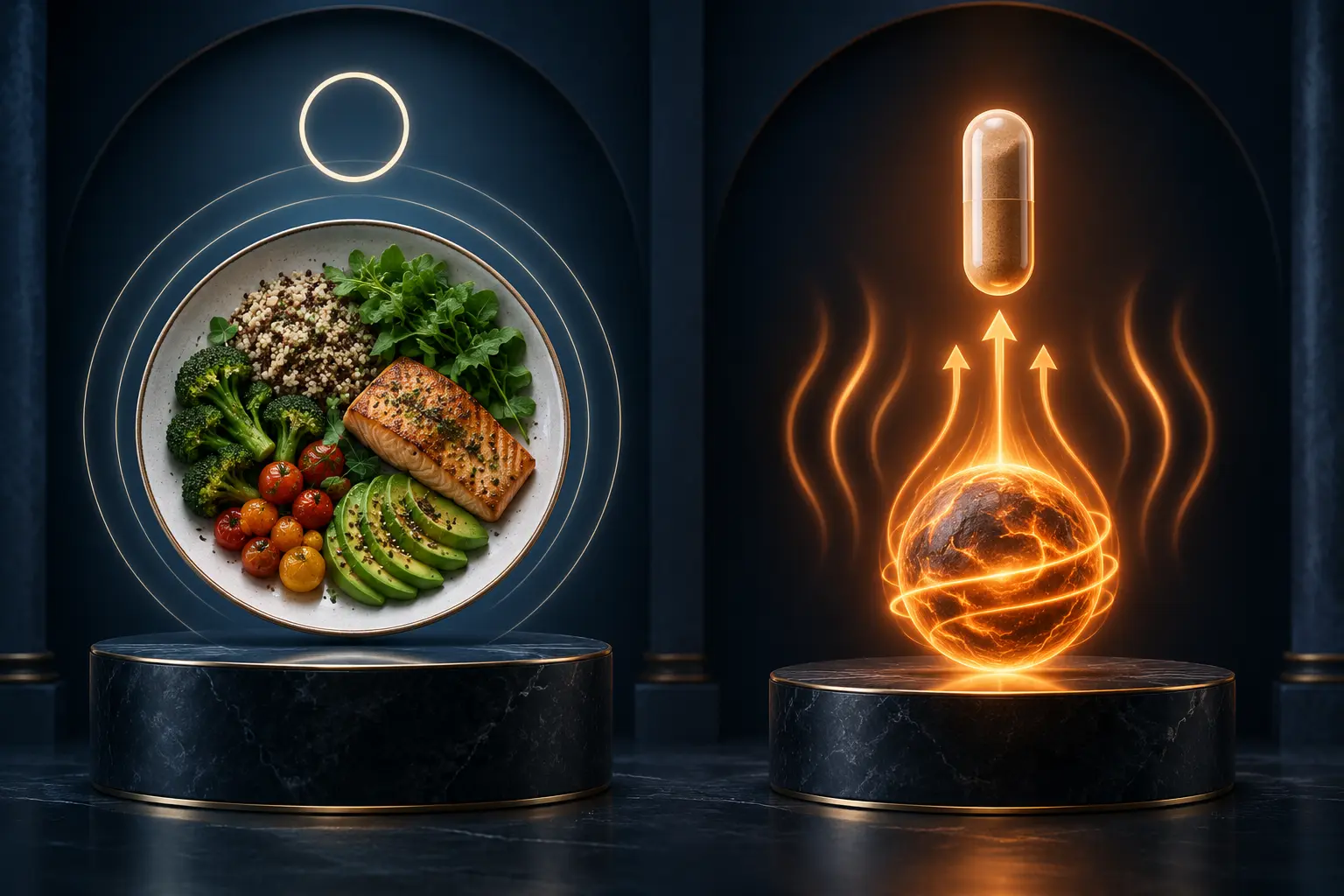
Run a food-structure test before buying
For seven to fourteen days, build meals around an appropriate protein source, fiber-rich foods, fruit or vegetables, enough fluid, and a realistic amount of dietary fat and carbohydrate. Plan the time when hunger usually breaks the plan. Review sleep, overly long meal gaps, alcohol, liquid calories, highly restrictive rules, and whether the calorie target is too aggressive.
This is not a promise that hunger disappears. It identifies whether the problem responds to a lower-risk, nutritionally useful intervention. If persistent or extreme hunger continues, the answer may be a target adjustment or professional help—not stronger suppression.
People with binge eating, restrictive eating, or fear of hunger should avoid turning appetite suppression into a contest.
Measure more than the first dose
An honest appetite trial records hunger before meals, unplanned eating, total intake when appropriate, gastrointestinal effects, sleep, mood, and weekly weight trend. The comparison period must be long enough to observe tolerance and compensation. A stimulant can suppress appetite early, then disturb sleep and increase next-day hunger.
For thermogenesis, require absolute rather than percentage changes and avoid projecting a brief calorimetry result across every hour of every day. For either route, decide the smallest improvement that would justify the monthly cost and uncertainty.
Worked example: evening eating is the real target
A buyer eats planned meals until late evening, then snacks after short sleep and a long workday. A morning thermogenic may create alertness without reaching the decisive period. An appetite blend might appear better matched, but the first experiment is earlier caffeine cutoff, a more substantial dinner, a planned snack, and additional sleep opportunity.
If those changes reduce the pattern, the supplement was not the missing mechanism. If hunger remains intense, review whether the deficit is excessive and whether medicines, stress, or a health condition need attention. Only then can a product be assessed against a clear baseline.
Use the label, not the category name
Category names are not standardized performance grades. Copy the serving size, maximum daily servings, every active ingredient, each stated amount, botanical form and standardization, other ingredients, warnings, and directions. Expand proprietary blends rather than treating their total weight as a usable dose. Count caffeine from anhydrous caffeine, coffee, tea, guarana, yerba mate, kola, drinks, medicines, and any second supplement.
Next, match each claim to the outcome actually studied. An ingredient trial at a comparable dose may inform plausibility, but it does not prove the complete formula. Acute changes in alertness, warmth, hunger ratings, fat oxidation, or energy expenditure are not interchangeable with multi-week changes in food intake, body weight, waist, or fat mass. When the dose or finished-product evidence is missing, preserve that uncertainty.
A five-part decision test
- Define the job. Write the one problem the product is supposed to solve: training performance, a repeatable meal plan, appetite management, convenience, or something else.
- Choose a measurable outcome. Use workout output, daily intake, sleep, weekly average weight, waist, adherence, or side effects—not tingling, sweating, or a vague feeling of activation.
- Compare the exact exposure. Require disclosed daily doses and evidence in relevant people for a relevant duration.
- Price the trade-offs. Include sleep, anxiety, heart-rate effects, gastrointestinal symptoms, taste, portability, complexity, and monthly cost.
- Set an exit rule. Decide when you will stop for adverse effects or lack of a meaningful benefit.
This prevents a supplement from becoming the default answer to several unrelated problems. It also makes “neither” a legitimate result when food, sleep, activity, or a simpler product solves the job more directly.
Keep the comparison fair: change one variable, use the same baseline routine, and record both benefit and harm. A personal trial cannot prove causation or detect uncommon adverse events, but it can expose a product that adds cost and complexity without a clear practical result. Do not extend use merely because a container remains.
Where Fat Burn Active fits
Separate any Fat Burn Active appetite claim from its thermogenic claim. Verify the evidence, disclosed dose, and relevant outcome for each rather than letting one plausible mechanism validate the other.
Use the Appetite Suppressants vs Thermogenic Fat Burners criteria to assess Fat Burn Active rather than relying on a headline claim. Our formula evidence analysis explains the remaining uncertainty. If the product fits your needs, view current availability and ordering terms on the official website. We may earn a commission at no extra cost.
Safety can decide the comparison
Do not stack stimulant products simply because their front labels use different category names. Avoid dry scooping powders. Stop use and seek medical help for chest pain, fainting, severe shortness of breath, a sustained racing or irregular heartbeat, severe agitation, confusion, or an allergic reaction. Sweating, insomnia, palpitations, nausea, constipation, anxiety, and tremor are adverse effects, not proof that a formula is burning fat.
People who are pregnant or breastfeeding, under 18, sensitive to caffeine, have an eating-disorder history, or manage cardiovascular, kidney, liver, endocrine, psychiatric, or sleep conditions need individualized advice. A pharmacist or clinician should review potential interactions with stimulants, decongestants, antidepressants, blood-pressure or diabetes medicines, anticoagulants, and concentrated botanicals.
Frequently asked questions
Can one formula be both?
Yes, but each claim still needs separate, relevant evidence.
Is reduced hunger the same as reduced intake?
No. Measure actual eating and compensation across the day.
Are appetite suppressants safer than thermogenics?
Not automatically. Ingredients, doses, interactions, and personal context determine risk.
Sources
- NIH ODS: Dietary Supplements for Weight Loss
- FDA: Questions and Answers on Dietary Supplements
- FTC: Health Products Compliance Guidance
- NIDDK: Prescription Medications to Treat Overweight & Obesity
Sources reviewed September 8, 2026. This article is general educational information, not medical advice, diagnosis, or treatment.