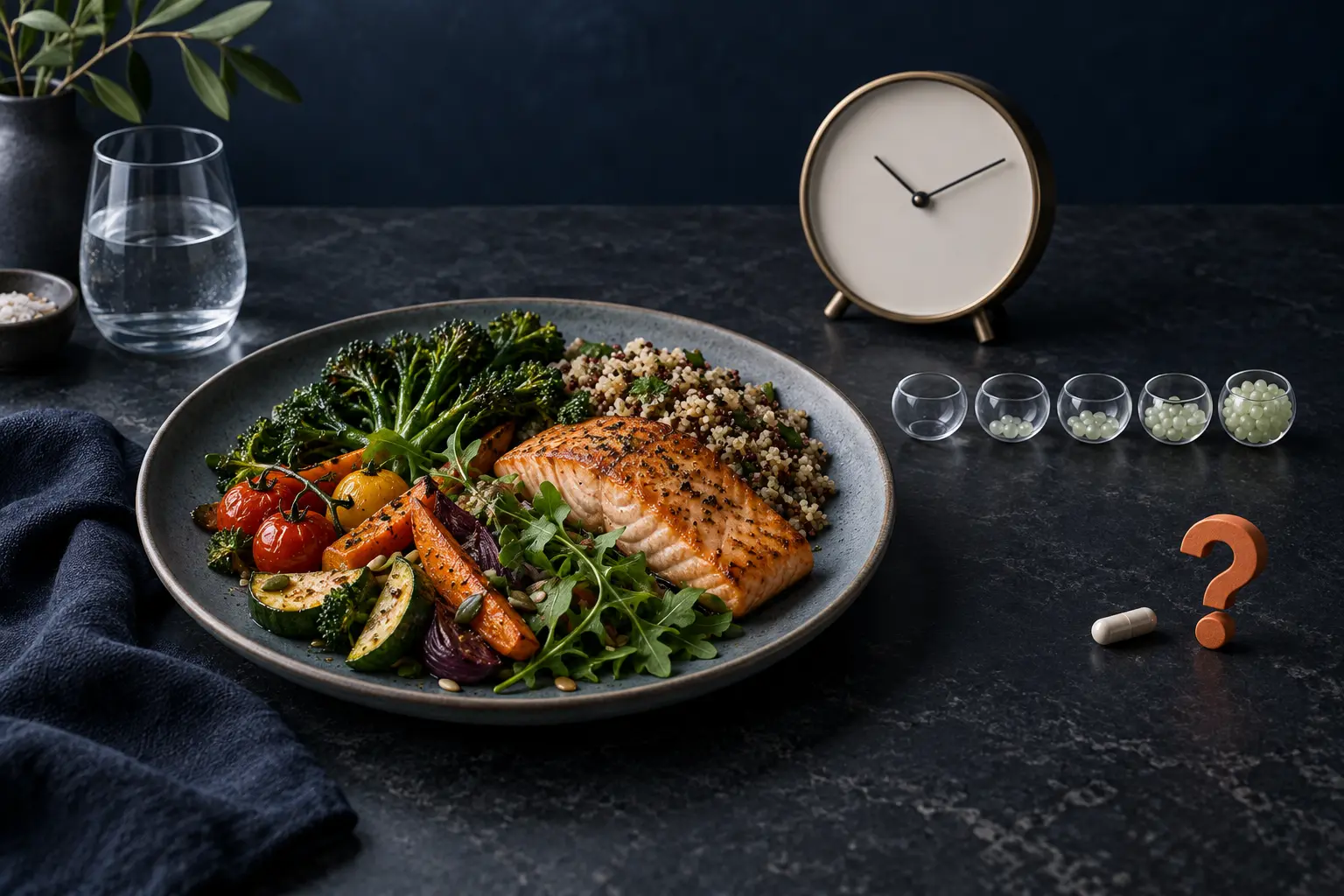
Hunger, appetite, cravings, and intake are not one outcome
Hunger is a physical motivation to eat. Appetite includes desire and willingness to eat. A craving is often specific and can appear without physical hunger. Satiety describes processes that delay the return of hunger after eating. Actual intake is the food and energy consumed.
A study can reduce a questionnaire score without changing lunch. A smaller laboratory meal can be followed by larger evening intake. A product can suppress appetite while causing nausea, anxiety, or overstimulation—an adverse effect rather than a useful satiety mechanism.
Require the outcome that matches the marketing promise and the buyer's goal.
How supplement categories may affect eating

How appetite evidence should be read
Visual analogue scales ask participants to rate hunger, fullness, desire to eat, or prospective consumption. These validated research tools capture subjective states, not guaranteed behavior. Ad libitum meals measure intake in a controlled setting, but one test meal may not represent home life.
Longer trials should examine total intake, diet adherence, weight or fat change, dropouts, side effects, and whether blinding was believable. Stimulant sensations can reveal group assignment and influence expectations.
Look for absolute differences and variability. A favorable group average does not predict every user.
Solve the appetite problem before buying a suppressant
Persistent diet hunger may indicate an overly large deficit, low meal volume, insufficient protein or fiber for personal needs, long gaps between meals, poor sleep, medication effects, or a restrictive pattern that drives rebound eating. Cravings may arise from cues, stress, deprivation, or habit rather than energy need.
Build meals with a suitable protein source, fiber-rich plants or whole grains, enough volume, and measured fats; plan the difficult time of day; protect sleep; and reduce the deficit if function is deteriorating. These changes address nourishment and adherence directly.
Severe or unexplained appetite change deserves clinical review rather than stimulant escalation.
Climb the evidence ladder before accepting the claim
Do not jump from the first rung to the last. A statistically detectable change can be too small, short, or uncertain to matter. Research on separate ingredients cannot be added together as though it proves the finished blend, and a stronger sensation is not a stronger outcome.
Run a claim-to-outcome audit
- Copy the exact claim. Preserve words such as supports, increases, promotes, clinically studied, and fast.
- Name the promised outcome. Is it heat, alertness, hunger, food intake, energy expenditure, weight, waist, or fat mass?
- Find the complete daily dose. Include serving multiplication and caffeine from botanicals, drinks, pre-workouts, and medicines.
- Match the evidence. Require the same ingredient form, comparable dose, human population, duration, and endpoint.
- Calculate practical size. Ask whether the difference could plausibly affect weeks of behavior or body composition.
- Count harms and trade-offs. Sleep loss, anxiety, heart-rate effects, gastrointestinal symptoms, appetite rebound, and cost belong in the result.
- Look for finished-product data. If it is absent, preserve that uncertainty.
End with one of four conclusions: supported and meaningful, supported but small or short-term, uncertain, or not supported. “Plausible” is not a fifth way of saying proven.
If you still use one, define a decision record
Save the dated label, directions, seller, price, and the exact claim that influenced you. Before starting, record a stable baseline for weekly average weight, waist, appetite or food intake when relevant, sleep, blood pressure or heart rate when appropriate, and adherence to the underlying food and activity plan. Do not introduce several supplements or a major diet change at the same time.
Choose a review date and stopping conditions in advance. A personal trial cannot prove causation, detect uncommon harms, or replace controlled research, but it can prevent indefinite use based only on sensation. No clear practical benefit is useful information. Do not double the dose or reinterpret palpitations, sweating, insomnia, constipation, nausea, or anxiety as evidence that the product is powerful.
Applying the standard to Fat Burn Active
If Fat Burn Active is promoted for appetite control, verify which ingredient and dose support that claim. Temporary stimulation or nausea should not be presented as healthy, durable satiety.
Fat Burn Active is optional and is not required for fat loss. Public ingredient information may suggest possible mechanisms, but ingredient presence does not establish dose relevance or prove that the complete product changes body fat. Where exact amounts or independent finished-product trials are unavailable, the honest conclusion remains uncertain.
Fat Burn Active is relevant to Can Fat Burners Reduce Appetite? because its official listing identifies standardized plant extracts, caffeine sources, vitamins, and zinc in one formula. First read our independent review. If the formula, stimulant profile, evidence limits, and warnings fit your situation, check the current formula and purchase options on the official Fat Burn Active website. We may receive a commission at no additional cost.
Safety can overturn a small theoretical benefit
Stop and seek medical advice for chest pain, fainting, severe shortness of breath, a sustained racing or irregular heartbeat, severe agitation, confusion, allergic symptoms, or other alarming effects. Report serious supplement reactions through the appropriate national system. Do not use dehydration, laxatives, diuretics, or excessive heat to manufacture a lower scale reading.
People who are pregnant or breastfeeding, under 18, sensitive to stimulants, have an eating-disorder history, or manage cardiovascular, kidney, liver, endocrine, psychiatric, or sleep conditions need individualized advice. Review interactions with a pharmacist or clinician, especially with stimulants, decongestants, antidepressants, diabetes medicines, blood-pressure medicines, anticoagulants, and multiple botanical extracts.
Frequently asked questions
Do caffeine pills suppress appetite?
Some people notice a short-term change, but effects vary, tolerance develops, and sleep or rebound hunger can offset it.
Is less hunger always better?
No. Persistent suppression can contribute to inadequate intake, poor recovery, or disordered behavior.
Can fiber supplements help fullness?
Some viscous fibers may help at suitable doses, but type, fluid, tolerance, and medicine timing matter.
Sources
- NIH ODS: Dietary Supplements for Weight Loss
- Review: appetite control and energy balance
- FDA: Spilling the Beans on Caffeine
- NIDDK: Choosing a Safe and Successful Weight-loss Program
Sources reviewed September 8, 2026. This article is general educational information, not medical advice, diagnosis, or treatment.