Myo-inositol, D-chiro-inositol, and ratios
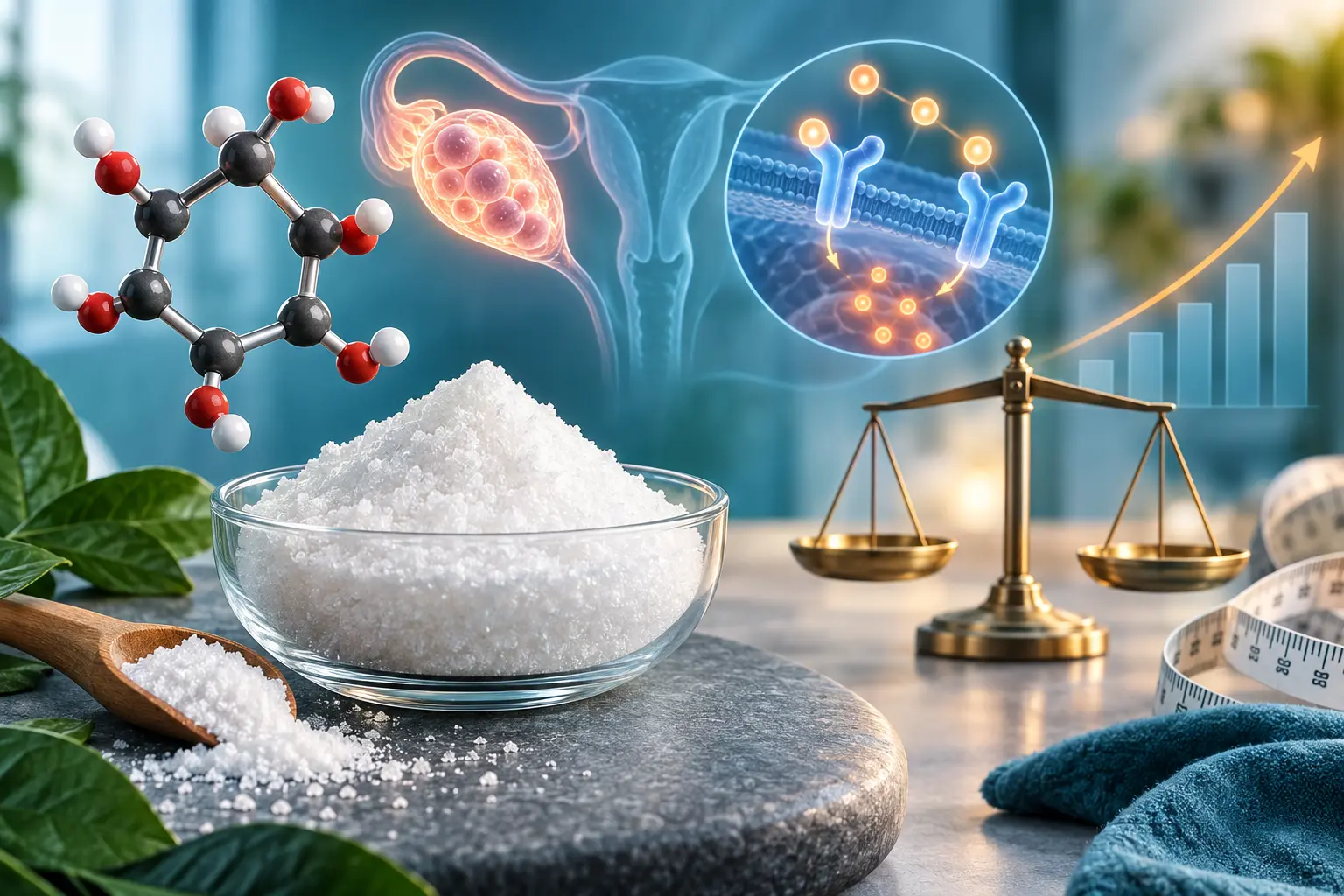
Inositol is a family of related compounds involved in cell signaling. Myo-inositol and D-chiro-inositol are the forms most often used in PCOS studies. Products may supply one form, both forms in a stated ratio, or a blend whose actual amounts are difficult to verify.
A popular ratio is not automatically an evidence-based dose for every goal. Trials vary in formulation, co-administered folic acid, duration, baseline body size, insulin resistance, fertility treatment, and outcomes. Match all of those before assuming equivalence.
PCOS evidence answers a narrower question
PCOS can involve irregular ovulation, hyperandrogenism, insulin resistance, and weight-management difficulty, but presentations differ. Reviews report possible improvements in selected metabolic, hormonal, or ovulatory markers, while certainty is limited by small trials and inconsistent methods. Improvement in insulin or cycle regularity does not automatically mean clinically important fat loss.
The international PCOS guideline treats inositol as having limited clinical evidence and emphasizes shared decision-making. Diagnosis matters because irregular cycles, hair changes, infertility, and weight change can have other causes.
What to measure if weight management is the goal
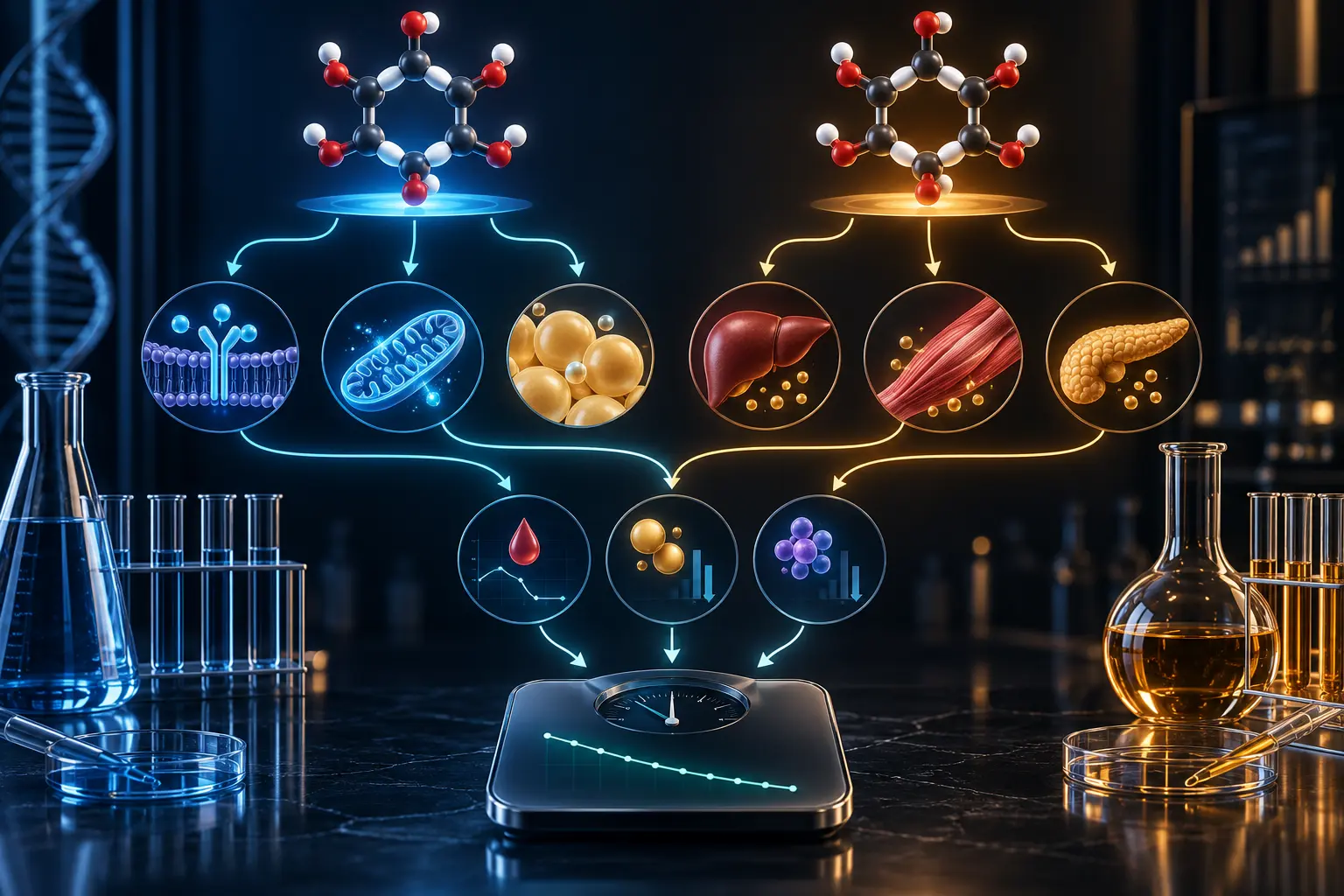
Separate four targets: body-weight trend, waist or body composition, laboratory markers, and reproductive outcomes. Decide which one matters before treatment and when it will be reassessed. A scale change during dietary counseling cannot be credited to inositol unless the comparison controlled for that counseling.
For weight management, track a seven-day average, waist with consistent technique, food pattern, activity, sleep, and medicines. For PCOS care, use clinician-selected markers and cycle or fertility outcomes rather than inventing a home hormone panel.
A better inositol label audit
Record milligrams or grams of each isomer, their ratio, servings per day, folic acid or other micronutrients, sweeteners, allergens, and third-party verification. Gummies or flavored powders may add energy or make exact daily dosing less consistent.
Choose transparency over claims such as “hormone balance.” If a product promises ovulation, pregnancy, rapid weight loss, or treatment of insulin resistance without appropriate qualification, the marketing has outrun the evidence.
Separate a plausible mechanism from weight-loss evidence
A biochemical pathway can explain why researchers tested an ingredient; it cannot tell you how much weight a person will lose. Changes in glucose, insulin, appetite ratings, oxidation, or an enzyme are intermediate outcomes. The buyer's question usually concerns body weight, waist, fat mass, health, or quality of life over months. Those endpoints require randomized human trials using a comparable ingredient, dose, population, and duration.
Read the full comparison. Was the ingredient tested alone or with a calorie-restricted diet? Did both groups receive the same lifestyle support? How many people finished, what was the absolute difference, and did the confidence interval include little or no effect? A statistically significant average can still be too small or uncertain to matter to an individual.
Keep ingredient evidence separate from finished-product evidence. A branded formula may contain a different form, an undisclosed amount, or several active ingredients. Listing a researched compound does not demonstrate that the sold product reproduces the study. When dose or composition cannot be verified, evidence matching stops.
Use a six-step decision instead of a supplement leap
- Define the problem. Is the goal weight loss, a diagnosed metabolic condition, appetite management, or correcting a deficiency?
- Check the diagnosis. Persistent symptoms, abnormal glucose, irregular cycles, neuropathy, or unexplained weight change deserve appropriate clinical assessment.
- Verify the exact product. Record ingredient form, amount per serving, maximum daily amount, other actives, excipients, warnings, and independent quality testing.
- Match human evidence. Compare form, dose, population, duration, diet, outcomes, adverse events, and funding.
- Review interactions first. Bring the actual label and a complete medicine and supplement list to a clinician or pharmacist.
- Set a stop rule. Choose one relevant measure, a review date, and symptoms that end the experiment.
Change one major variable at a time. Track a multiweek weight trend rather than a single reading, and note waist, appetite, sleep, activity, diet adherence, menstrual-cycle context, and side effects where relevant. A personal trial cannot rule out uncommon harm or prove causation, but it is more honest than crediting every normal fluctuation to a capsule.
Put the possible effect in real-world context
Food portions, liquid calories, alcohol, weekend patterns, daily movement, training recovery, sleep, medicines, and changing body size can each outweigh a small supplement effect. Do not use an ingredient to cancel an unmeasured diet or justify an extreme deficit. Sustainable weight management still depends on a workable eating pattern, adequate protein and fiber, movement, recovery, and care for relevant medical conditions.
Use comparable measurements. Weigh under similar conditions and interpret a rolling trend, not one morning. Repeat waist measurements at the same landmark. Note travel, high-sodium meals, soreness, constipation, menstrual-cycle phase, and medicine changes when they explain short-term shifts. Never raise a dose because the scale moved for one day.
Value is not the bottle price alone. Calculate cost per fully disclosed daily serving, likely duration, evidence quality, size of plausible benefit, and the cost of side effects, monitoring, or interactions. If a label hides doses, the evidence is too indirect, or the outcome cannot be measured, choosing no supplement is a complete decision.
How this applies to Fat Burn Active
Inositol is not listed on the current public Fat Burn Active formula. A PCOS-focused inositol decision and a stimulant fat-burner decision solve different problems and should not share evidence.
Fat Burn Active is relevant to Inositol for Weight Management because its official listing identifies standardized plant extracts, caffeine sources, vitamins, and zinc in one formula. First read our independent review. If the formula, stimulant profile, evidence limits, and warnings fit your situation, check the current formula and purchase options on the official Fat Burn Active website. We may receive a commission at no additional cost.
Safety boundaries and reasons to stop
Stop the supplement and seek urgent care for fainting, severe weakness, confusion, seizure, chest pain, breathing difficulty, a serious allergic reaction, or signs of major liver injury such as yellow skin or eyes, dark urine, or persistent upper abdominal pain. Significant vomiting, diarrhea, dizziness, palpitations, unusual mood change, or symptoms of low blood glucose also deserve prompt review.
Pregnancy or breastfeeding, age under 18, eating-disorder history, upcoming surgery, and liver, kidney, cardiovascular, endocrine, or psychiatric conditions require extra caution or avoidance. Supplements can change glucose, blood pressure, bleeding, absorption, or medicine metabolism. “Natural” and “non-stimulant” do not mean interaction-free. Do not stop or replace prescribed treatment without the prescriber.
Frequently asked questions
Does inositol directly burn fat?
No convincing evidence shows that it acts as a universal fat burner.
Is it only for PCOS?
It is studied in other contexts, but most weight-management interest centers on PCOS-related metabolic questions.
Which ratio is best?
No single ratio is proven best for every person or outcome; match the formulation to clinician-guided goals and evidence.
Sources
- 2023 International Evidence-Based PCOS Guideline
- Systematic Review of Inositol for PCOS
- NIH ODS: Dietary Supplements—What You Need to Know
- FDA: Dietary Supplements
Sources reviewed September 8, 2026. This article is general educational information, not medical advice, diagnosis, or treatment.