
The strain is part of the intervention
A useful label identifies genus, species, and strain—for example, three levels rather than “Lactobacillus blend.” Closely related strains can differ in survival, metabolic products, host interaction, and clinical evidence. Multi-strain products add another layer because component effects and viability may differ.
Colony-forming units describe viable organisms under stated conditions, not weight-loss potency. More CFU is not automatically better. Check whether the count is guaranteed through expiry or only at manufacture, and follow storage requirements.
A pooled average hides different products
Reviews combine trials using fermented foods, capsules, single strains, combinations, and sometimes synbiotics with prebiotic substrates. Small pooled changes may be statistically detectable while remaining inconsistent across subgroups. Weight, BMI, waist, and fat mass are separate outcomes.
Match the exact strain, dose, duration, population, and outcome before using a paper to judge a bottle. When a meta-analysis reports subgroup differences, treat them as clues needing confirmation rather than a shopping list of “best strains.”
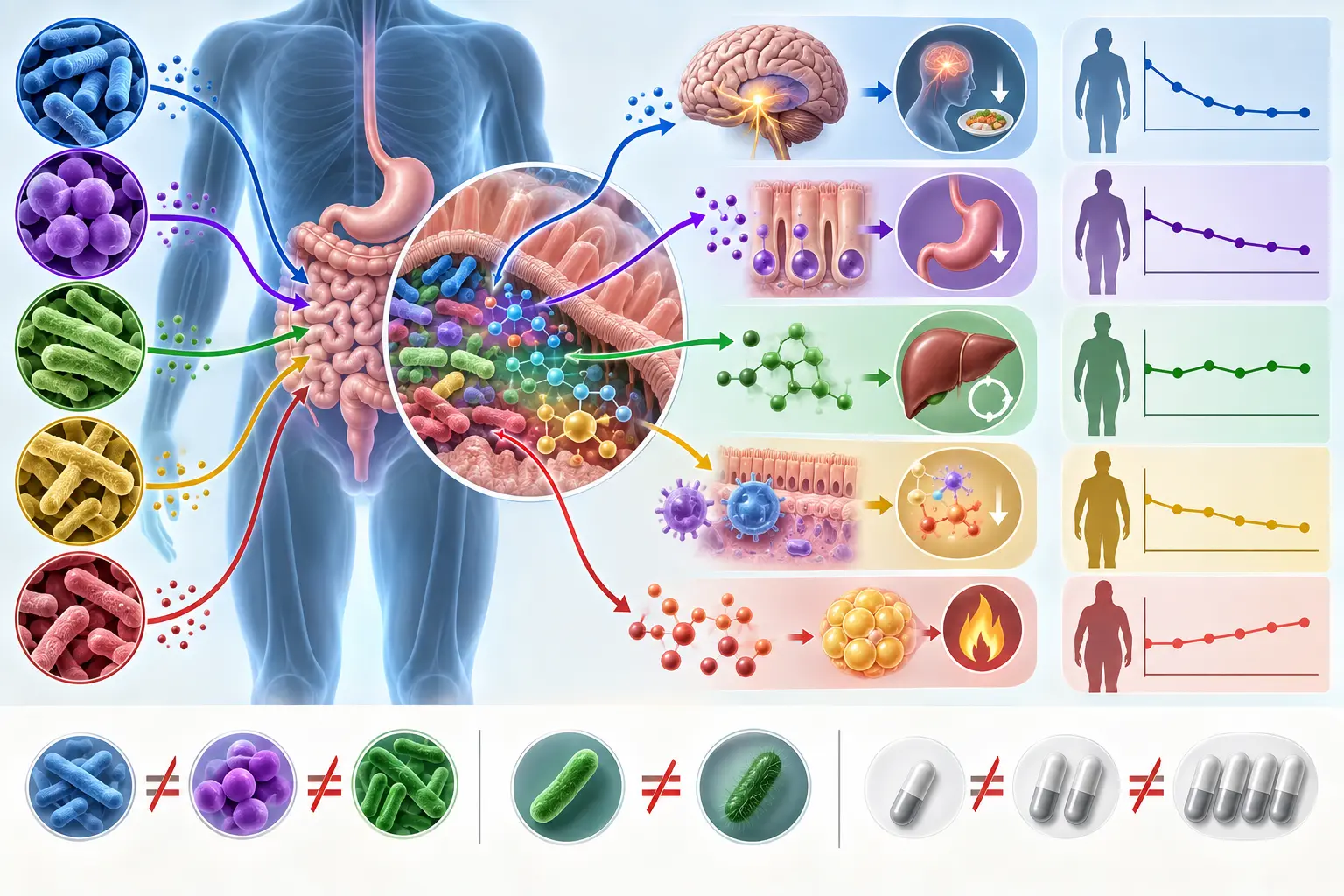
Mechanism is not a personal diagnosis
Researchers study gut-barrier function, fermentation products, bile acids, inflammation, appetite signaling, and energy harvest. These pathways are complex and do not mean a commercial microbiome test can identify a weight-loss probiotic for an individual.
Diet pattern, fiber, medicines, illness, sleep, and baseline microbiota can affect response. For most healthy people, mild gas or bloating may occur, but safety evidence is less certain in severely ill or immunocompromised people; professional guidance matters.
Match the evidence to the product
Start by identifying exactly what researchers tested: a purified chemical, named botanical extract, microbial strain, food, or finished blend. Copy the serving size, daily dose, standardization, other active ingredients, duration, population, comparator, and primary outcome. A familiar ingredient name is not enough when manufacturing, potency, viability, or accompanying stimulants differ.
Rank evidence in order: mechanistic laboratory work, animal studies, acute human measurements, controlled human trials, systematic reviews, and trials of the exact sold formula. Each level answers a narrower question. A plausible pathway can justify research, but it cannot establish meaningful fat loss. Report absolute group differences, uncertainty, adverse events, dropouts, funding, and whether the result survived sensitivity analysis.
Use a practical decision system
- Define one job. Choose a measurable purpose such as a four-week waist trend, meal tolerance, or adherence—not “boost metabolism.”
- Record baseline. Use seven morning weights, one standardized waist measure, usual intake, steps, training, sleep, digestion, medicines, and supplements.
- Audit the label. Confirm the exact ingredient, dose, directions, allergens, caffeine, warnings, expiry, storage, and independent quality information.
- Change one variable. If professional review supports use, keep the rest of the routine reasonably stable and follow the label.
- Review averages. Compare the predefined outcome, side effects, adherence, and cost; do not credit one dramatic day.
- Stop deliberately. Discontinue when the benefit is absent, too small, or outweighed by symptoms, complexity, or price.
A personal trial cannot prove causation or reveal uncommon harm. It simply reduces the chance that expectation, changing food intake, constipation, menstrual-cycle timing, or ordinary water fluctuation will be mistaken for an ingredient effect.
Example: a label that cannot support its promise
A shopper finds a study using a defined material for twelve weeks, then sees the same broad ingredient name inside a proprietary blend. The bottle omits the active amount and combines several ingredients while promising rapid results. The correct comparison is not “same ingredient.” It is “dose and formula relevance unknown.”
The shopper requests the complete specification, checks whether the study outcome was weight, waist, or only a laboratory marker, and declines to convert an average group result into a personal forecast. Transparent labeling makes evaluation possible; it does not prove effectiveness, purity, or safety.
Build a study-to-label comparison card
Create two columns before deciding. In the study column, record the exact material, active specification, daily dose, timing, treatment length, participant characteristics, calorie or exercise program, comparator, number randomized, number completing, primary endpoint, absolute difference, confidence interval, adverse events, and funding. In the product column, copy the same fields from the current label and manufacturer documents. Mark “not disclosed” rather than estimating a favorable match.
Then grade relevance. Direct means the finished product, dose, schedule, population, and outcome were tested. Close means the same defined ingredient and comparable exposure were studied, but the complete formula was not. Indirect means only a related extract, strain, food, chemical, mechanism, or animal model was used. Unusable means the study is retracted, the material cannot be identified, the dose is hidden, or the cited outcome does not support the advertised claim. A long reference list does not compensate for low relevance.
Finally, translate the evidence into a decision rather than a promise. Write the most likely benefit as a range that includes no meaningful effect, list the main uncertainties, and set a review date. Track weekly average weight, standardized waist, the behavior the product is supposed to support, adverse effects, and total cost. Do not change food, exercise, sleep schedule, and several supplements at once and then assign the result to one capsule.
Ordinary scale noise can exceed the small average differences reported for many supplements. Sodium, carbohydrate intake, hydration, bowel contents, soreness, travel, and menstrual-cycle timing can all change weight without changing body fat. If the observed result is not larger than this noise or does not persist, record it as inconclusive. The honest endpoint may be that the ingredient is interesting but not useful enough to buy.
Where Fat Burn Active fits
No named probiotic strain or viable count is identified in the currently available Fat Burn Active information. Probiotic research cannot be transferred to it.
Fat Burn Active is optional and is not required for fat loss. Ingredient plausibility cannot replace evidence for the complete formula, a relevant dose, or a sustainable calorie deficit. Read our independent Fat Burn Active review before deciding.
The official Fat Burn Active page lists a multi-ingredient thermogenic formula, but the buying decision for Probiotics for Weight Loss should follow the evidence check above. Compare our independent review, then, if the product remains a reasonable fit, verify the current label, directions, and purchase options. We may receive a commission at no additional cost.
Safety boundaries
Ask a clinician or pharmacist before using a weight-loss supplement if you are pregnant or breastfeeding, under 18, have an eating-disorder history, allergy, gastrointestinal disease, diabetes, immune compromise, heart or rhythm disease, liver or kidney disease, or take medicines. Do not stack products or exceed directions to chase a sensation.
Stop and seek appropriate care for chest pain, fainting, breathing difficulty, a serious allergic reaction, severe or persistent abdominal pain, repeated vomiting, blood in stool, or a sustained racing or irregular heartbeat. Gas, bowel changes, nausea, insomnia, anxiety, palpitations, and headache are adverse effects, not evidence that fat loss is occurring.
Frequently asked questions
Which probiotic is best for weight loss?
No universal best strain has been established; evidence is strain- and population-specific.
Does a higher CFU count work better?
No. CFU count alone does not measure clinical effectiveness.
Is fermented food the same as a trial capsule?
No. Organisms, dose, matrix, and viability can differ.
Sources
- NIH ODS: Probiotics fact sheet
- NCCIH: Probiotics usefulness and safety
- Probiotics and weight-loss meta-analysis
- Probiotics and body composition meta-analysis
Sources reviewed September 14, 2026. This article is general educational information, not medical advice, diagnosis, or treatment.