The formula has four functional layers
What each thermogenic input can and cannot tell us
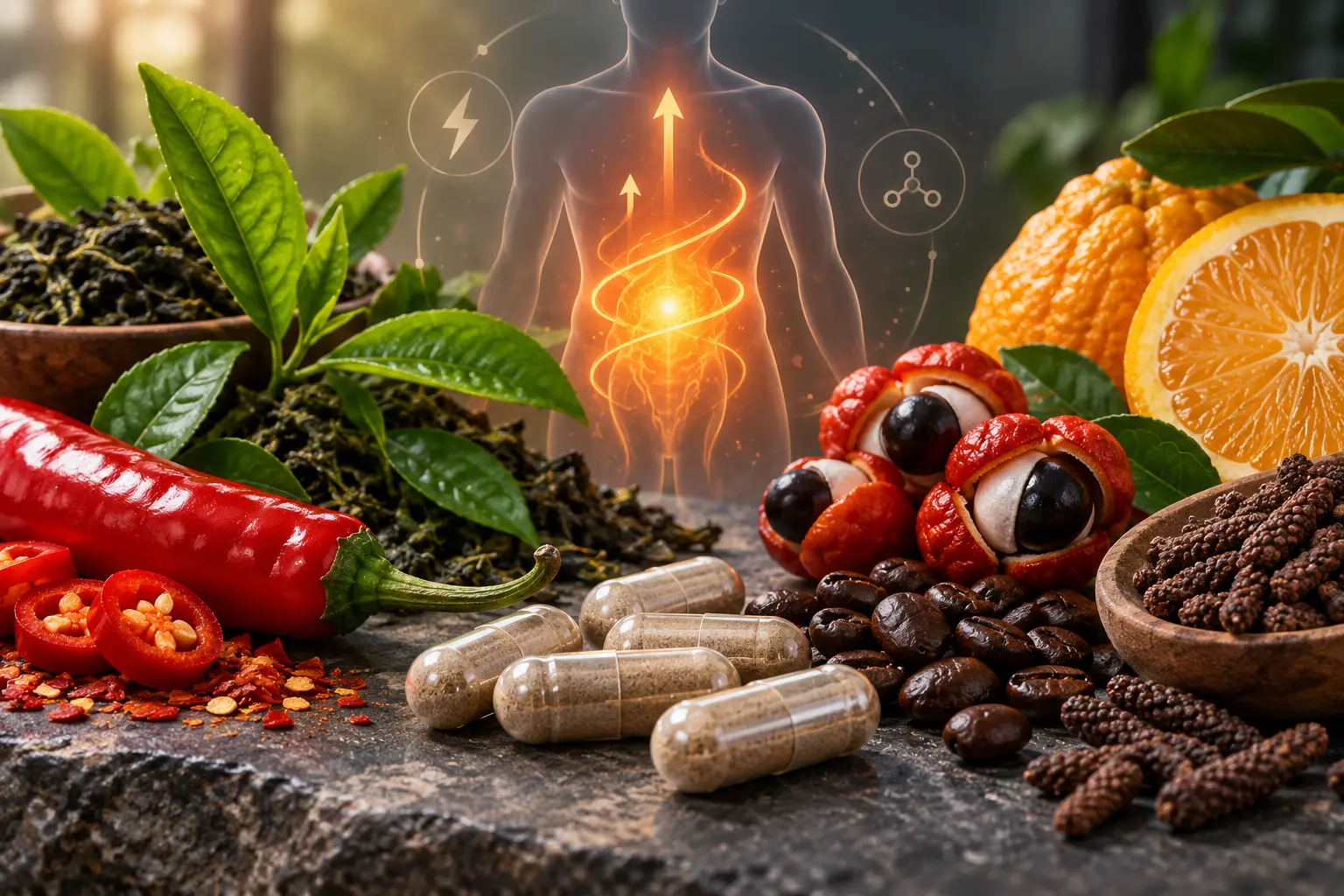
Caffeine can affect alertness and short-term expenditure, but tolerance and sleep trade-offs matter. Green tea supplies 100 mg calculated EGCG, yet extract composition and outcomes vary. Phenylcapsaicin is a capsaicin analogue; a matched ingredient study cannot establish the finished formula. Bitter orange supplies about 6 mg synephrine and raises cardiovascular-combination questions. Grains of paradise supplies about 10 mg 6-paradol, with evidence much thinner for durable weight loss than mechanism-led marketing suggests.
ForsLean supplies about 25 mg forskolin, which is often framed through cyclic-AMP and body-composition mechanisms. Piperine may affect bioavailability, but greater absorption is not automatically greater benefit and may increase interaction uncertainty.
Thermogenesis is not the same as body-fat loss
An increase in heat production or energy expenditure measured over several hours must be expressed in absolute energy terms and tested for persistence. A higher rate of fat oxidation during one window does not equal net loss of stored body fat because fat is stored and used throughout the day.
Long-term outcomes can be offset by tolerance, appetite, reduced ordinary movement, sleep disruption, or changes in adherence. The relevant product evidence would measure weight, fat mass, waist, function, and harms over a suitable duration.
A formula-level test should answer the interaction question
Because multiple pathways overlap, the study should test the complete current formula rather than assume additive effects. It should quantify all-source caffeine, standardize timing and food, use the recommended serving, and report blood-pressure, heart-rate, sleep, gastrointestinal, and dropout outcomes.
It should also distinguish acute laboratory measurements from multi-week clinical outcomes. A study can legitimately show a short metabolic effect while leaving the buying question unresolved.
Worked example: the heat sensation trap
A user feels warmer and sweats more after two capsules. The product contains several ingredients that could plausibly contribute to that sensation. However, the user has not measured energy expenditure, intake, water loss, or body-fat change.
The honest conclusion is that a sensation occurred. Sweating may lower scale weight temporarily through fluid loss, while caffeine may change alertness. Neither observation proves additional fat loss. Track the intended outcome and protect sleep rather than increasing the serving to intensify the feeling.
Use a dated verification worksheet
- Capture the product. Save the official page, complete delivered label, serving size, formula, warnings, seller, lot code, expiry, and purchase date.
- Separate evidence objects. Keep manufacturer claims, ingredient studies, combination studies, and finished-product trials in different columns.
- Calculate only what is supported. Multiply extract mass by standardization when both are stated, but label the result as a calculated specification rather than laboratory verification.
- Map each claim to an outcome. Thermogenesis, alertness, hunger, scale weight, fat mass, waist, and workout performance are different endpoints.
- Record uncertainty. An unknown dose, missing all-source caffeine figure, absent lot report, or lack of a finished-product trial should remain visible.
- Set a decision rule. Decide what evidence, safety conditions, and practical benefit would justify purchase or continued use.
Do not total several small ingredient effects into a product prediction unless the complete combination was studied. A mechanism can make a claim plausible, but only a relevant human outcome can show whether the effect is large and durable enough to matter. Testimonials and a strong first-dose sensation cannot close that gap.
Make the unresolved questions visible
Where the buying decision belongs
Fat Burn Active may interest a buyer specifically seeking a multi-pathway stimulant thermogenic, but the breadth of the formula increases the need for dose, interaction, and finished-product evidence. More mechanisms do not automatically mean more fat loss.
Fat Burn Active is optional. It cannot replace a sustainable calorie deficit, adequate nutrition, daily movement, resistance training, sleep, or medical care. A transparent formula permits better questions; it does not guarantee effectiveness or personal safety.
If the current bottle matches the verified formula, the warnings and stimulant exposure fit your situation, and you accept the evidence limits, confirm current availability, price, delivery, and return terms on the official website. We may receive a commission at no additional cost to you. Results are not guaranteed.
Run a decision-focused real-world check
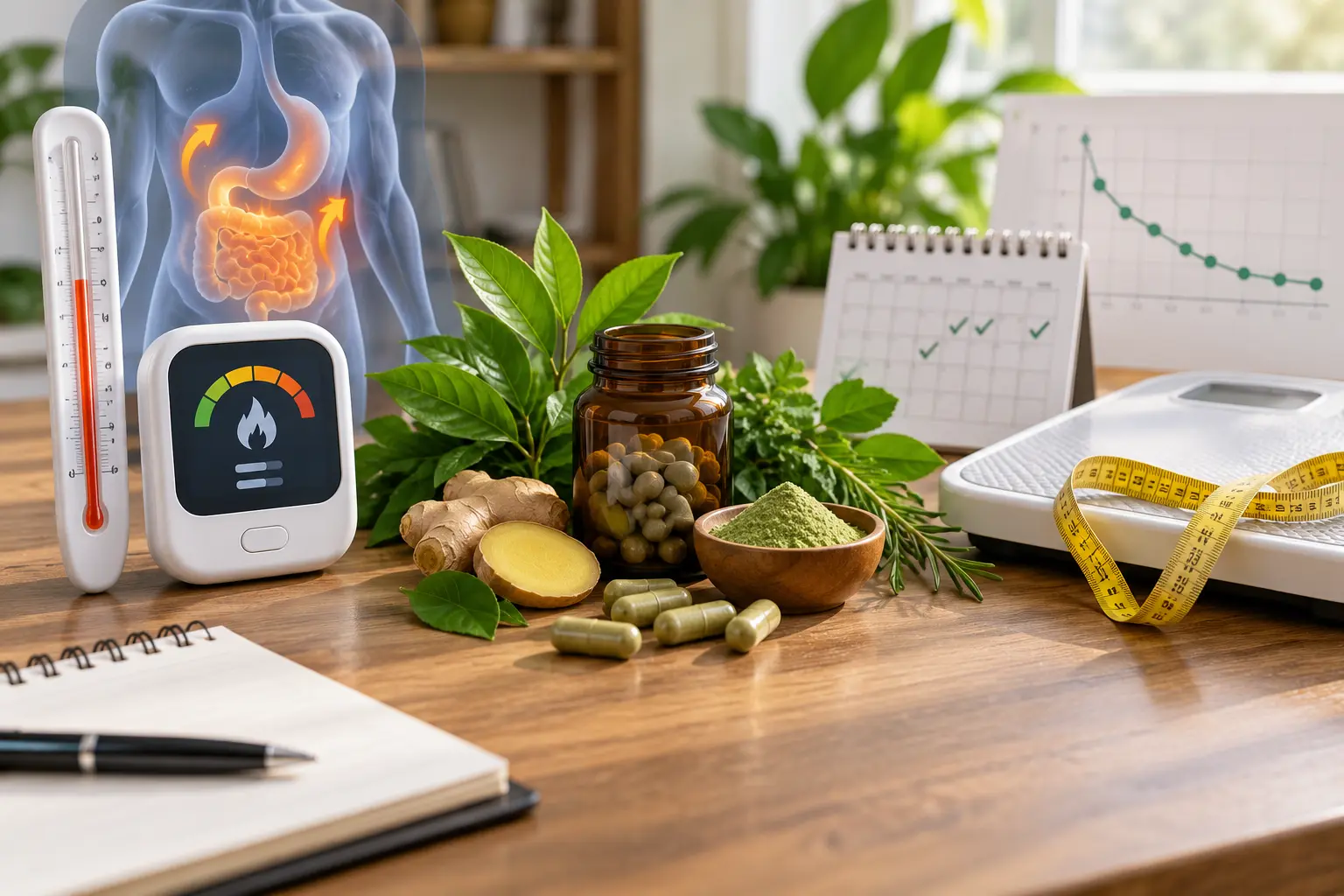
Before adding the product, collect a stable baseline for at least one to two weeks when practical. Record morning weight under comparable conditions, a weekly waist measurement, ordinary caffeine sources, sleep timing, hunger pattern, training performance, and relevant symptoms. This baseline does not turn self-observation into a clinical trial; it prevents normal fluctuation from being credited to a new capsule.
Choose one primary outcome and one review date. Keep food structure, training, and other supplements reasonably consistent. Do not increase the serving to chase warmth, sweating, appetite suppression, or stimulation. Those sensations may appear quickly while the meaningful outcome remains unchanged. Use weekly averages rather than comparing the lightest day after starting with the heaviest day before starting.
At review, ask four questions: Did the intended outcome improve? Was the change large enough to matter? Did sleep, anxiety, digestion, pulse symptoms, cost, or routine complexity worsen? Could another change explain the result? Continue only when the benefit is defined, worthwhile, and not outweighed by harm. If the result is ambiguous, uncertainty is the result—not a reason to buy another bottle indefinitely.
Safety is a separate gate
The official page excludes children, pregnancy or breastfeeding, cardiovascular disease, and caffeine hypersensitivity, and warns against other caffeine or similar ingredients. Medicines, hypertension, arrhythmia, anxiety, sleep problems, liver disease, eating-disorder history, and planned surgery deserve individualized review with a clinician or pharmacist.
Stop use and seek appropriate care for chest pain, fainting, severe breathing difficulty, serious allergic symptoms, repeated vomiting, confusion, jaundice, or a sustained racing or irregular heartbeat. Insomnia, palpitations, tremor, anxiety, nausea, headache, and excessive sweating are adverse effects, not proof of fat burning.
Frequently asked questions
Is Fat Burn Active thermogenic?
Yes, its formula is explicitly built around several thermogenic and stimulant-related ingredients.
Does thermogenesis guarantee fat loss?
No. Acute heat or expenditure does not establish a meaningful long-term body-fat outcome.
Which ingredients supply caffeine?
Caffeine anhydrous and guarana are quantifiable; green tea may add an unknown amount.
Does sweating show the formula works?
No. Sweating mainly reflects temperature regulation and fluid loss.
Practical decision checkpoint
Follow the evidence chain from a proposed mechanism to a measured human outcome and then to the sold formula. Do not assume that a temporary change in heat production or alertness becomes meaningful fat loss. The label and direct testing determine how confident the conclusion can be.
Sources
- Fat Burn Active official formula
- NIH ODS: Weight-Loss Supplements
- NCCIH: Green Tea
- NCCIH: Bitter Orange
- Systematic review of thermogenic supplements
Sources reviewed September 16, 2026. This article is general educational information, not medical advice, diagnosis, or treatment.