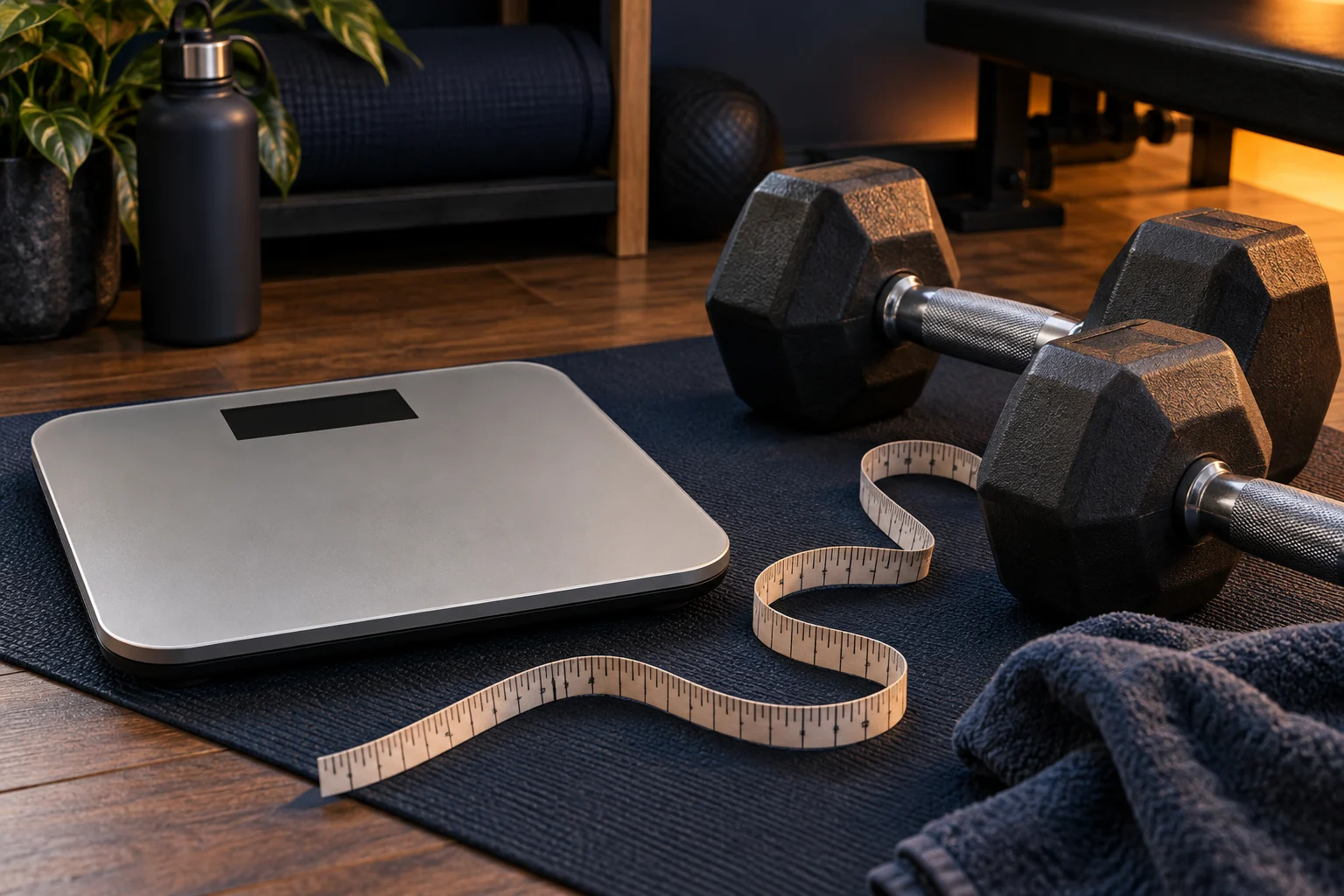
The scale cannot identify what changed
A bathroom scale combines fat, muscle, water, glycogen, food, and bowel contents into one number. Dieting without resistance training may produce a larger decline partly because more lean tissue is lost. Adding strength work can protect that tissue, so the scale tells a smaller but potentially better story.
New or harder training also creates local inflammation and replenishes muscle glycogen. Glycogen is stored with water, so weight can rise or pause for days after a difficult session. Creatine, sodium, carbohydrate intake, menstrual-cycle changes, and soreness can amplify the shift.
None of this proves fat loss. It explains why the scale needs supporting measurements.
What resistance training changes during dieting
Resistance exercise provides the mechanical stimulus to maintain strength and lean tissue. Meta-analyses find that it can reduce fat mass and, when combined with calorie restriction, improve body composition while attenuating lean-mass loss. Aerobic training may reduce scale weight more when it creates greater energy expenditure, but the outcomes answer different questions.
Muscle gain during a deficit is possible, especially in beginners, people returning after a break, and some individuals with higher body-fat levels. It is not guaranteed and is usually slower than dramatic online transformations imply.
Protein supports recovery, but more protein cannot replace progressive training or make an extreme deficit safe.
Separate four competing explanations
Home body-fat scales cannot reliably distinguish these states day by day. Their estimates are strongly affected by hydration and algorithms.
Use a body-composition dashboard
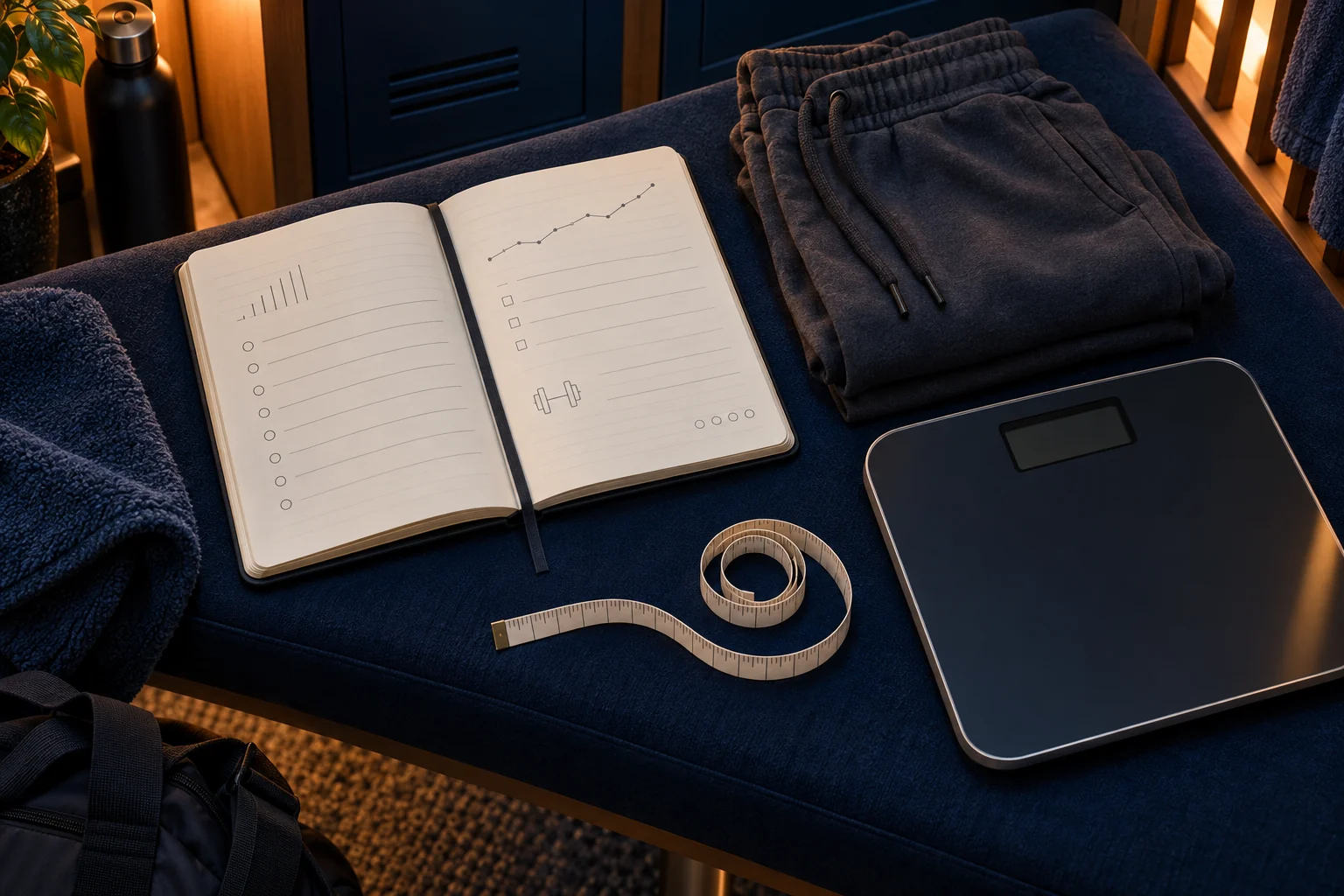
Weigh under similar morning conditions several times weekly and compare averages. Measure waist at the same location and tension every two to four weeks. Use the same clothing, lighting, distance, and posture for optional photographs. Record key exercises, repetitions, loads, and technique.
Clothing fit and daily function add context. Calipers and consumer impedance devices can contribute trends when used consistently, but do not treat decimals as laboratory truth. DEXA also has measurement error and is rarely needed for routine fat loss.
Look for agreement among measures. A falling waist with stable weight and improving strength is different from no change anywhere.
What to do when the scale slows
First, wait through the early training-water period and compare at least two to four weekly averages. Confirm that the same calorie target is actually being followed. Strength training can increase hunger, and reward eating may replace the energy used.
Do not remove lifting merely to make the scale drop faster. If weight and waist truly stall, adjust one modest variable: food portions, liquid calories, daily steps, or aerobic minutes. Preserve adequate protein and recovery.
If performance falls, fatigue persists, and weight is dropping rapidly, the deficit may be too large. The goal is not the lightest possible body at the cost of function.
Set realistic recomposition expectations
Visible muscle gain and fat loss occur gradually. Beginners may improve quickly at first because technique and nervous-system skill increase before large tissue changes. Experienced lifters usually progress more slowly. A dramatic short-term scale shift is more likely to be water than new muscle.
Use an eight-to-twelve-week view for meaningful body-composition interpretation while making safety decisions sooner. If waist, photographs, clothing, and performance all remain unchanged, do not invoke “muscle gain” as an automatic explanation. Recheck execution, calories, progression, sleep, and medical context with the same honesty used for scale data. Sustainable progress rarely looks perfectly linear from week to week.
Build a four-week decision test
- Measure the baseline. Record current sessions, steps, exercise minutes, sleep, soreness, hunger, and weekly average weight.
- Choose one progression. Add time, frequency, pace, incline, or resistance—not everything together.
- Protect recovery. Keep at least one easier day and reduce the plan when pain, fatigue, or performance worsens.
- Track execution. A program cannot be judged from planned sessions that did not happen.
- Review several outcomes. Compare waist, fitness, strength, consistency, symptoms, and weight trend.
Four weeks can reveal feasibility and direction, but it may be too short to determine the full body-composition effect. Continue a tolerable plan long enough to judge a trend. Change one major variable at a time so the result remains interpretable.
Interpret exercise data without false precision
Calorie displays on watches and machines are estimates built from population equations. Use them to compare similar sessions on the same device, not to calculate an exact food allowance. Heart rate, pace, distance, and power can also contain measurement error.
Standardize the information you control: the same scale conditions, a weekly average, a consistent waist site, and repeatable fitness or strength markers. Note illness, heat, travel, unusually hard sessions, sodium, carbohydrate, and menstrual-cycle context when relevant. Agreement among several trends is more informative than one impressive workout number or one disappointing weigh-in.
Where Fat Burn Active fits
A thermogenic does not separate fat from lean mass on the scale and should not replace resistance training or appropriate measurements.
Fat Burn Active is an optional stimulant-oriented thermogenic supplement, not a substitute for exercise programming, an appropriate calorie intake, sleep, hydration, or medical care. Feeling warmer, more alert, less hungry, sweatier, or experiencing a faster heart rate does not prove additional fat loss. Evidence for an isolated ingredient cannot automatically establish the effect of the finished formula at the amount sold.
A supplement is not required to benefit from Can Strength Training Reduce Scale Weight Loss?. If your foundations are already in place, use the independent Fat Burn Active review to judge whether the formula has a useful optional role. If it fits your expectations and stimulant tolerance, check current product details and ordering terms. We may receive a commission.
Safety and individual context
Use qualified coaching when technique, balance, pain, or equipment setup is uncertain. Sharp pain, progressive weakness, severe swelling, or dark urine after unusually hard exercise requires prompt assessment.
Stop exercise and seek urgent care for chest pain, fainting, severe or unusual shortness of breath, new neurological symptoms, or a rapid irregular heartbeat. Pregnancy, recent surgery, significant heart or lung disease, uncontrolled blood pressure, diabetes treatment, severe obesity, major joint problems, and long inactivity may require individualized clearance and progression. Exercise is not a diagnostic test.
Frequently asked questions
Can I gain muscle while losing fat?
Yes, particularly for beginners or people returning to training, but the response varies.
How long can workout water last?
Often days, depending on training novelty, soreness, carbohydrate, sodium, and recovery.
Should I stop lifting before weigh-in?
No. Standardize measurement conditions and judge averages rather than manipulating one reading.
Sources
- Resistance training and body composition meta-analysis
- Exercise during dietary weight loss review
- ACSM resistance-training progression guidance
- CDC healthy weight and physical activity
Sources reviewed September 8, 2026. This article is general educational information, not medical advice, diagnosis, or treatment.