How the body makes heat
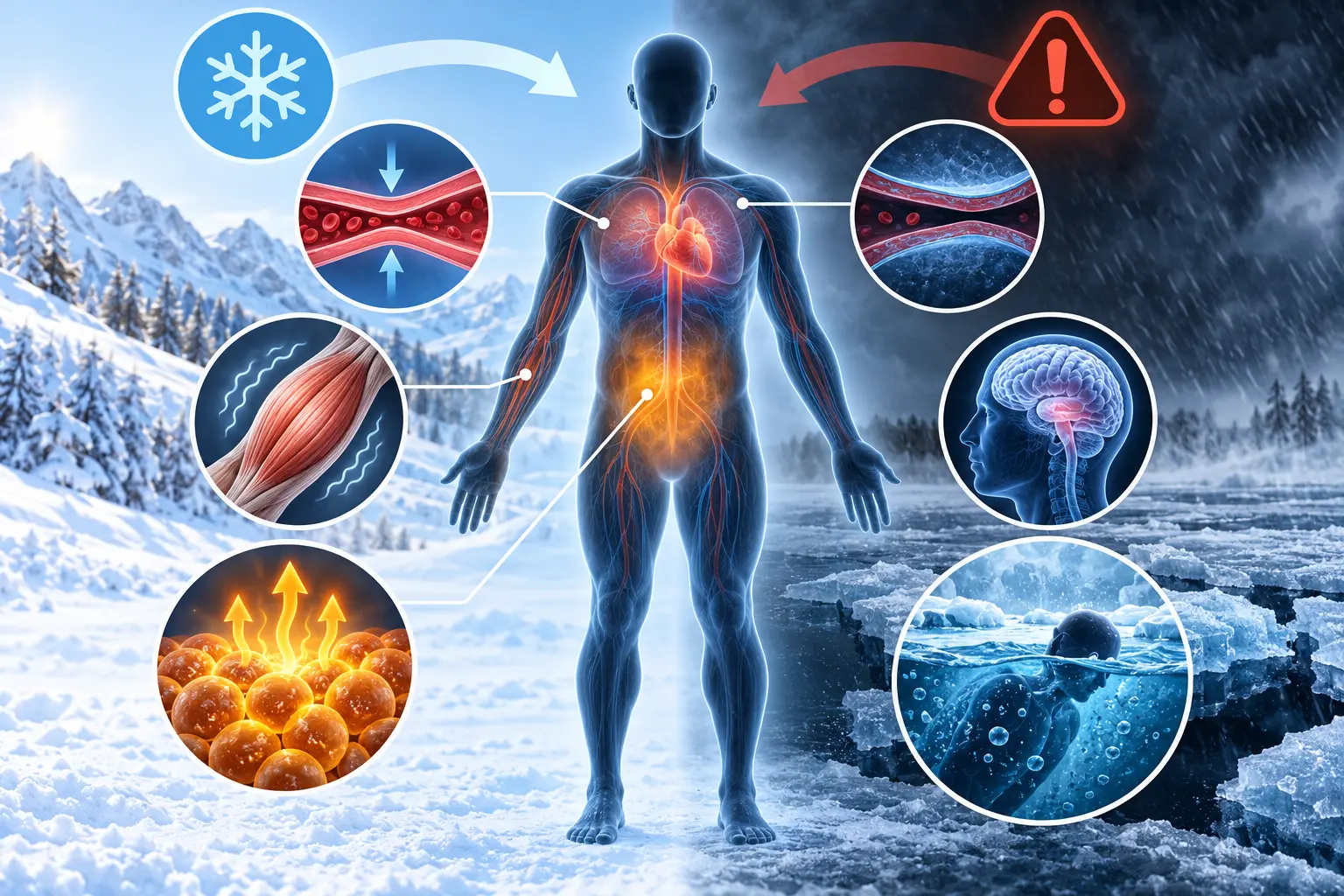
Vasoconstriction reduces heat loss from the skin. If cooling continues, skeletal muscles can shiver, rapidly increasing heat production. Non-shivering thermogenesis includes metabolic responses in brown adipose tissue, where energy can be released as heat rather than captured entirely for cellular work.
These defenses protect temperature; they did not evolve as a convenient fat-loss program. Once warmth returns, the extra demand ends, and later appetite or behavior may compensate.
Brown fat is active, but not a magic furnace
Adults can have metabolically active brown adipose tissue, often detected around the neck and upper chest during controlled cold exposure. People differ greatly in detectable activity. Season, age, body composition, acclimation, medication, and study procedure influence findings.
A scan or acute rise in expenditure demonstrates physiology, not guaranteed fat reduction. Small samples and tightly controlled temperatures limit broad predictions.
What controlled studies can show
Trials using individualized mild cold or repeated exposures have measured increases in expenditure and brown-fat activity. Some small studies report body-fat changes after repeated exposure. The findings are scientifically interesting, but do not establish an efficient, scalable, or superior obesity treatment.
Participants are monitored and exposure is standardized. The “coldest tolerable” condition is not equivalent to an unsupervised ice bath, winter swim, or under-heated home.
Why online calorie estimates are unreliable
A calculator cannot infer whether someone was shivering, how insulated they were, the true room temperature, or their brown-fat activity. Applying one published percentage to every cold shower or winter walk creates false precision.
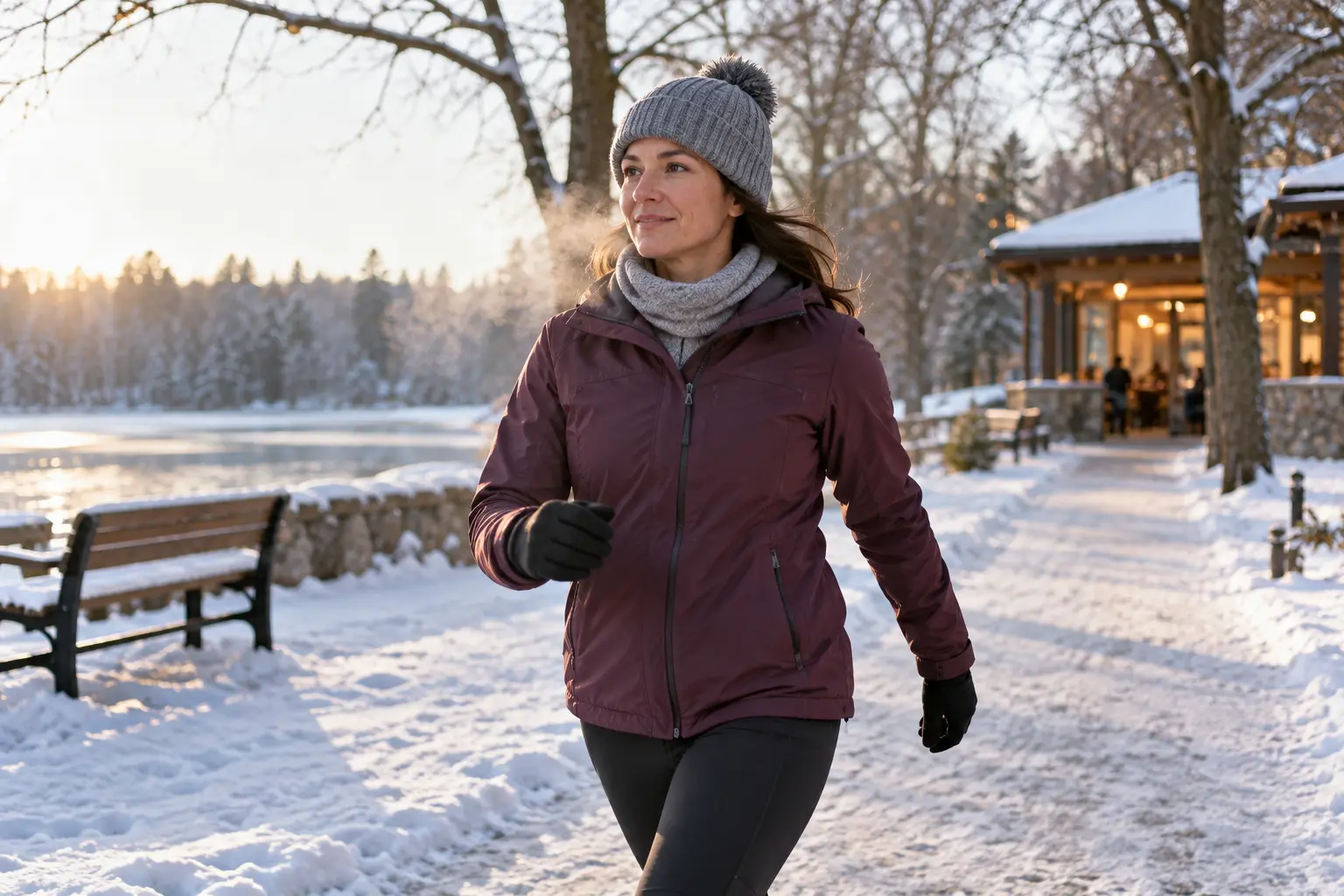
Walking in cold weather may burn energy primarily because of the walking. Heavy clothing, wind, terrain, and altered movement complicate comparison with the same activity indoors.
Cold stress is not a harmless intensity dial
Cold can raise blood pressure and cardiac workload, impair judgment and coordination, and cause cold injury or hypothermia. Water removes heat much faster than air, making immersion especially hazardous. Alcohol, sedatives, exhaustion, wet clothing, poor circulation, neuropathy, cardiovascular disease, and some medicines can increase risk.
Do not attempt extreme exposure alone or use shivering as a calorie target. Confusion, slurred speech, loss of coordination, severe drowsiness, or persistent uncontrollable shivering requires urgent warming and medical help.
A safety-first rule for cold-weather activity
Check the forecast, wind, precipitation, route, daylight, clothing layers, footwear, communication, and a warm exit option. Choose the walking or sport workload based on fitness and surface conditions, then dress to prevent excessive cooling. The exercise can support health without using discomfort as the dose.
An ice bath used for recovery has a different purpose and evidence question from cold used for calorie burning; neither should be entered as bonus calories. People with cardiovascular disease, uncontrolled blood pressure, Raynaud symptoms, neuropathy, impaired mobility, or previous cold injury need individualized advice.
Turn the mechanism into a useful decision
Cold exposure also complicates appetite and recovery. A demanding winter session may increase hunger, require more clothing and energy, or lead to less movement afterward. Someone who feels invigorated may become more active; another person may sit under blankets for the rest of the day. The laboratory exposure cannot predict those complete-day responses.
Create stopping rules before any optional cool-environment experiment: no deliberate shivering, no solo immersion, no exposure when ill or impaired, and immediate warming for numbness, confusion, loss of coordination, or uncontrolled shaking. Never withhold adequate home heating to pursue calorie burning. Comfort, housing safety, cardiovascular risk, and the ability to function matter more than a speculative energy calculation. When exercise is the goal, choose a safe workload and treat the weather as a condition to manage.
Use an evidence ladder before believing a calorie claim
Separate four questions before turning a laboratory effect into a weight-loss strategy. Does the mechanism exist? Can researchers measure it? How large and durable is the change? Does it improve body weight, waist, fat mass, health, or adherence in real life? A statistically detectable rise in expenditure may still be too small, brief, or variable to matter on the scale.
Put controlled human outcome trials above acute metabolic measurements, and acute measurements above animal or cell mechanisms. Check the actual food, compound, temperature, dose, exposure time, participants, and comparator. Do not annualize an effect recorded for a few hours as though it repeats unchanged every day. Appetite, movement, tolerance, environment, and behavior can compensate.
Protect the large levers first: a sustainable intake pattern, adequate protein and fiber, daily movement, resistance training, sleep, and medical care when needed. A thermogenic effect can exist inside that system, but it cannot make an unmeasured calorie deficit reliable or turn discomfort into evidence of fat loss.
Run a practical two-week reality check
- Define the claim. Write the exact outcome: fullness, meal quality, warmth, beverage substitution, daily intake, or weight trend. “Faster metabolism” is too vague.
- Record the baseline. Use comparable morning weights, a weekly waist measure, ordinary activity, sleep, hunger, and relevant symptoms.
- Change one variable. Keep the rest of the eating and activity plan as stable as practical.
- Measure execution first. A strategy cannot be judged if it happened only on two unusually good days.
- Compare averages. Interpret at least two weekly averages, not the highest or lowest reading.
- Keep only useful changes. Continue when the tactic improves nutrition, comfort, or consistency; stop when it adds risk, obsession, or inconvenience without a meaningful benefit.
Two weeks cannot prove fat loss from a tiny thermogenic mechanism. It can show whether the behavior is tolerable and whether it changes the part of the routine that matters. Longer trends are required for body-composition conclusions.
Where Fat Burn Active fits
Fat Burn Active is marketed through thermogenic ingredients, but a food, cold, or water mechanism does not prove that the finished supplement produces meaningful fat loss. Ingredient studies use specific preparations and doses; their effects cannot be added together or transferred automatically to a multi-ingredient formula. Feeling warm, stimulated, or less hungry is not a body-fat measurement.
Once the practical steps in Cold Exposure and Calorie Burning are working, decide whether an optional supplement adds enough value. Start with the Fat Burn Active review; if the formula and limitations are acceptable, see current availability and official ordering details. We may receive a commission.
Frequently asked questions
Does a higher metabolic rate automatically mean fat loss?
No. The size and duration of the change, total intake, total expenditure, compensation, and time determine whether body fat changes.
Can several small thermogenic tactics be added together?
You cannot assume separate study effects are additive. Combining tactics may change appetite, sleep, comfort, hydration, or safety.
Does sweating show that extra calories are being burned?
No. Sweating mainly regulates temperature and changes body water; it does not measure fat loss.
Should a calorie target change because of one thermogenic food or exposure?
Usually not. Treat the effect as uncertain and calibrate the complete plan from multi-week trends.
Sources
- Randomized Trial of Repeated Cold Exposure
- Quantifying Human Cold-Induced Thermogenesis
- Brown Fat Activation and Cold Thermogenesis
- NCBI: Human Responses to Cold
Sources reviewed September 14, 2026. This article is general educational information, not medical advice, diagnosis, or treatment.