The warming calculation has a ceiling
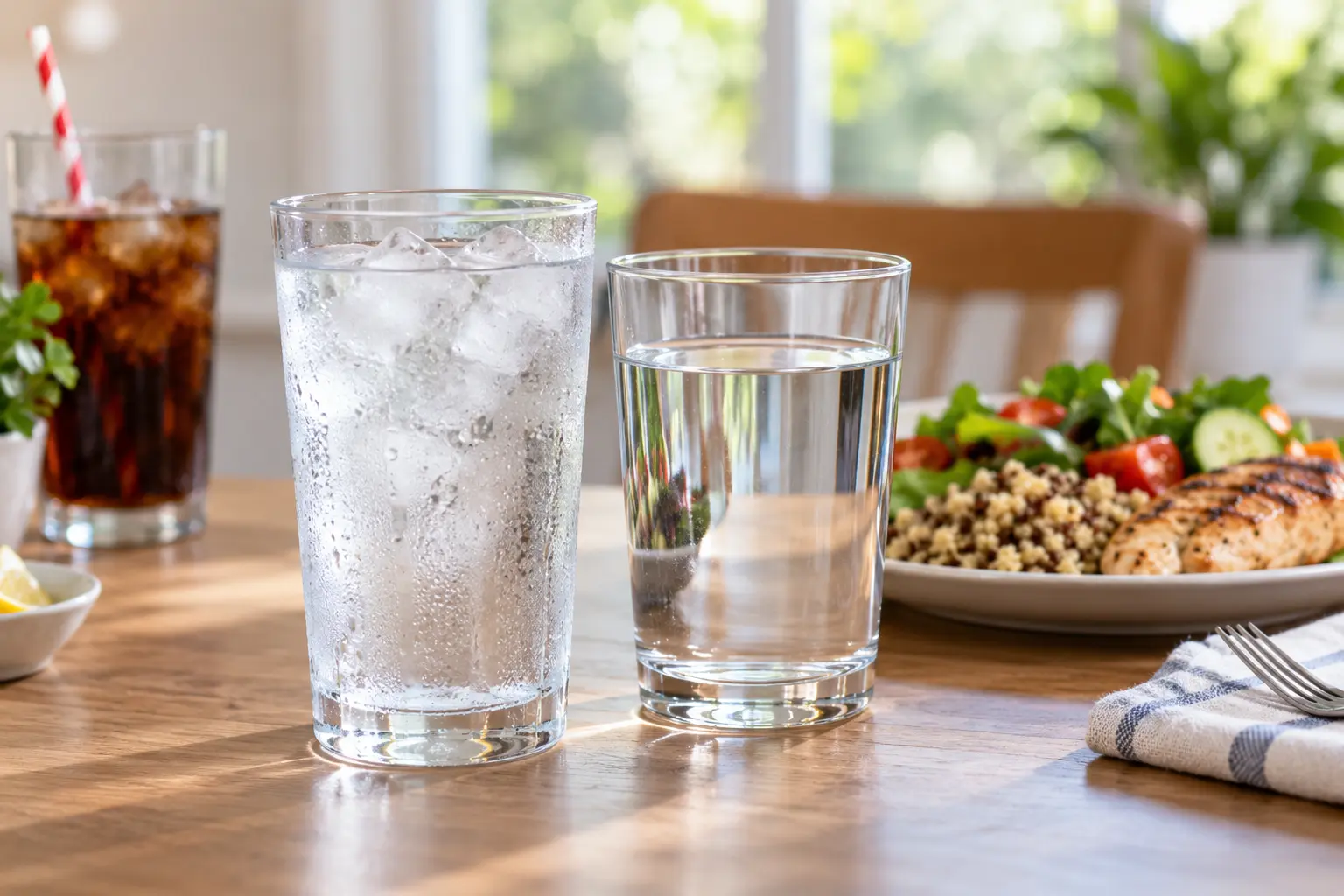
One food calorie is a kilocalorie: enough energy to warm one kilogram of water by one degree Celsius. Warming 500 milliliters of water from 5°C to about 37°C therefore requires roughly 16 kilocalories in a simplified calculation. Real physiology is more complex, but the calculation shows the scale.
Even this theoretical amount is not a special fat-loss signal. It is tiny relative to a day's intake and expenditure, and the body regulates temperature through an integrated system.
Why research headlines conflict
An influential early study reported a large rise in metabolic rate after 500 milliliters of water and attributed part of the response to warming. Later work has produced different findings depending on participants, water amount and temperature, equipment, timing, and experimental controls.
A percentage headline can sound dramatic when calculated from resting expenditure over a short window. The absolute number and reproducibility matter more.
Water can help without thermogenesis
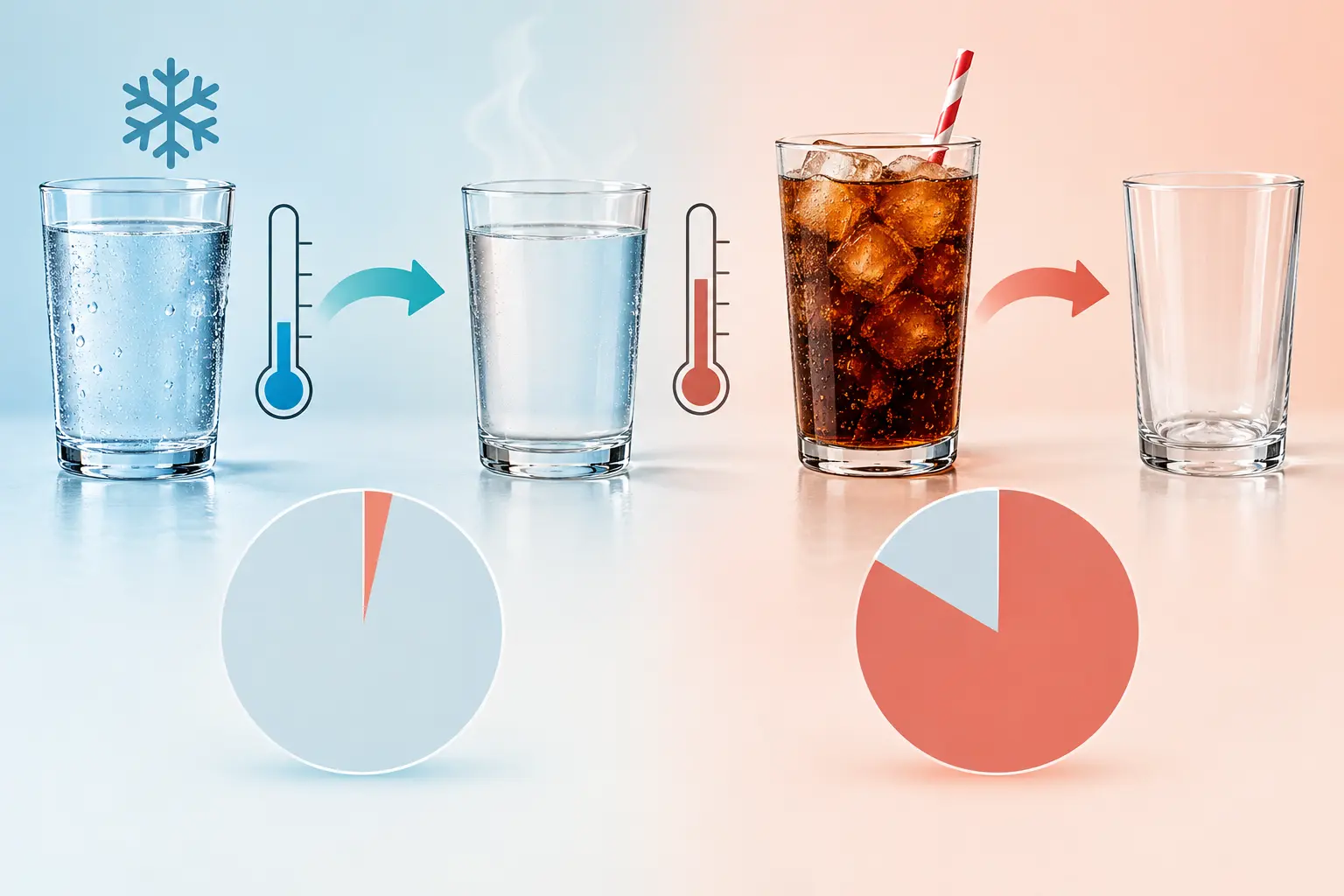
Replacing soda, sweet coffee, juice, or alcohol with water can reduce intake directly. Water around meals may help some people with routine or fullness, while others notice little change. Adequate fluid also supports physical activity and normal function.
None of these benefits requires icy water. Warm, cool, sparkling, or room-temperature water can serve the same substitution role if it is unsweetened and personally appropriate.
Cold water can change the scale immediately
Drinking 500 milliliters adds about half a kilogram of mass until the water is distributed and excreted. That short-term scale rise is not fat gain. Sweating or urination can later reduce scale weight without representing fat loss.
For consistent measurements, weigh before breakfast under similar hydration and bathroom conditions rather than using dehydration to chase a lower number.
More water is not always better
Forcing very large amounts quickly can dilute blood sodium and become dangerous. Needs vary with body size, climate, exercise, food, pregnancy, illness, and medication. Endurance activity may require a planned fluid and electrolyte strategy rather than water alone.
People with heart, kidney, liver, or endocrine conditions may have individualized fluid advice. Follow the treating clinician rather than an online gallon challenge.
Separate substitution from temperature
Maya replaces a 180-calorie sweet drink at lunch with cold water. The meaningful arithmetic is the drink she no longer consumes, not the few theoretical calories required to warm the water. If she prefers room-temperature water, almost all of the substitution benefit remains.
She records the beverage change for two weeks and watches hunger, meals, activity, and weekly weight averages instead of adding “cold-water calories” to her tracker. Preference is a valid criterion.
Test the decision, not a metabolism myth
Record what the water replaces, how much you drink, whether it improves exercise comfort, and whether very cold water causes headache, tooth sensitivity, cramping, or reduced intake. Keep whichever safe temperature helps you drink appropriately.
Do not multiply the theoretical warming calculation by dozens of glasses and present the annual total as predicted fat loss. That assumes a fixed response, no compensation, perfect repetition, and direct conversion of calculated energy into lost fat. The reliable win is usually mundane: water is available, replaces a caloric beverage, and supports planned activity.
Turn the mechanism into a useful decision
Temperature preference can still affect behavior. Some people drink more during exercise when water is cool; others tolerate room-temperature fluid better. The useful temperature is the one that supports appropriate intake without pain or gastrointestinal discomfort. Record hydration separately from a calorie-burning claim. If water replaces a sweetened drink, credit the substitution; if it is added beside the same drink, no equivalent saving occurred. This keeps the arithmetic honest and the habit easy to repeat.
Use an evidence ladder before believing a calorie claim
Separate four questions before turning a laboratory effect into a weight-loss strategy. Does the mechanism exist? Can researchers measure it? How large and durable is the change? Does it improve body weight, waist, fat mass, health, or adherence in real life? A statistically detectable rise in expenditure may still be too small, brief, or variable to matter on the scale.
Put controlled human outcome trials above acute metabolic measurements, and acute measurements above animal or cell mechanisms. Check the actual food, compound, temperature, dose, exposure time, participants, and comparator. Do not annualize an effect recorded for a few hours as though it repeats unchanged every day. Appetite, movement, tolerance, environment, and behavior can compensate.
Protect the large levers first: a sustainable intake pattern, adequate protein and fiber, daily movement, resistance training, sleep, and medical care when needed. A thermogenic effect can exist inside that system, but it cannot make an unmeasured calorie deficit reliable or turn discomfort into evidence of fat loss.
Run a practical two-week reality check
- Define the claim. Write the exact outcome: fullness, meal quality, warmth, beverage substitution, daily intake, or weight trend. “Faster metabolism” is too vague.
- Record the baseline. Use comparable morning weights, a weekly waist measure, ordinary activity, sleep, hunger, and relevant symptoms.
- Change one variable. Keep the rest of the eating and activity plan as stable as practical.
- Measure execution first. A strategy cannot be judged if it happened only on two unusually good days.
- Compare averages. Interpret at least two weekly averages, not the highest or lowest reading.
- Keep only useful changes. Continue when the tactic improves nutrition, comfort, or consistency; stop when it adds risk, obsession, or inconvenience without a meaningful benefit.
Two weeks cannot prove fat loss from a tiny thermogenic mechanism. It can show whether the behavior is tolerable and whether it changes the part of the routine that matters. Longer trends are required for body-composition conclusions.
Where Fat Burn Active fits
Fat Burn Active is marketed through thermogenic ingredients, but a food, cold, or water mechanism does not prove that the finished supplement produces meaningful fat loss. Ingredient studies use specific preparations and doses; their effects cannot be added together or transferred automatically to a multi-ingredient formula. Feeling warm, stimulated, or less hungry is not a body-fat measurement.
Treat Fat Burn Active as an optional addition, not a substitute for Does Drinking Cold Water Burn Extra Calories?. Review its listed ingredients and limitations in our product analysis. If the evidence, warnings, and cost fit your decision, verify the current formula and purchase options. We may earn a commission.
Frequently asked questions
Does a higher metabolic rate automatically mean fat loss?
No. The size and duration of the change, total intake, total expenditure, compensation, and time determine whether body fat changes.
Can several small thermogenic tactics be added together?
You cannot assume separate study effects are additive. Combining tactics may change appetite, sleep, comfort, hydration, or safety.
Does sweating show that extra calories are being burned?
No. Sweating mainly regulates temperature and changes body water; it does not measure fat loss.
Should a calorie target change because of one thermogenic food or exposure?
Usually not. Treat the effect as uncertain and calibrate the complete plan from multi-week trends.
Sources
- Water-Induced Thermogenesis Study
- Water Drinking and Energy Expenditure
- National Academies: Water and Electrolytes
- Exercise-Associated Hyponatremia Consensus
Sources reviewed September 14, 2026. This article is general educational information, not medical advice, diagnosis, or treatment.