
The same workout can be counted twice
If a calculator multiplies resting needs by an “active” factor, planned exercise is already represented approximately. Adding the watch's workout number on top may count activity twice. A different system may start with a conservative baseline and add a planned allowance on training days. Either can work, but mixing them creates invisible arithmetic errors.
Also distinguish active calories from total calories. Some devices show energy above rest; others show total energy during the session, which includes calories you would have burned while resting.
Use a clear energy ledger
Exercise can change the rest of the day
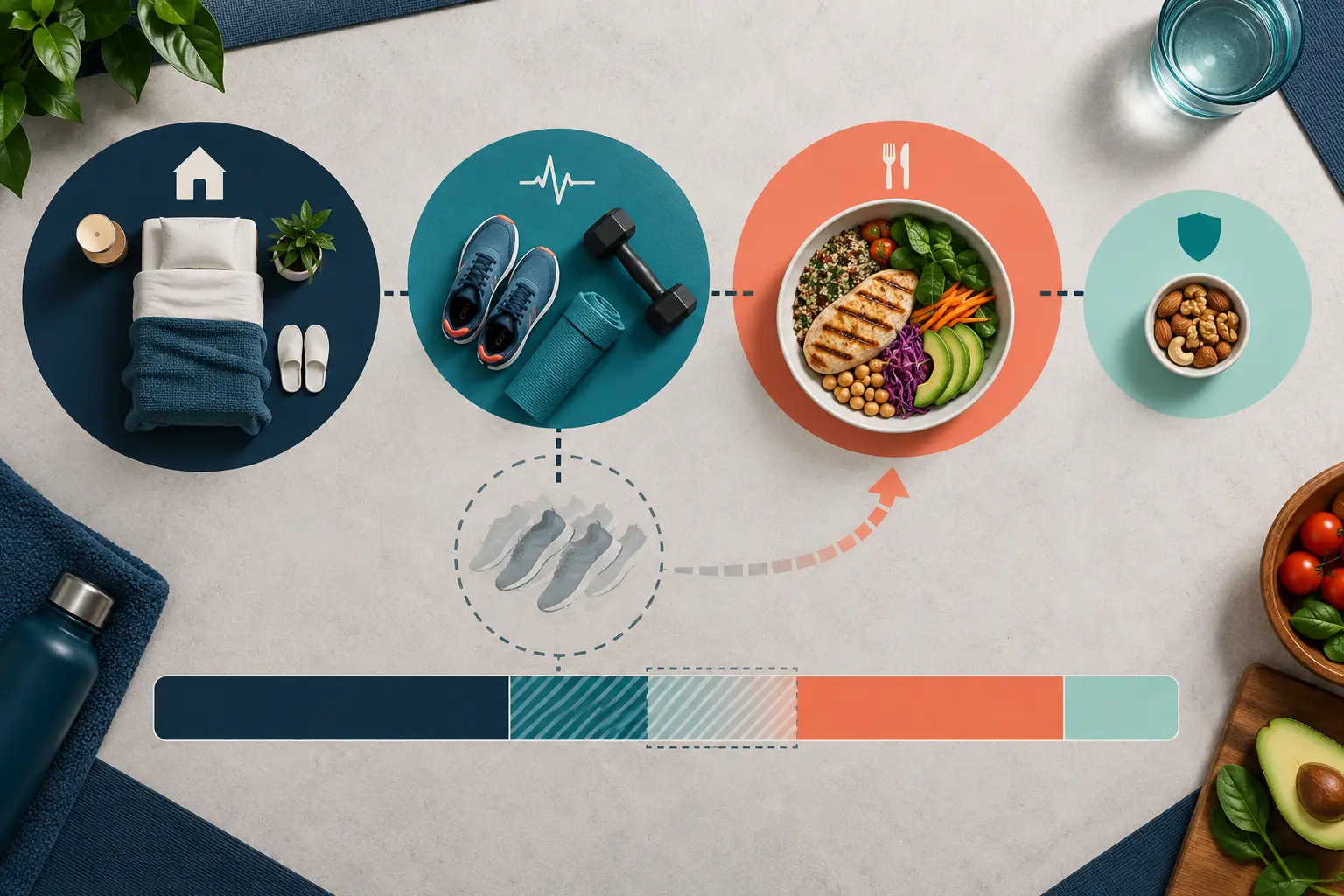
A workout may increase appetite, encourage a larger reward meal, or leave someone sitting more afterward. These responses do not erase the health benefits of exercise, but they mean the device total cannot be treated as a clean addition to expenditure. As fitness improves, the same session may also require different effort.
Track training for fitness and function first. Let body-weight and waist trends help calibrate the calorie plan instead of making food an exact payment for each workout.
Choose one of two practical methods
Fixed-target method: estimate maintenance using a realistic average activity level, set a consistent intake target, and do not add individual workout calories. Review the trend after several weeks. This is simple and reduces daily device dependence.
Variable-target method: use a lower baseline that excludes planned exercise, then add a conservative pre-defined training-day allowance. This can support long endurance work or appetite management, but it requires clear rules and should not copy the wearable output blindly.
Example: the 500-calorie workout that was already included
Alex uses a moderately active maintenance estimate, subtracts a planned deficit, then adds the treadmill's 500-calorie display to dinner. The activity factor and machine number both attempt to represent the same session. His intended deficit may shrink substantially.
He switches to a fixed target and monitors four weekly averages. On unusually long training days he uses a planned recovery meal based on performance and hunger, not a one-for-one machine reimbursement.
Fuel training without turning the watch into a food bank
Long, intense, or frequent exercise may require more carbohydrate, protein, fluid, and total energy than a sedentary plan. Persistent dizziness, declining performance, recurrent injury, menstrual disturbance, sleep disruption, or extreme hunger can signal that the combined deficit and training load is inappropriate.
Adjust around the training goal with a dietitian or clinician when necessary. The answer is not always “eat back zero,” just as it is not “eat back everything.”
A deeper calibration check
Build the ledger before the workout begins. Write the maintenance method, the activity level it assumes, the fixed intake target, and the rule for unusually long or demanding sessions. If the method already represents normal weekly exercise, label the watch number “training information only.” This one note prevents a display from silently changing the food budget.
Separate ordinary training from exceptional demand. A thirty-minute routine that occurs three times every week belongs in the average. A multi-hour hike, tournament, long ride, or endurance session may justify planned additional fuel, especially for performance and recovery. Decide the allowance from the session context and professional guidance rather than from a single device total.
Review compensation as part of the calculation. Compare hunger, post-workout portions, steps outside training, sitting time, sleep, and next-day fatigue. If hard sessions repeatedly lead to larger intake and less movement, adding more workouts may not create the expected deficit. Modify training load or meal structure without pretending the exercise was useless.
Use the smallest stable system. Many people do well with one fixed target and a recovery meal already included. Athletes may need training-day and rest-day ranges. Both approaches should converge on adequate nutrition, sustainable progress and useful performance. The final test is not whether spreadsheet subtraction looks exact; it is whether multi-week trends match the goal while health, function and adherence remain acceptable.
The final accounting rule
Label every calorie number by source and purpose. A watch estimate can describe a session; an activity factor can build a weekly target; observed trends can calibrate the plan. Do not let one number silently perform all three jobs.
Use a two-week calibration loop
Choose one calorie estimate and keep the method stable for fourteen days. Record food with consistent detail, use comparable morning weights, note waist, steps or training, sleep, hunger, and unusual events. Compare weekly weight averages rather than selecting the highest or lowest day. The purpose is not to prove a calculator correct; it is to learn how the estimate behaves in your real routine.
If the direction differs from the plan, investigate measurement consistency and adherence before changing the target. Restaurant meals, cooking oils, drinks, weekend portions, device settings, constipation, sodium, menstrual timing, and new training can obscure the signal. Change one variable, hold it long enough to evaluate, and schedule the next review.
Do not keep cutting intake when hunger, fatigue, sleep, mood, training, or daily function is deteriorating. People with diabetes, pregnancy, eating-disorder history, frailty, major illness, or medicines that affect appetite, glucose, fluid balance, or heart rate need individualized guidance.
Where Fat Burn Active fits
Fat Burn Active cannot make a wearable calorie number accurate, calculate maintenance, or prove that a deficit exists. Stimulants can also change heart rate, sleep, appetite, and spontaneous movement, which makes a poorly controlled self-test harder to interpret. Evidence for an ingredient cannot be transferred automatically to the complete formula.
Treat Fat Burn Active as an optional addition, not a substitute for Do Exercise Calories Count Toward Your Deficit?. Review its listed ingredients and limitations in our product analysis. If the evidence, warnings, and cost fit your decision, verify the current formula and purchase options. We may earn a commission.
Frequently asked questions
Are maintenance calories one exact number?
No. They are an estimate and practical range that changes with body mass, activity, environment, intake, and normal day-to-day behavior.
Should I change calories after one flat week?
Usually not. Water and digestive changes can hide the trend. Confirm several comparable weeks and execution first.
Can a lab test measure total daily expenditure?
Indirect calorimetry can measure resting expenditure under specified conditions. Total free-living expenditure requires additional methods or assumptions.
Is faster weight loss always a better-calibrated deficit?
No. Rapid changes can include water and lean tissue, and an overly aggressive target may impair recovery or adherence.
Sources
- Physical Activity Guidelines for Americans
- NIDDK Body Weight Planner
- Stanford: Fitness Trackers and Energy Expenditure
- National Academies: Dietary Reference Intakes for Energy
Sources reviewed September 14, 2026. This article is general educational information, not medical advice, diagnosis, or treatment.