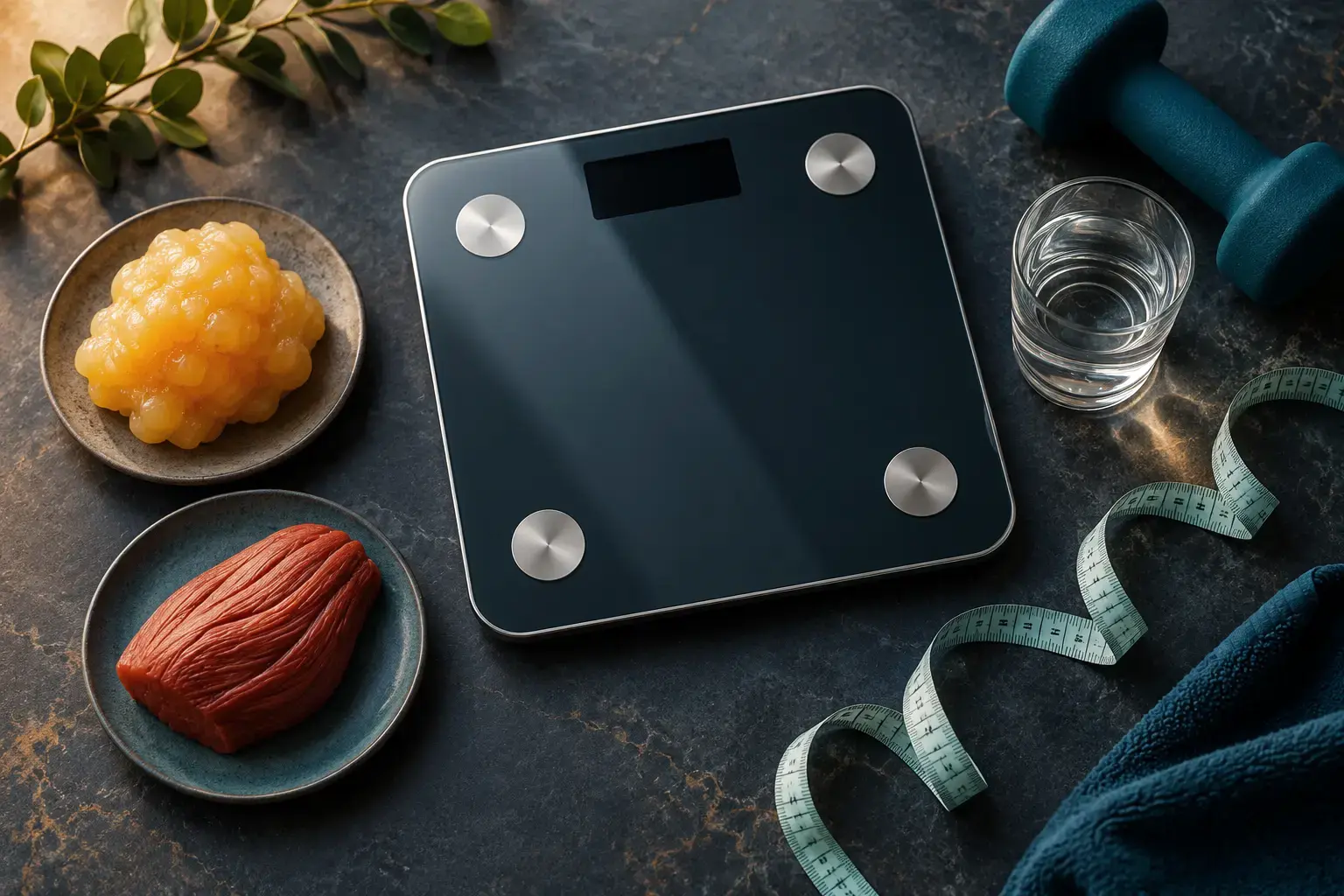
What changes inside an adipocyte
An adipocyte stores energy mainly as triglyceride in a large lipid droplet. With sustained surplus, the droplet expands and the cell enlarges. During negative energy balance, triglyceride is broken down, fatty acids and glycerol are released, and tissues can use them. The cell becomes smaller but usually remains available to store energy again.
Fat tissue is not passive packaging. It contains vessels, immune cells and connective tissue and releases signaling molecules. Smaller average cell size and better tissue function can matter even if the number of cells barely changes.
What adult cell-turnover research means
A landmark study used atmospheric carbon-14 incorporated into DNA to estimate adipocyte age. It found adult fat-cell number to be tightly regulated, including after marked weight loss, while roughly 10% of cells renewed annually. This supports shrinkage as the central adult weight-loss response.
The result does not say no adipocyte can ever die or form. Severe obesity, aging, disease, surgery and tissue remodeling complicate the biology. The defensible conclusion is narrower: ordinary dieting should not be marketed as erasing a chosen population of cells.

Why smaller cells may refill
After weight loss, energy needs fall because a smaller body costs less to maintain and move. Appetite may increase, and daily movement can decline. Remaining adipocytes can enlarge again if intake exceeds expenditure. That is physiology interacting with environment, not evidence that maintenance is impossible.
Long-term meal structure, resistance training, movement, sleep, self-monitoring and appropriate medical treatment can support maintenance. The objective is sustainable balance—not keeping cells “empty” through constant hunger.
Do cosmetic procedures remove cells?
Liposuction physically removes adipose tissue from treated regions, and some cosmetic procedures damage localized cells. These are contouring interventions, not general obesity treatment, and do not stop remaining cells or other depots from enlarging. Risks and expectations require a qualified clinician.
Exercise cannot transform an adipocyte into a muscle cell. Fat and muscle are separate tissues: fat mass can fall while resistance training preserves or builds muscle.
Separate mechanism, measurement, and outcome
Three questions are often collapsed into one. First, can a biological event happen—for example, can fatty acids leave an adipocyte, can glycogen bind water, or can hormones influence depot behavior? Second, can a tool measure that event accurately? Third, does the event produce a meaningful long-term outcome for a person? A plausible mechanism does not automatically answer the measurement or outcome questions.
Give the greatest weight to human research that uses a relevant population, sufficient duration, a comparison group, and a measure that matches the claim. A short experiment measuring substrate oxidation cannot establish months of finished-product fat loss. An association between a hormone and body shape cannot prove that lowering one daily reading will reshape a chosen region. A scale trend cannot reveal which tissue changed without supporting methods.
For supplement claims, match the exact ingredient form and amount, then look separately for evidence on the complete sold formula. Multi-ingredient products can combine uncertain doses, interactions, and stimulant exposure. Testimonials cannot isolate these effects because users frequently change food, activity, sleep, and expectations at the same time.
A 14-day interpretation protocol
- Days 1–3: observe ordinary intake, morning weight, waist conditions, sleep, activity, sodium, carbohydrate pattern, and symptoms without reacting to each number.
- Days 4–10: hold the core routine reasonably consistent. Use comparable weigh-ins and note only major disruptions such as travel, illness, restaurant meals, hard training, or menstrual-cycle changes.
- Days 11–14: calculate two seven-day averages and review behavior before interpreting the direction.
Fourteen days may reveal obvious noise, but it is not always long enough to prove or disprove fat loss. If the expected change is small, menstrual cycles are relevant, or measurements are sparse, continue for another comparable period. Do not respond to an unexplained high day by fasting, dehydrating, doubling exercise, or increasing a stimulant. Those reactions create new noise and can make the plan less safe.
Write the conclusion in cautious language: “the trend is consistent with progress,” “fluid is a plausible short-term explanation,” or “the current data do not show change.” This is more accurate than claiming a single reading proves fat gain, metabolic damage, or supplement success.
How to track the result without fooling yourself
A bathroom scale reports total mass. It cannot separate fat, water, glycogen, lean tissue, bone, organs, or food still moving through the digestive tract. Weigh under comparable conditions—often after waking and using the bathroom, before food—and calculate a seven-day average. Add a waist measurement every two to four weeks, consistent photographs if useful, and a short behavior record covering meals, activity, sleep, travel, hard training, and unusual sodium or carbohydrate intake.
Judge agreement across several weeks. One low reading after sweating and one high reading after a restaurant meal are weak evidence about adipose tissue. If the average, waist, and execution record remain unchanged across three to four well-documented weeks, reassess intake and movement rather than using water as an unlimited explanation. Change one variable and set another review date.
Build the part of the plan you can control
Use a moderate energy deficit that leaves room for adequate nutrition and ordinary life. Build meals around an appropriate protein source, fiber-rich plants, and portions that fit hunger and the goal. Include resistance training to preserve or build capability, accumulate aerobic activity and everyday movement appropriate to health, and protect sleep. These actions affect overall energy balance and health; they cannot order one body region to release fat first.
Faster scale loss is not automatically better. Severe restriction can worsen hunger, mood, recovery, and adherence while producing dramatic water changes that look like proof. Medical conditions, pregnancy, eating-disorder history, and medicines require individualized care. Rapid unexplained weight change, marked swelling, one-sided leg swelling, breathing difficulty, fainting, or severe weakness should be assessed rather than treated as routine diet noise.
Where Fat Burn Active fits
A thermogenic or fat-oxidation claim is not evidence that a product destroys adipocytes. Fat Burn Active is optional and cannot replace nutrition, activity, sleep, hydration, or medical care. Its current official page lists at least 120 mg caffeine per serving from caffeine anhydrous and guarana, additional green-tea caffeine that is not quantified, and bitter-orange extract standardized to 6 mg synephrine. Warmth, stimulation, sweating, or a short-term scale change cannot prove a finished-product fat-loss effect.
Once the practical steps in Fat Cells and Weight Loss: Do They Disappear? are working, decide whether an optional supplement adds enough value. Start with the Fat Burn Active review; if the formula and limitations are acceptable, see current availability and official ordering details. We may receive a commission.
Frequently asked questions
Can a home scale identify fat loss?
No. It measures total mass. Multi-week averages, waist, and consistent behavior provide better context.
Does sweating show fat leaving?
No. Sweat primarily changes body water; a lower post-workout number is not a direct fat measurement.
When should a weight change be checked medically?
Seek qualified help for rapid unexplained changes, significant swelling, breathing difficulty, fainting, severe weakness, or symptoms related to disease or medicines.
Sources
- Spalding et al.: Dynamics of fat cell turnover
- Endotext: Adipose Tissue
- NIDDK: Treatment for Overweight and Obesity
- NIH ODS: Weight-Loss Supplements
Sources reviewed September 13, 2026. This article is general educational information, not medical advice, diagnosis, or treatment.