
The journey starts with digestion
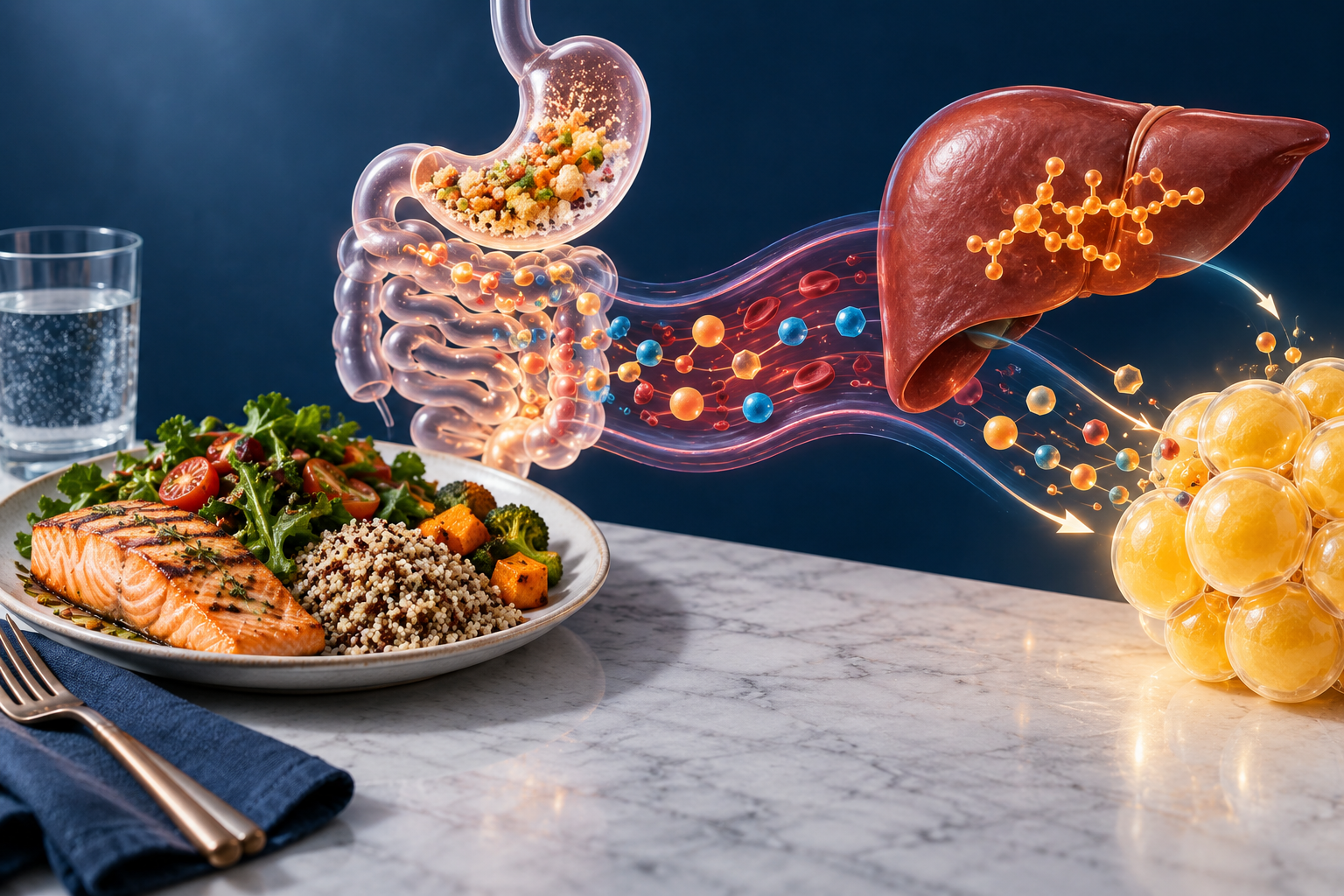
Dietary triglycerides are too large to travel directly from a meal into the bloodstream. Digestion breaks them into components that can be absorbed by intestinal cells. Inside those cells, fatty acids are reassembled into triglycerides and packaged into lipoprotein particles called chylomicrons.
Chylomicrons enter circulation and deliver triglyceride-derived fatty acids to tissues. Lipoprotein lipase helps release those fatty acids. Muscle can oxidize them for energy, while adipose tissue can reassemble and store them as triglycerides for later use. Chylomicron remnants are cleared by the liver.
What insulin changes after a meal
Insulin rises in response to carbohydrate and, to different degrees, mixed meals. In the fed state it supports nutrient storage and suppresses the release of fatty acids from adipose tissue. This is not a metabolic mistake: alternating storage after meals with release between meals is part of normal energy management.
The error is to treat any temporary insulin rise as permanent fat gain. Hormone levels, fuel use, and storage flows change across the day. Long-term body-fat change reflects the net result after intake and expenditure are considered together.
Do carbohydrate and protein become body fat?
Carbohydrate is commonly used for immediate energy or stored as glycogen in liver and muscle. When total intake is high, carbohydrate also reduces how much fat is oxidized, which can indirectly make dietary-fat storage more likely. Converting large amounts of carbohydrate into new fatty acids—de novo lipogenesis—can occur, but the practical pathway depends on the overall dietary and energy context.
Why one meal does not decide fat gain
After a large meal, scale weight can rise from the physical mass of food and drink, sodium-related water retention, and restored glycogen with accompanying water. These changes can happen before any meaningful conclusion about fat mass is possible.
Can a fat burner stop post-meal fat storage?
No supplement should be assumed to cancel the energy from a meal. Ingredients marketed for thermogenesis, fat oxidation, appetite, or nutrient absorption act—if they act at all—through different mechanisms, usually with limited or uncertain effects. An acute change in fat oxidation does not prove less body fat weeks later.
Products that imply you can “block,” “melt,” or neutralize food without changing long-term intake deserve scrutiny. Start with our guide to how fat burners claim to work, then compare that mechanism with evidence from the effectiveness review.
What actually influences net fat storage?
- Total energy intake. Meal size matters, but the repeated daily and weekly pattern matters more.
- Total energy expenditure. Resting needs, movement, exercise, and the thermic effect of food contribute.
- Macronutrient mix. Protein, carbohydrate, fat, fiber, and food form influence digestion, satiety, and fuel use.
- Meal context. Activity before and after eating, glycogen status, and timing can change where nutrients are directed.
- Individual biology. Body composition, insulin sensitivity, health conditions, medicines, sleep, and genetics influence the response.
- Consistency. Repeated patterns determine long-term direction; a single meal is rarely the whole explanation.
A calmer response to a high-calorie meal
Do not try to punish the meal with extreme restriction, unsafe supplements, dehydration, or excessive exercise. Return to your normal routine, hydrate appropriately, prioritize filling foods, move as usual, and review the weekly pattern only when enough data exists.
Where Fat Burn Active fits
No supplement should be used to punish a meal or be described as blocking normal nutrient storage without relevant finished-product evidence. Fat Burn Active is optional and cannot replace nutrition, activity, sleep, medical care, or a reliable measurement system. Evidence about an individual ingredient does not prove that the finished formula produces the same outcome at the sold dose.
Review Fat Burn Active, then official details. We may receive a commission if you purchase through the official details link, at no extra cost to you.
Frequently asked questions
Does eating fat immediately make you fat?
Dietary fat can be stored efficiently after a meal, but body-fat gain is the net result of storage and release across time. One nutrient and one meal do not determine the full outcome.
Does eating at night cause more fat storage?
Timing may affect appetite, glucose responses, sleep, and adherence for some people, but total intake, expenditure, and the repeated pattern remain central.
Can walking after a meal help?
Post-meal movement can support glucose handling and contributes to daily activity. It does not erase the meal, but it can be a practical part of a healthy routine.
Sources
- Postprandial metabolism of meal triglyceride in humans
- Endotext: Introduction to lipids and lipoproteins
- Triglyceride metabolism in the liver
- NCBI Bookshelf: Lipolysis
Evidence reviewed September 7, 2026. Educational information only; not medical advice.
What determines the net result
Fat storage after a meal is normal and reversible. During the same day, the body repeatedly stores and releases energy. The meaningful question is the net balance across many meals and days—not whether dietary fat entered adipose tissue at one moment. Meal size, macronutrient composition, recent activity, glycogen status, insulin sensitivity, and total energy needs all influence fuel handling. This is why a single insulin spike or high-fat meal cannot diagnose future fat gain.
A four-week review process
- Week 1 — establish the baseline. Keep normal routines, collect the measures above, and note unusual travel, illness, restaurant meals, hard training, poor sleep, or other events that can distort the result.
- Week 2 — choose one controlled change. Define a behavior you can actually measure, such as a meal structure, a walking range, or a training target. Avoid changing food, exercise, supplements, and sleep at the same time.
- Week 3 — check execution before outcome. Ask whether the planned behavior happened often enough. A plan cannot be judged fairly from perfect weekdays followed by unrecorded weekends or from data collected under changing conditions.
- Week 4 — compare averages and context. Review direction, size, consistency, hunger, recovery, and practical cost. Continue when the trend and experience are acceptable; simplify or adjust one variable when they are not.
How to avoid a false conclusion
Association is not always cause. A lower scale reading after a new food, supplement, or workout may reflect water, meal timing, or random variation. A higher reading does not prove fat gain. Look for a repeatable pattern, a plausible mechanism, and agreement between several measures. Consumer wearables and home body-composition devices are useful for trends but are not laboratory instruments.
What a useful decision looks like
A useful conclusion is specific and reversible: keep the current approach for another review period, reduce the size of the change, improve measurement consistency, or ask a qualified professional about an individual concern. It is not “this one tactic always works” or “nothing works.” Record why you made the decision and what result would cause you to reconsider it. That simple rule reduces hindsight bias and helps separate a genuine response from ordinary fluctuation.
When to adjust
Keep the method stable long enough to see a trend. Change one major variable at a time, document the change, and reassess the result rather than reacting to a single day. Stop and seek qualified medical guidance when symptoms, medicines, a diagnosed condition, pregnancy, disordered-eating concerns, or an unusually rapid unexplained change make self-directed experimentation inappropriate.