
Why progress can be happening before you see it
Fat loss is gradual, while the mirror is viewed every day and water can hide change. Expectations shaped by edited photographs and aggressive advertising make normal progress feel too slow.
What may change first
These are observation windows, not promises. Smaller people or those seeking modest changes may see slower scale movement than people with larger starting energy needs.
What controls the timeline
- Starting fat mass and distribution.
- The real size and consistency of the energy deficit.
- Water and menstrual-cycle variation.
- Training history and muscle changes.
- Sleep, stress, medicines, and medical conditions.
- Accuracy of food and progress measurements.
When slow progress is not a plateau
A few flat days are not a plateau. Compare at least several weeks, standardize measurements, and check adherence. If waist and average weight both remain unchanged, reassess portions, liquid calories, weekends, movement, and recovery.
A realistic review schedule
Record weight under similar conditions, average it weekly, measure waist every two to four weeks, and take standardized photos monthly if helpful. Review strength, energy, hunger, and plan adherence at the same time.
Do fat burners make results visible faster?
Product claims often highlight rapid scale change without separating water from fat. Require body-composition evidence on the finished formula before assuming faster fat loss. Start with our evidence review.
Use a four-week observation window
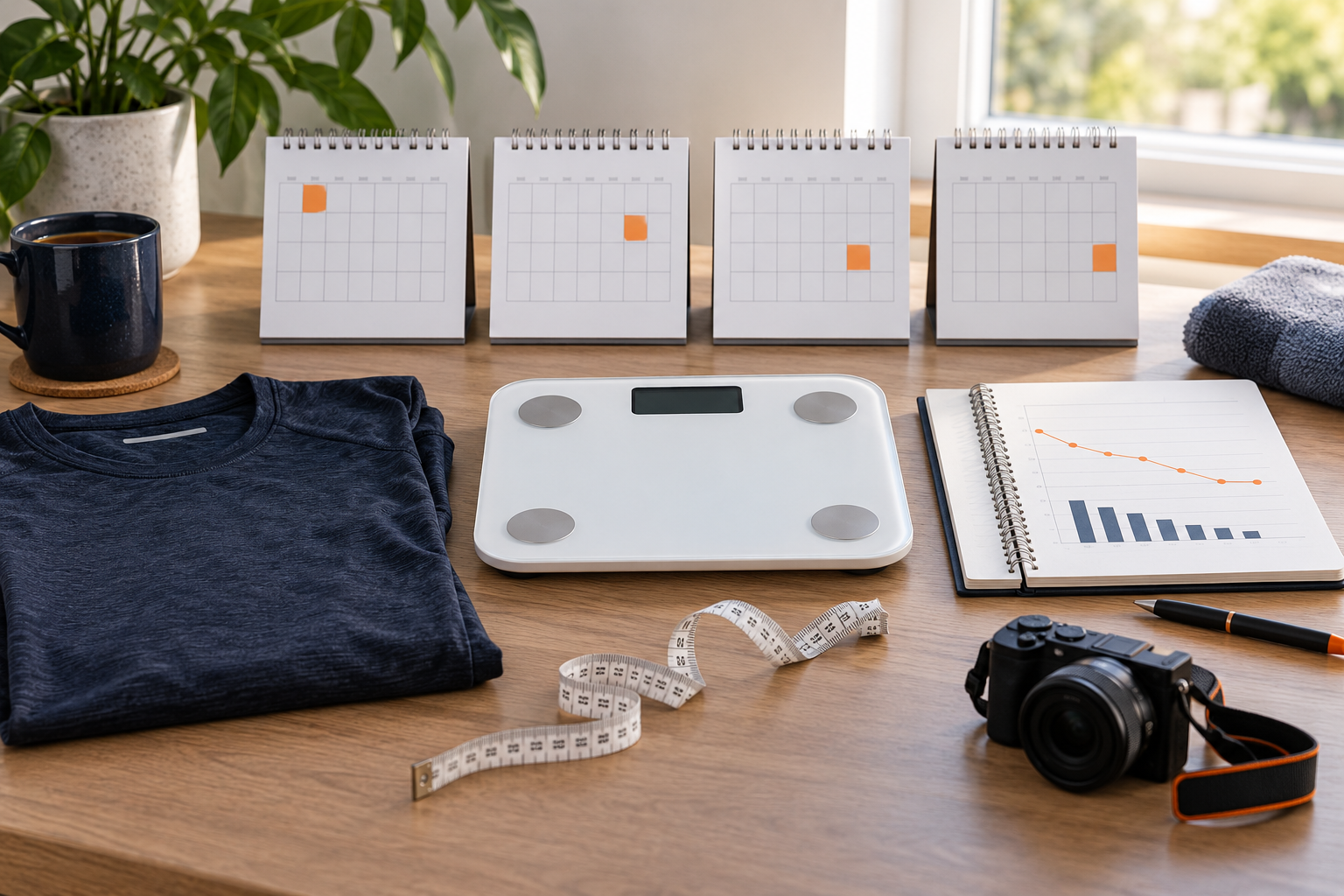
Choose consistent conditions before looking for a visible change. Record morning weight and calculate a weekly average; measure the waist at the same landmark every two to four weeks; use the same clothing, camera distance, posture, and lighting for photographs. Also record adherence, training performance, hunger, sleep, and major changes in sodium, carbohydrate, travel, illness, or menstrual cycle.
What the combined signals mean
Set a decision date, not an appearance deadline. Rapid loss, weakness, swelling, fainting, breathing difficulty, or other concerning symptoms should be assessed medically rather than celebrated as unusually fast progress.
Where Fat Burn Active fits
A rapid scale change after starting a product may reflect water, food intake, or digestive contents and does not establish faster fat loss. Fat Burn Active remains optional. It cannot replace an appropriate calorie target, nutritious meals, activity, resistance training, sleep, or medical care. Evidence for one ingredient is not proof that the complete formula produces the same outcome at its sold doses.
Once the practical steps in How Long Does It Take to Notice Fat Loss? are working, decide whether an optional supplement adds enough value. Start with the Fat Burn Active review; if the formula and limitations are acceptable, see current availability and official ordering details. We may receive a commission.
Why visual change arrives unevenly
Fat distribution, starting size, clothing, posture, and lighting affect visibility. Someone may notice a belt setting before a mirror difference, while another sees facial change before the waist moves. This variation does not identify a superior method. Repeat the same measurement system long enough to separate gradual tissue change from normal noise.
Noticeability also depends on the size of the change relative to the starting body and the observer. Avoid comparing your timeline with a cropped image or another person’s starting point.
Frequently asked questions
Why do others notice before I do?
Daily self-observation makes gradual change harder to detect.
Should I cut calories harder?
Not from one week of noisy data. Aggressive restriction can harm adherence and lean-mass retention.
Use milestones instead of a deadline
Visibility depends on starting size, fat distribution, the size of the change, clothing, lighting, water retention, and who is looking. The scale may detect a trend before the mirror; waist measurements may change before other people notice. Set process milestones for two weeks, trend-review milestones for four weeks, and broader visual reviews less often. This reduces the temptation to intensify a working plan because daily appearance seems unchanged.
A four-week review process
- Week 1 — establish the baseline. Keep normal routines, collect the measures above, and note unusual travel, illness, restaurant meals, hard training, poor sleep, or other events that can distort the result.
- Week 2 — choose one controlled change. Define a behavior you can actually measure, such as a meal structure, a walking range, or a training target. Avoid changing food, exercise, supplements, and sleep at the same time.
- Week 3 — check execution before outcome. Ask whether the planned behavior happened often enough. A plan cannot be judged fairly from perfect weekdays followed by unrecorded weekends or from data collected under changing conditions.
- Week 4 — compare averages and context. Review direction, size, consistency, hunger, recovery, and practical cost. Continue when the trend and experience are acceptable; simplify or adjust one variable when they are not.
How to avoid a false conclusion
Association is not always cause. A lower scale reading after a new food, supplement, or workout may reflect water, meal timing, or random variation. A higher reading does not prove fat gain. Look for a repeatable pattern, a plausible mechanism, and agreement between several measures. Consumer wearables and home body-composition devices are useful for trends but are not laboratory instruments.
What a useful decision looks like
A useful conclusion is specific and reversible: keep the current approach for another review period, reduce the size of the change, improve measurement consistency, or ask a qualified professional about an individual concern. It is not “this one tactic always works” or “nothing works.” Record why you made the decision and what result would cause you to reconsider it. That simple rule reduces hindsight bias and helps separate a genuine response from ordinary fluctuation.
When to adjust
Keep the method stable long enough to see a trend. Change one major variable at a time, document the change, and reassess the result rather than reacting to a single day. Stop and seek qualified medical guidance when symptoms, medicines, a diagnosed condition, pregnancy, disordered-eating concerns, or an unusually rapid unexplained change make self-directed experimentation inappropriate.
Sources
- CDC: losing weight
- Preserving muscle during weight loss
- Body-composition assessment
- NIDDK: Treatment for overweight and obesity
Evidence reviewed September 8, 2026. Educational information only; not medical advice.