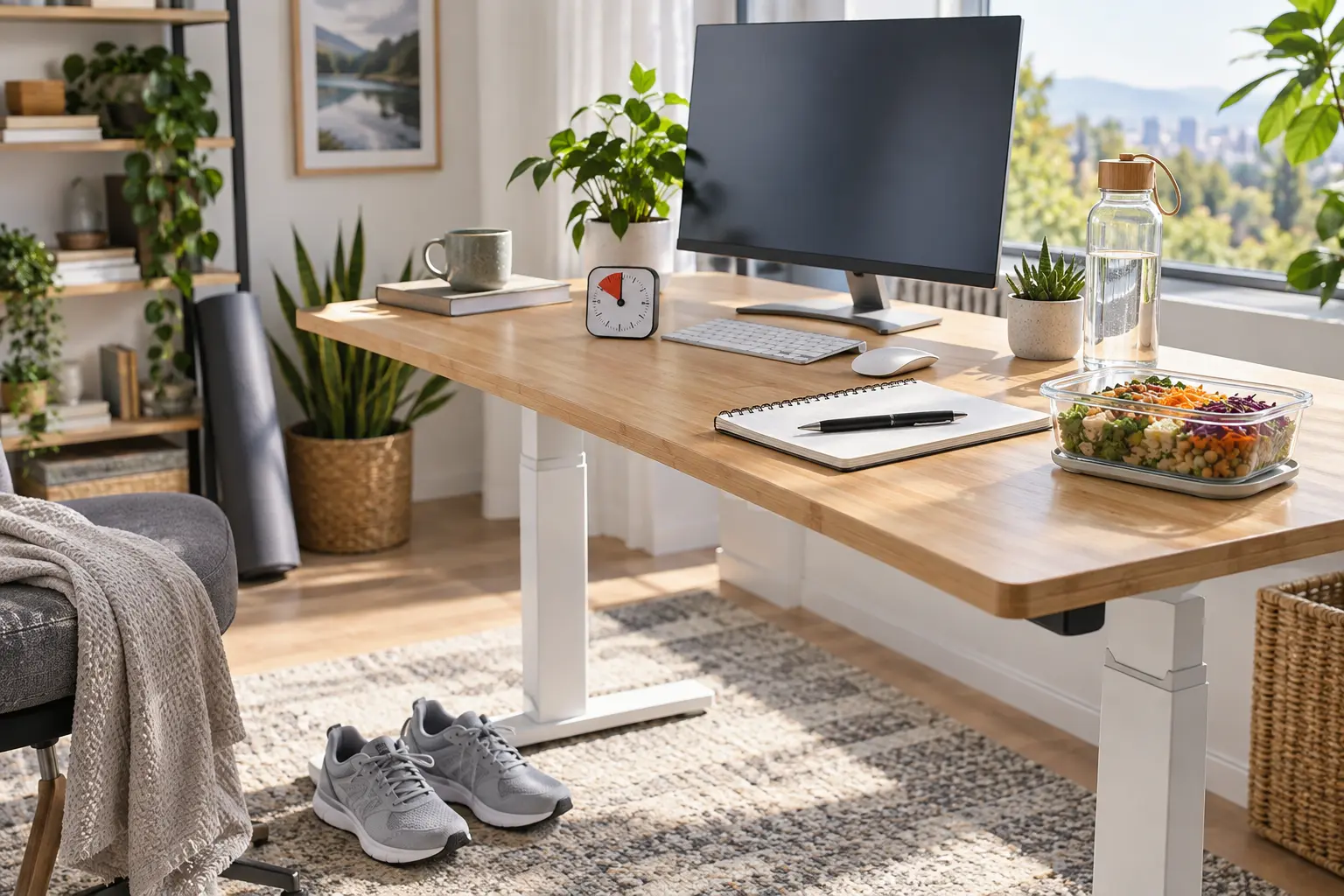
Why desk work changes the plan
Desk work reduces opportunities for incidental movement: walking between locations, standing, carrying, and changing posture. This component is often called non-exercise activity thermogenesis, or NEAT. It varies between people and can also fall when dieting makes someone tired. The result is not a “broken metabolism”; it is an environment that quietly makes total daily expenditure lower.
Search results often prescribe a magic step count or exercises performed in a chair. Neither is a complete strategy. Steps are a useful behavior measure, but the right increase depends on baseline ability, pain, commute, caregiving, and work rules. Desk exercises can interrupt sitting, yet they do not replace progressive resistance training or the overall energy balance.
Use movement snacks instead of one heroic session
Measure three ordinary workdays, then add a realistic amount—perhaps one short walk before work, five minutes after lunch, and two standing or walking breaks. Put the cue in the calendar and connect it to events you already do, such as finishing a call or refilling water. Phone calls taken standing, stairs for one or two floors, and a farther parking or transit stop can accumulate without requiring gym clothes.
The US Physical Activity Guidelines recommend adults work toward 150 to 300 minutes of moderate aerobic activity weekly plus muscle strengthening on two days. Inactive people are encouraged to start small. More is not automatically better when it causes pain, exhaustion, or compensatory eating. Choose a level that can be repeated during the busiest week.
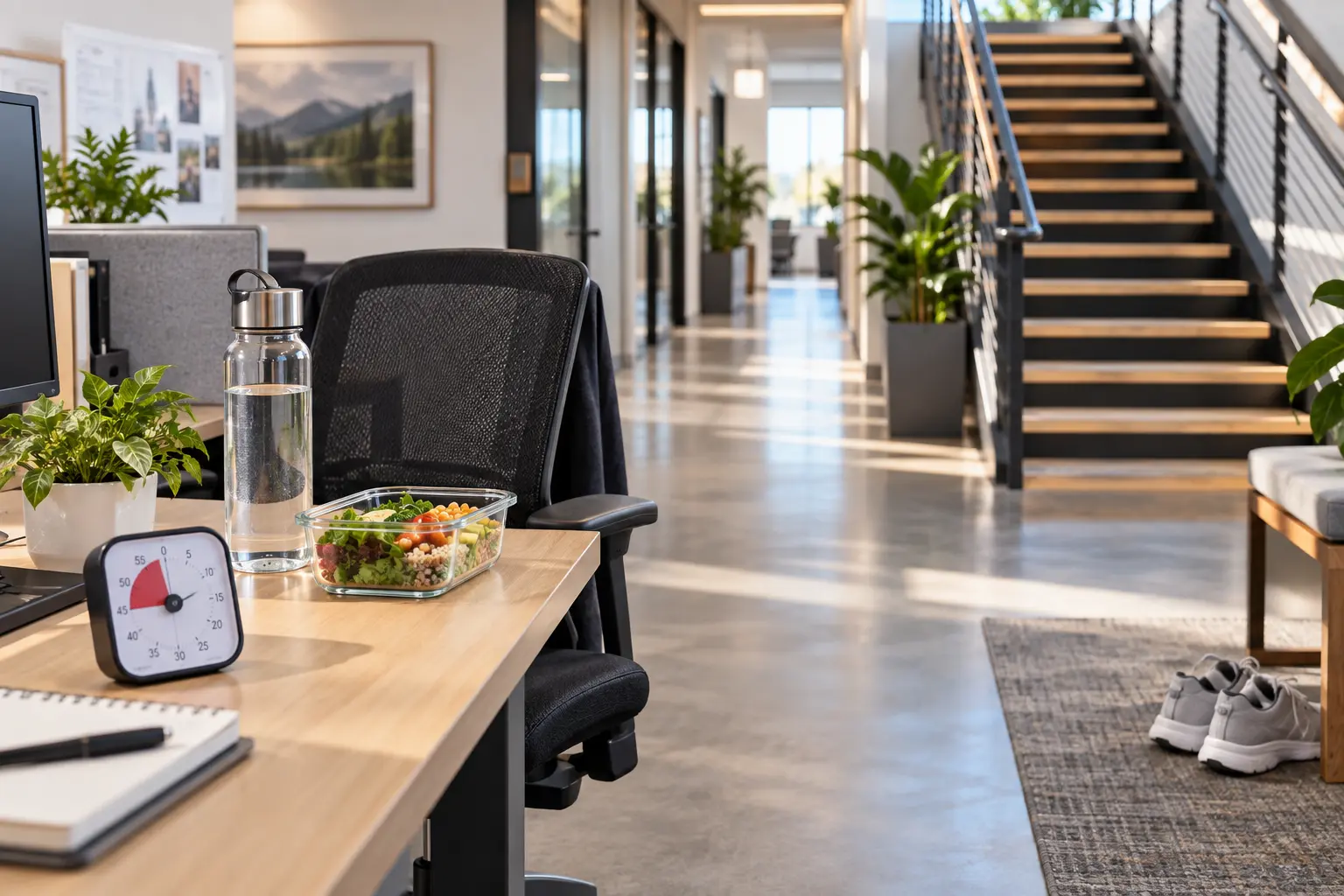
Design the desk food environment
A planned lunch should be filling enough to prevent a predictable afternoon raid on snacks. Build it around a meaningful protein source, vegetables or fruit, a high-fiber carbohydrate, and an amount of fat that fits the meal. Examples include chicken, beans, or tofu with vegetables and rice; Greek yogurt with fruit and oats; or a whole-grain sandwich with lean protein and a side salad.
Keep emergency food in a drawer or refrigerator: tuna pouches, lower-sugar yogurt, fruit, roasted chickpeas, or another option that suits your needs. Portion food away from the package and move communal sweets out of direct sight when possible. Liquid calories from specialty coffee, soft drinks, and repeated cream or sugar deserve attention because they are easy to consume without creating much fullness.
Strength training preserves capability
During weight loss, resistance training and adequate protein help preserve lean tissue better than dieting alone. Two full-body sessions can cover a squat or sit-to-stand, hinge, push, pull, carry, and trunk exercise. Home bands and adjustable dumbbells can work if a gym commute is the barrier. Progress gradually by adding repetitions, load, or control.
Cardio and walking support health and expenditure, while strength training protects function. They are partners, not competing camps. Schedule sessions like appointments, but keep a short fallback version for overtime days. Twenty focused minutes is not a failed workout.
A realistic office-day template
After waking, eat normally or follow the meal pattern that controls your hunger best. Walk ten minutes before opening email. At work, stand or walk briefly after every two or three focused blocks. Eat the packed lunch away from the screen, then take a short walk. Use the prepared snack only when physically hungry. Finish with a commute walk or a scheduled training session.
This template is not a metabolic schedule. It simply turns good intentions into visible decisions. A person who cannot leave the desk can use standing calls and movement before and after the shift. Someone with disability or pain should adapt activity with a qualified professional rather than chase a universal step target.
Run a two-week desk-job audit
For two weeks, record only variables you can act on: packed lunch versus unplanned lunch, sweetened drinks, number of movement breaks, intentional activity, bedtime, and a simple hunger score before the workday ends. Do not use the log to judge yourself. Use it to find the hour when the environment repeatedly wins.
If 4 p.m. is the pressure point, the solution may be a more substantial lunch, a planned snack, and a short walk—not greater willpower. If late meetings erase training, move two sessions to mornings or lunch and keep a ten-minute fallback. When progress is absent after several consistent weeks, review portions and drinks before setting a much larger step goal. This sequence changes the highest-probability bottleneck without making the entire workday feel like a diet.
Turn the advice into a repeatable system
Start with a seven-day observation period rather than an aggressive overhaul. Record sleep, meal opportunities, drinks, movement, hunger, and the situations in which the plan breaks. Then choose two changes that remove the most friction. Examples include packing one reliable meal, scheduling a ten-minute walk, keeping a shelf-stable backup, or protecting a consistent sleep window. A small system used on difficult days is more valuable than an ideal routine used only when life is quiet.
Review trends weekly. Use a seven-day weight average if weighing is appropriate for you, plus waist, energy, sleep, strength, and adherence. Day-to-day scale changes largely reflect water, glycogen, food in the gut, and other short-term factors. Adjust one variable at a time after two to four consistent weeks. Faster restriction can increase hunger, fatigue, and the chance of abandoning the plan.
Medical conditions, pregnancy, eating-disorder history, medicines, or persistent fatigue deserve individualized care. Seek prompt help for chest pain, fainting, severe shortness of breath, or other concerning symptoms. The goal is a routine that supports health and can survive the real schedule—not a punishment for having a demanding one.
Where an optional supplement fits
Food structure, sleep, movement, and environment do the main work. A supplement is optional and cannot compensate for missed sleep, an unsustainable deficit, or a schedule with no reliable meals. If caffeine already supports long desk hours, adding a stimulant formula can increase total exposure and may worsen sleep. Count coffee, tea, energy drinks, medicines, and botanical caffeine together.
The current Fat Burn Active page lists at least 120 mg caffeine per serving from caffeine anhydrous and guarana, with additional green-tea caffeine not quantified, plus bitter-orange extract standardized to 6 mg synephrine. It directs adults to take two capsules with 300 ml water, preferably before a meal or training, not on an empty stomach, and warns against combining it with other caffeine or similar-effect sources. Those details matter particularly for shift work, travel, and sleep disruption.
Once the practical steps in How to Lose Weight With a Desk Job are working, decide whether an optional supplement adds enough value. Start with the Fat Burn Active review; if the formula and limitations are acceptable, see current availability and official ordering details. We may receive a commission.
Frequently asked questions
How many steps should an office worker take?
There is no mandatory number. Measure your baseline and increase gradually in a way your health and schedule allow.
Can standing desks cause weight loss?
Standing changes posture and may reduce uninterrupted sitting, but it produces only a small energy difference. It is a cue for movement, not a fat-loss treatment.
Do I need a gym?
No. Walking and progressive home resistance training can build an effective plan.
Sources
- CDC: Healthy Eating for a Healthy Weight
- US Physical Activity Guidelines
- NIDDK: Treatment for Overweight and Obesity
- NIH ODS: Weight-Loss Supplements
Sources reviewed September 13, 2026. This article is general educational information, not medical advice, diagnosis, or treatment.