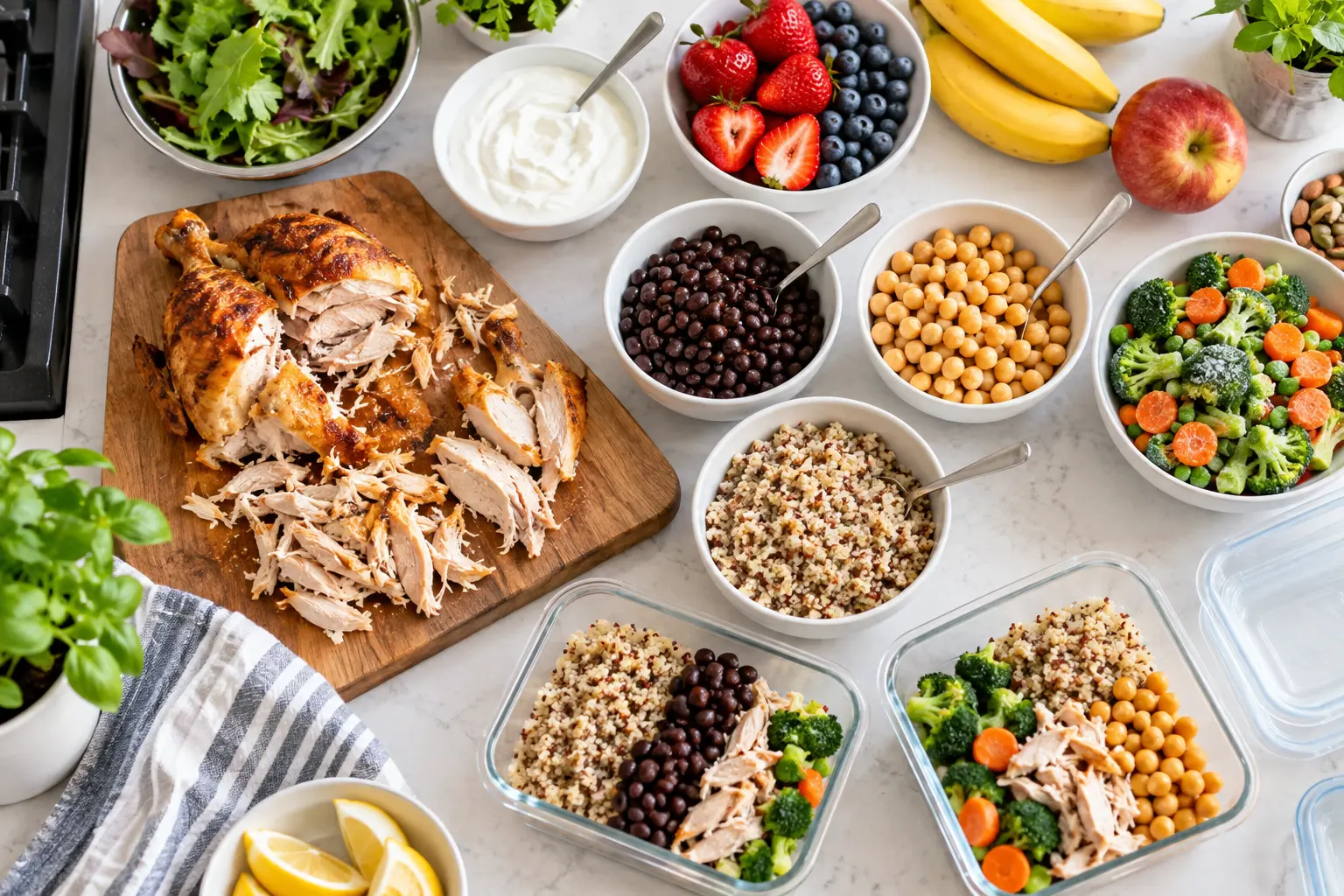
Scratch cooking is useful, not mandatory
Home-prepared meals can make ingredients and portions easier to control, but “cook everything yourself” is not practical for many workers, caregivers, students, and people with disabilities. Frozen vegetables, canned beans, rotisserie chicken, microwave grains, bagged salad, yogurt, eggs, and tinned fish can shorten preparation while preserving a useful meal structure.
Convenience is not a nutritional category. Compare labels within the category for protein, fiber, sodium, added sugar, and serving size. A frozen meal with adequate protein and vegetables may support the plan better than buying takeout while extremely hungry.
Use a four-part assembly formula
Not every plate must be visually perfect. The formula exists to prevent a snack from becoming an unsatisfying dinner and to make protein and produce automatic.
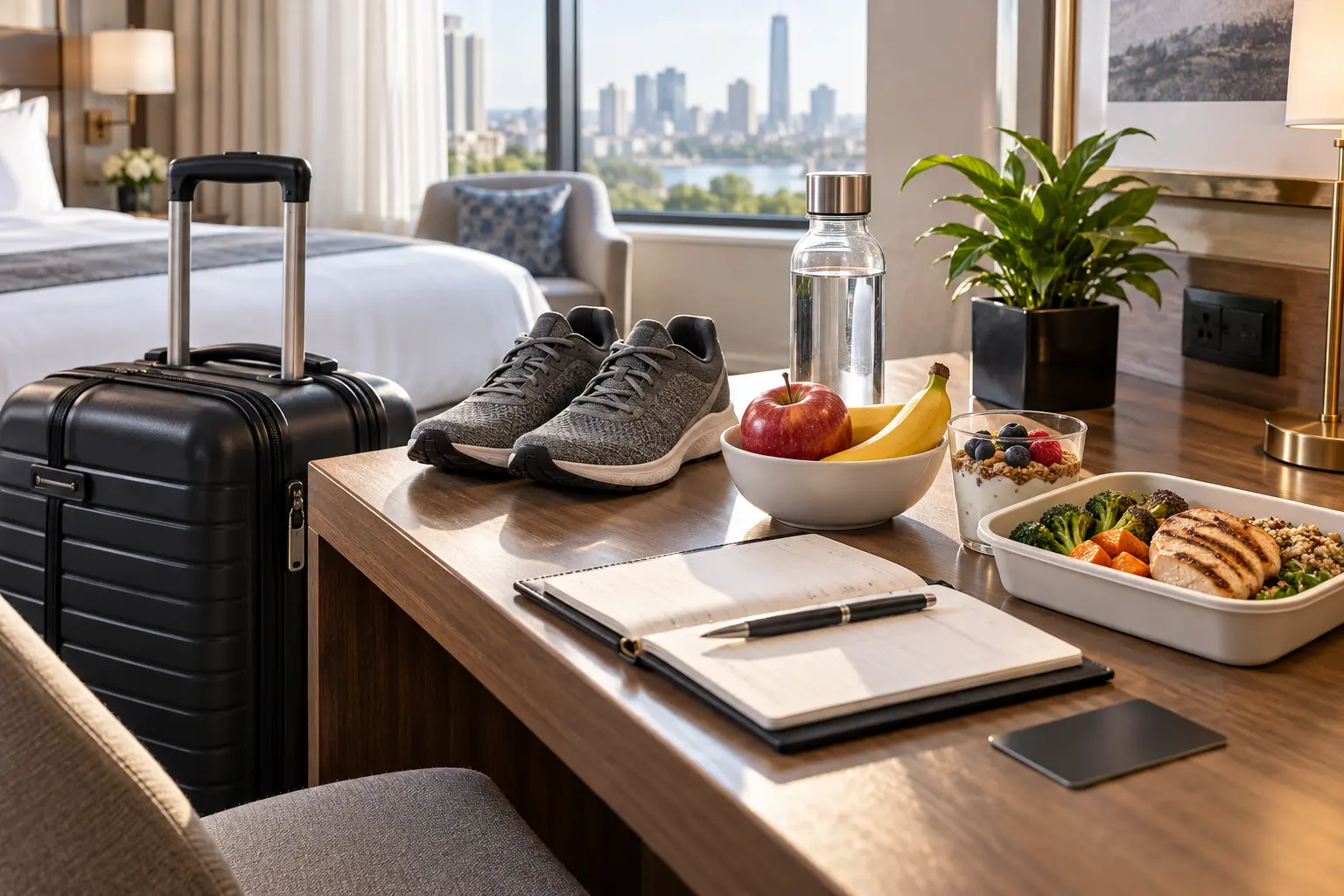
Five fast meal patterns
- Microwave grain, frozen vegetables, beans, and salsa.
- Rotisserie chicken or tofu, bagged salad, whole-grain bread, and fruit.
- Greek yogurt, oats, berries, and nuts.
- Eggs with frozen vegetables and a microwave potato.
- A lower-sodium soup upgraded with extra beans or chicken and vegetables.
Adjust portions to hunger, body size, activity, and clinical needs. Repetition is acceptable. Rotate sauces, vegetables, and protein sources when variety improves adherence.
Shop for decisions, not recipes
Build a short default list and reorder it. Buy ingredients with overlapping uses so leftovers do not become waste. Frozen and canned foods reduce urgency and can be economical. Keep one meal at work and one at home that survives a disrupted week.
Batch preparation can mean washing fruit, cooking one protein, or portioning two lunches—not spending Sunday cooking fourteen containers. Stop at the amount of preparation that saves more time than it consumes.
Make takeout part of the system
Identify two local orders that fit reasonably well: a bowl with lean protein, vegetables, and rice; a grilled option with salad and potatoes; sushi with edamame; or another culturally appropriate meal. Request sauces separately when useful and order before hunger becomes extreme.
Cost, sodium, and portions vary. Split a very large serving before eating or save part for lunch. The objective is not the lowest-calorie item; it is a satisfying order that makes the weekly intake more predictable.
Build a three-level meal rotation
Level one is a five-minute assembly: yogurt, oats, fruit, and nuts; a tuna-and-bean salad; or microwave grains with frozen vegetables and tofu. Level two uses fifteen minutes: eggs and vegetables, a fast stir-fry, or a sheet-pan protein with pre-cut produce. Level three is the emergency option: a selected frozen meal, soup upgraded with protein, or a known takeout order.
Write two choices at each level and keep the ingredients visible. When time collapses, move down a level instead of abandoning the structure. This also helps control food waste because the same frozen vegetables, grains, and proteins can appear in several combinations.
Track which meals keep you satisfied for three or four hours. If a quick meal repeatedly leads to snacking, increase its protein, produce, or fiber before simply cutting the portion. If calorie-dense sauces, cheese, nuts, or oils accumulate, measure them briefly to recalibrate. The meal should be fast and satisfying, not merely small.
Assign each household member one contribution when possible: wash fruit, start the microwave grain, or portion tomorrow's lunch. Use grocery pickup or delivery if the added fee reliably replaces expensive takeout and fits the budget. Put the fastest foods at eye level and freeze extra servings immediately. Good kitchen design reduces the number of decisions required after a long day. Keep the default list on your phone so restocking takes minutes, not another planning session.
Turn the advice into a repeatable system
Start with a seven-day observation period rather than an aggressive overhaul. Record sleep, meal opportunities, drinks, movement, hunger, and the situations in which the plan breaks. Then choose two changes that remove the most friction. Examples include packing one reliable meal, scheduling a ten-minute walk, keeping a shelf-stable backup, or protecting a consistent sleep window. A small system used on difficult days is more valuable than an ideal routine used only when life is quiet.
Review trends weekly. Use a seven-day weight average if weighing is appropriate for you, plus waist, energy, sleep, strength, and adherence. Day-to-day scale changes largely reflect water, glycogen, food in the gut, and other short-term factors. Adjust one variable at a time after two to four consistent weeks. Faster restriction can increase hunger, fatigue, and the chance of abandoning the plan.
Medical conditions, pregnancy, eating-disorder history, medicines, or persistent fatigue deserve individualized care. Seek prompt help for chest pain, fainting, severe shortness of breath, or other concerning symptoms. The goal is a routine that supports health and can survive the real schedule—not a punishment for having a demanding one.
Where an optional supplement fits
Food structure, sleep, movement, and environment do the main work. A supplement is optional and cannot compensate for missed sleep, an unsustainable deficit, or a schedule with no reliable meals. When time is scarce, buying a supplement can feel easier than changing meals. It should never replace food planning, and its stimulant profile may be counterproductive if late work already shortens sleep.
The current Fat Burn Active page lists at least 120 mg caffeine per serving from caffeine anhydrous and guarana, with additional green-tea caffeine not quantified, plus bitter-orange extract standardized to 6 mg synephrine. It directs adults to take two capsules with 300 ml water, preferably before a meal or training, not on an empty stomach, and warns against combining it with other caffeine or similar-effect sources. Those details matter particularly for shift work, travel, and sleep disruption.
Treat Fat Burn Active as an optional addition, not a substitute for Weight Loss When You Have Little Time to Cook. Review its listed ingredients and limitations in our product analysis. If the evidence, warnings, and cost fit your decision, verify the current formula and purchase options. We may earn a commission.
Frequently asked questions
Are frozen meals bad for weight loss?
No. Compare protein, fiber, sodium, serving size, and fullness; add produce when needed.
Can I eat the same breakfast daily?
Yes, if it meets your needs and the rest of your diet provides variety.
Do meal-replacement shakes count as meals?
They can be convenient, but fullness and nutrition vary. Whole-food assembly meals are often more satisfying.
Sources
- CDC: Healthy Eating for a Healthy Weight
- NIDDK: Treatment for Overweight and Obesity
- USDA MyPlate: Healthy Eating on a Budget
- NIH ODS: Weight-Loss Supplements
Sources reviewed September 13, 2026. This article is general educational information, not medical advice, diagnosis, or treatment.