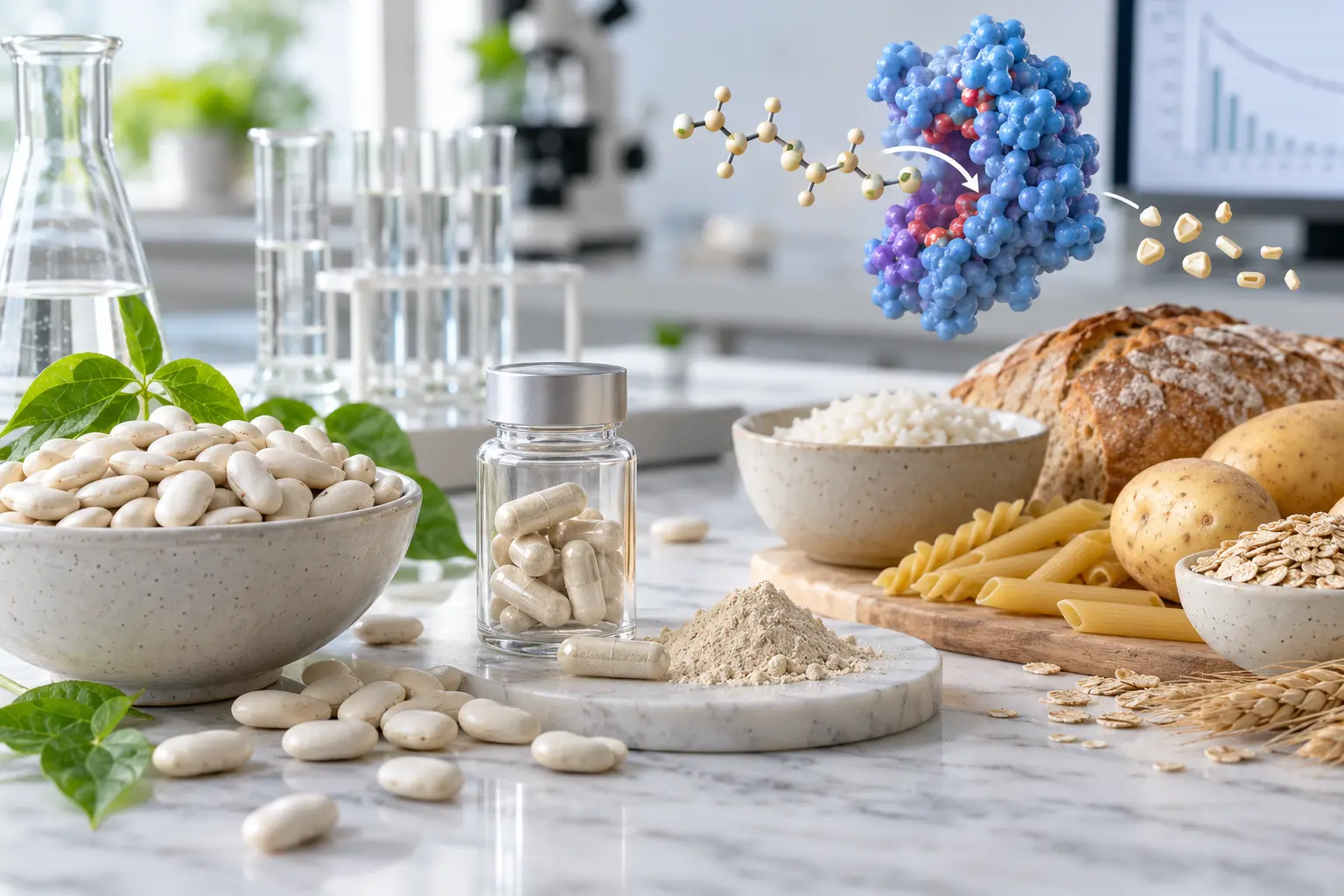
The target is starch digestion
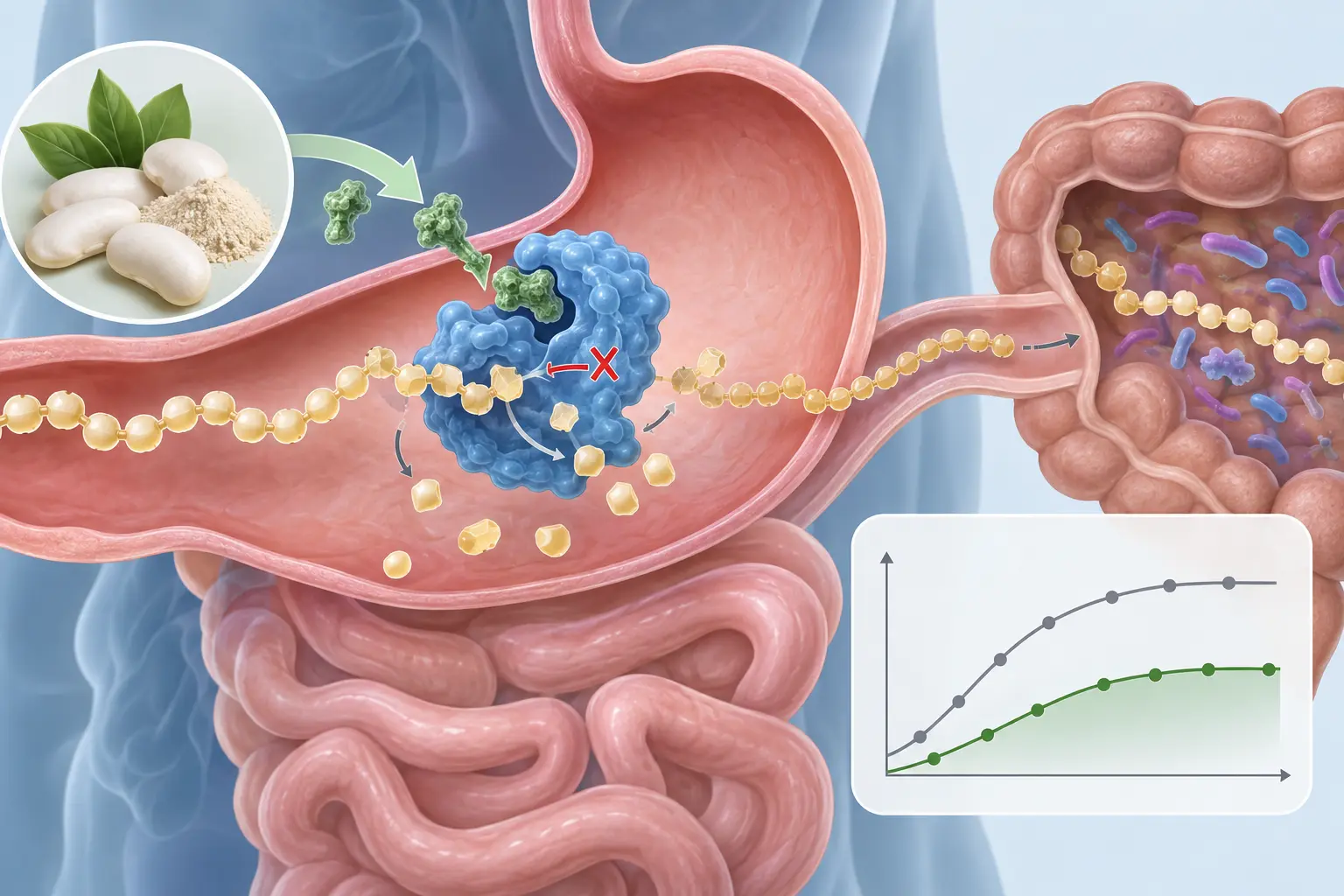
Alpha-amylase begins breaking large starch molecules into smaller carbohydrates. Certain Phaseolus vulgaris extracts contain inhibitors that can reduce this enzyme's activity under defined conditions. The mechanism depends on inhibitor activity, timing, dose, and how much digestible starch the meal contains.
Sucrose, glucose, fructose, lactose, fiber, and non-carbohydrate calories do not disappear because alpha-amylase is inhibited. A low-starch meal also provides little relevant substrate, so taking more does not create a larger rational benefit.
Product identity controls relevance
Trials frequently use proprietary standardized extracts rather than generic bean powder. Record enzyme-inhibiting units when reported, extract amount, timing before meals, dietary instructions, duration, and whether the manufacturer funded the work. Milligrams alone may not describe biological activity.
Weight change can reflect reduced intake, study counseling, gastrointestinal tolerance, or random variation as well as partial starch malabsorption. Look for replicated independent trials and absolute differences from placebo.
Keep this page separate from the category claim
The broader guide to whether fat burners block carbohydrate absorption compares supplements with medicines, fiber, sugars, and different digestive enzymes. This ingredient page answers a narrower question: whether a specified white kidney bean extract matches alpha-amylase research.
Gas, bloating, cramping, or stool changes can follow greater carbohydrate delivery to the colon. Those symptoms do not prove a useful calorie deficit. People using diabetes medicines need professional review because changing carbohydrate absorption may complicate glucose management.
Match the evidence to the product
Start by identifying exactly what researchers tested: a purified chemical, named botanical extract, microbial strain, food, or finished blend. Copy the serving size, daily dose, standardization, other active ingredients, duration, population, comparator, and primary outcome. A familiar ingredient name is not enough when manufacturing, potency, viability, or accompanying stimulants differ.
Rank evidence in order: mechanistic laboratory work, animal studies, acute human measurements, controlled human trials, systematic reviews, and trials of the exact sold formula. Each level answers a narrower question. A plausible pathway can justify research, but it cannot establish meaningful fat loss. Report absolute group differences, uncertainty, adverse events, dropouts, funding, and whether the result survived sensitivity analysis.
Use a practical decision system
- Define one job. Choose a measurable purpose such as a four-week waist trend, meal tolerance, or adherence—not “boost metabolism.”
- Record baseline. Use seven morning weights, one standardized waist measure, usual intake, steps, training, sleep, digestion, medicines, and supplements.
- Audit the label. Confirm the exact ingredient, dose, directions, allergens, caffeine, warnings, expiry, storage, and independent quality information.
- Change one variable. If professional review supports use, keep the rest of the routine reasonably stable and follow the label.
- Review averages. Compare the predefined outcome, side effects, adherence, and cost; do not credit one dramatic day.
- Stop deliberately. Discontinue when the benefit is absent, too small, or outweighed by symptoms, complexity, or price.
A personal trial cannot prove causation or reveal uncommon harm. It simply reduces the chance that expectation, changing food intake, constipation, menstrual-cycle timing, or ordinary water fluctuation will be mistaken for an ingredient effect.
Example: a label that cannot support its promise
A shopper finds a study using a defined material for twelve weeks, then sees the same broad ingredient name inside a proprietary blend. The bottle omits the active amount and combines several ingredients while promising rapid results. The correct comparison is not “same ingredient.” It is “dose and formula relevance unknown.”
The shopper requests the complete specification, checks whether the study outcome was weight, waist, or only a laboratory marker, and declines to convert an average group result into a personal forecast. Transparent labeling makes evaluation possible; it does not prove effectiveness, purity, or safety.
Build a study-to-label comparison card
Create two columns before deciding. In the study column, record the exact material, active specification, daily dose, timing, treatment length, participant characteristics, calorie or exercise program, comparator, number randomized, number completing, primary endpoint, absolute difference, confidence interval, adverse events, and funding. In the product column, copy the same fields from the current label and manufacturer documents. Mark “not disclosed” rather than estimating a favorable match.
Then grade relevance. Direct means the finished product, dose, schedule, population, and outcome were tested. Close means the same defined ingredient and comparable exposure were studied, but the complete formula was not. Indirect means only a related extract, strain, food, chemical, mechanism, or animal model was used. Unusable means the study is retracted, the material cannot be identified, the dose is hidden, or the cited outcome does not support the advertised claim. A long reference list does not compensate for low relevance.
Finally, translate the evidence into a decision rather than a promise. Write the most likely benefit as a range that includes no meaningful effect, list the main uncertainties, and set a review date. Track weekly average weight, standardized waist, the behavior the product is supposed to support, adverse effects, and total cost. Do not change food, exercise, sleep schedule, and several supplements at once and then assign the result to one capsule.
Ordinary scale noise can exceed the small average differences reported for many supplements. Sodium, carbohydrate intake, hydration, bowel contents, soreness, travel, and menstrual-cycle timing can all change weight without changing body fat. If the observed result is not larger than this noise or does not persist, record it as inconclusive. The honest endpoint may be that the ingredient is interesting but not useful enough to buy.
Where Fat Burn Active fits
White kidney bean extract is not identified in the currently available Fat Burn Active information. Carbohydrate-blocker evidence cannot support the product.
Fat Burn Active is optional and is not required for fat loss. Ingredient plausibility cannot replace evidence for the complete formula, a relevant dose, or a sustainable calorie deficit. Read our independent Fat Burn Active review before deciding.
For White Kidney Bean Extract for Carbohydrate Blocking, health assessment comes before a supplement purchase. If Fat Burn Active is being considered, start with who should avoid the formula, then use the independent review to decide whether any further step is reasonable.
Safety boundaries
Ask a clinician or pharmacist before using a weight-loss supplement if you are pregnant or breastfeeding, under 18, have an eating-disorder history, allergy, gastrointestinal disease, diabetes, immune compromise, heart or rhythm disease, liver or kidney disease, or take medicines. Do not stack products or exceed directions to chase a sensation.
Stop and seek appropriate care for chest pain, fainting, breathing difficulty, a serious allergic reaction, severe or persistent abdominal pain, repeated vomiting, blood in stool, or a sustained racing or irregular heartbeat. Gas, bowel changes, nausea, insomnia, anxiety, palpitations, and headache are adverse effects, not evidence that fat loss is occurring.
Frequently asked questions
Does white kidney bean extract block sugar?
No. Its proposed target is alpha-amylase-mediated starch digestion.
Can it cancel a high-carbohydrate meal?
No. Inhibition is partial and meal-specific.
Is ordinary bean powder equivalent?
No. A standardized extract and culinary beans are not interchangeable.
Sources
- NIH ODS: Dietary Supplements for Weight Loss
- White bean alpha-amylase inhibitor review
- White bean extract randomized trial
- FDA: Dietary supplements overview
Sources reviewed September 14, 2026. This article is general educational information, not medical advice, diagnosis, or treatment.