The short answer
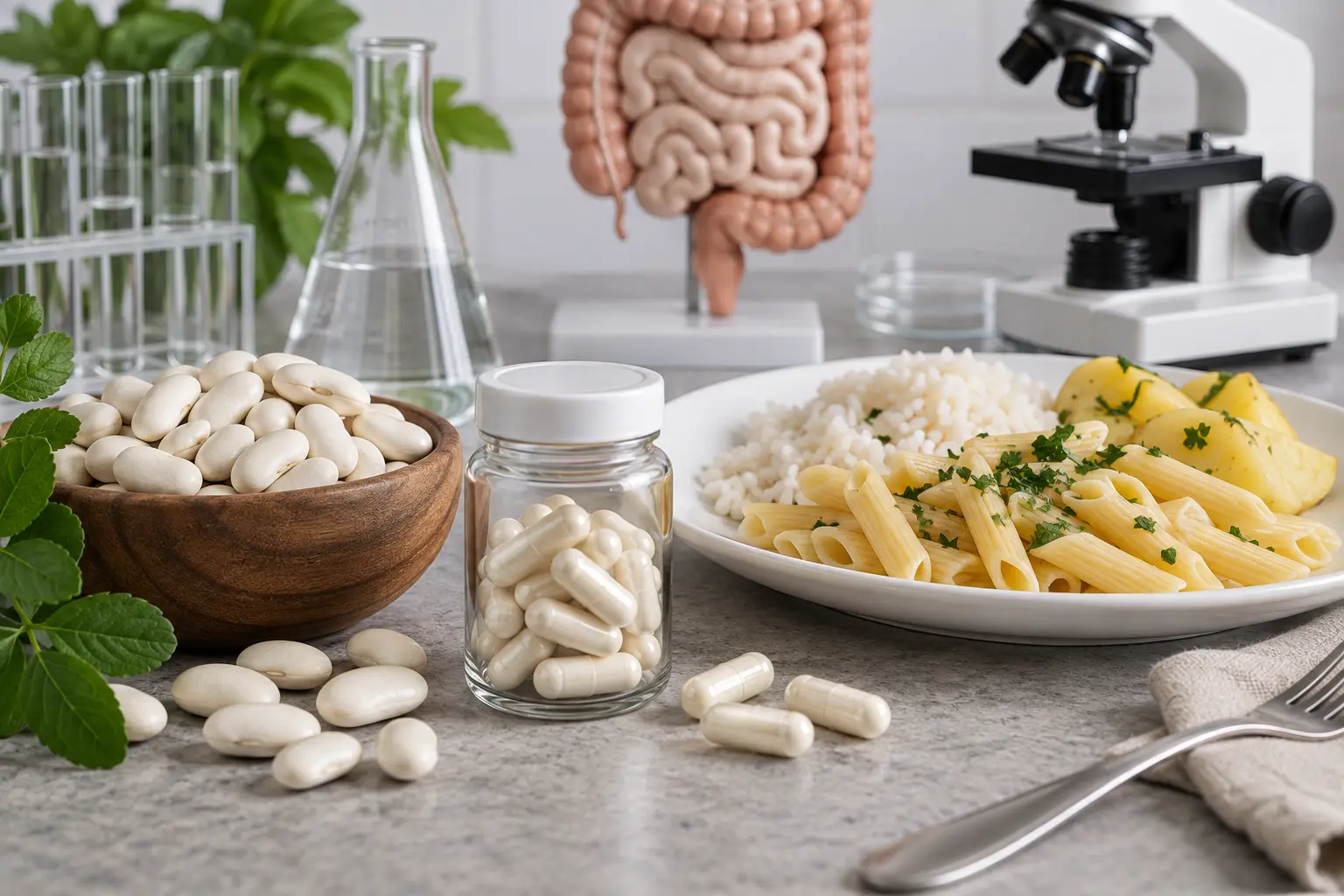
Most supplement “carb blockers” use white kidney bean extract intended to inhibit alpha-amylase, but they do not erase all carbohydrates, sugar, calories, or an oversized meal. No supplement cancels the energy in an unrestricted diet, and a plausible mechanism is not the same as a clinically meaningful result.
Alpha-amylase helps break starch into smaller carbohydrates. A standardized bean extract may reduce some starch digestion under specific conditions. It does not block table sugar, sweet drinks, dietary fat, protein, or the calories already present in the supplement user’s broader diet.
What the claim means—and what it does not
Human studies vary in extract, dose, meal composition, duration, and background diet. Some report modest changes, but evidence cannot be transferred to an undisclosed blend. Gastrointestinal effects are plausible when more carbohydrate reaches the colon, and compensation at later meals can erase a small benefit.
Evaluate the exact product rather than the category name. Two bottles can use different extracts, doses, serving sizes, co-ingredients, and quality controls. Evidence for one formulation cannot automatically validate another, especially when a proprietary blend hides amounts.
How to judge the evidence
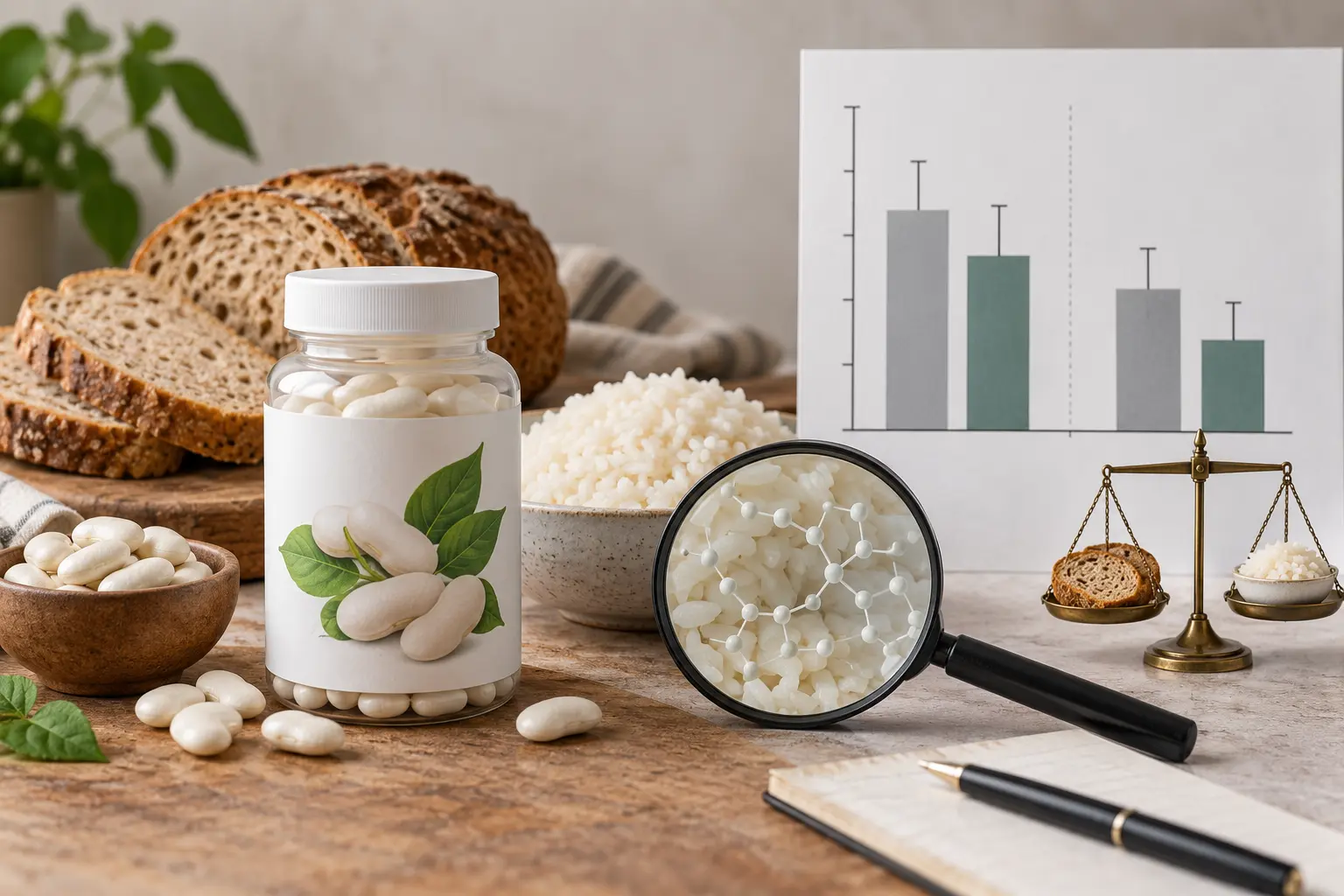
Start with randomized controlled human trials that measure body weight, waist, or body composition over a meaningful period. An enzyme test, animal experiment, post-meal blood marker, or one-day appetite score can explain a hypothesis, but it cannot establish lasting fat loss.
Read the between-group difference, not only how much the supplement group changed from baseline. Check the confidence interval, dropout, adherence, adverse events, background diet, and funding. A statistically significant difference can still be too small to notice or justify the price.
A five-step label and use system
- Look for Phaseolus vulgaris or white kidney bean extract, not “carb complex.”
- Confirm the standardized extract and amount per serving.
- Check whether cited trials used the same dose before starch-containing meals.
- Do not assume an effect on sugar, fiber, fat, or total calories.
- Track GI tolerance and stop if symptoms are persistent or severe.
Photograph the Supplement Facts panel and write down the date, full serving, timing, symptoms, hunger, diet consistency, and weekly average weight. Change only one optional product at a time. That makes it easier to identify an adverse effect and avoids crediting ordinary scale noise to a capsule.
Worked example
Someone takes a “carb blocker” before pizza and dessert. Even if the extract affects part of the crust’s starch, it does not neutralize cheese fat, dessert sugar, toppings, or later snacking. Treating the capsule as permission to add food can move intake in the wrong direction.
The disciplined conclusion is narrower than the advertisement. Ask what was directly demonstrated, in whom, at what dose, for how long, and against what control. If the answer is only a biochemical possibility, classify the weight-loss claim as unproven.
Set a realistic decision threshold
Decide in advance what outcome would make continued use worthwhile. Use four-week rolling weight trends, waist measurements taken consistently, appetite notes, side effects, cost, and adherence to the underlying food plan. Do not use one unusually low weigh-in as proof.
If the supplement adds no clear benefit after a reasonable evaluation window, stopping is a valid result. Increasing the dose beyond the label to chase an effect increases risk without creating evidence. Sustainable food, activity, sleep, and medical care remain higher-priority levers.
Safety and quality questions
“Natural” does not mean risk-free. Supplements can cause gastrointestinal symptoms, headaches, sleep disruption, allergy, or interactions. Risk changes with pregnancy, chronic disease, surgery, and prescription medicines. A clinician or pharmacist can help when the label includes an unfamiliar blend.
Look for a complete facts panel, lot number, contact information, sensible warnings, and independent quality testing where available. Quality verification can confirm identity or contamination controls; it does not prove the product causes weight loss.
Related Active Body Hub guides
For the ingredient-level analysis, see white kidney bean extract. Our separate guide asks whether fat burners can block carbohydrate absorption.
Also review how to find the true daily dose and ingredient trials versus finished-product trials before comparing prices.
Where Fat Burn Active fits
Fat Burn Active is relevant to Carbohydrate Blockers: Evidence and Limitations because its official listing identifies standardized plant extracts, caffeine sources, vitamins, and zinc in one formula. First read our independent review. If the formula, stimulant profile, evidence limits, and warnings fit your situation, check the current formula and purchase options on the official Fat Burn Active website. We may receive a commission at no additional cost.
Which carbohydrate is supposed to be blocked?
Most supplement “carb blockers” focus on white kidney bean extract and inhibition of alpha-amylase, an enzyme involved in starch digestion. That mechanism does not apply equally to sugar, every fiber, or the full energy in a meal. A claim that a capsule “cancels carbs” skips the type of carbohydrate, the tested extract, the meal, and the outcome. If the advertised study used a starch-rich test meal, do not apply it automatically to a sugary drink or an ordinary mixed diet.
Read the label for the extract amount per full daily serving and whether its activity is standardized. Compare the preparation and dose with human trials that measured body weight over a relevant period, not only a brief digestion marker. In a multi-ingredient product, a favorable result cannot be assigned to white kidney bean unless the comparison isolates it. Also examine the control group's weight change and the absolute difference, rather than repeating the active group's before-and-after number.
Digestive effects and medication context belong in the decision. If a person experiences bloating, cramps, or other symptoms, treating those as proof that calories were blocked is unsound. People using glucose-lowering medicine or managing digestive conditions should seek individual advice. The simplest alternative to an uncertain blocker is a meal pattern with satisfying portions and adequate fiber that can be repeated without a capsule.
A buyer's checklist is specific: identify the starch-blocking ingredient, calculate its daily amount, find comparable human weight outcomes, inspect adverse events, and decide whether the expected benefit would justify the price. If the label hides the amount or only cites laboratory enzyme inhibition, classify the weight claim as unverified. This page answers starch-blocker evidence; it should not be confused with fat-binding products, fiber satiety tools, or ketone drinks.
Frequently asked questions
Can this type of supplement replace a calorie deficit?
No. It may influence appetite, digestion, or a metabolic marker, but sustained fat loss still requires energy intake to remain below expenditure over time.
How quickly should scale weight change?
Daily weight reflects water, glycogen, food, and bowel contents. Judge a trend across several weeks alongside waist and adherence rather than expecting an immediate capsule effect.
Does a stronger dose work better?
Not necessarily. Effects may plateau while adverse effects rise. Use the labeled amount and evidence from the same ingredient and dose; never improvise a high dose.
Who should get professional advice first?
People who are pregnant or breastfeeding, under 18, managing chronic disease, preparing for surgery, or taking medicines should ask an appropriate clinician or pharmacist before use.
Record the reason for trying the product and the evidence level in one sentence. This simple note protects against changing the goal after purchase—from weight loss to “feeling something”—and keeps the decision tied to a measurable outcome, tolerability, and total cost.
Sources
- NIH ODS: Weight-loss dietary supplements
- White kidney bean extract review
- Alpha-amylase inhibitor clinical evidence
- FDA questions and answers on dietary supplements
- Systematic review of weight-loss supplements
Evidence reviewed September 16, 2026. Educational information only; not medical advice.