
Why hunger becomes the real bottleneck
A calculated target may look reasonable but feel punishing when it removes too much food, relies on small energy-dense portions, or leaves long gaps. Dieting can also increase appetite while a lighter body requires less energy. Poor sleep, stress, hard training and highly palatable food cues amplify the problem. Hunger is not proof of “fat burning”; it is a signal to inspect the plan.
A larger theoretical deficit can produce a smaller real weekly deficit when it triggers evening overeating or weekend rebound. Sustainability is therefore part of the energy equation, not a soft extra.
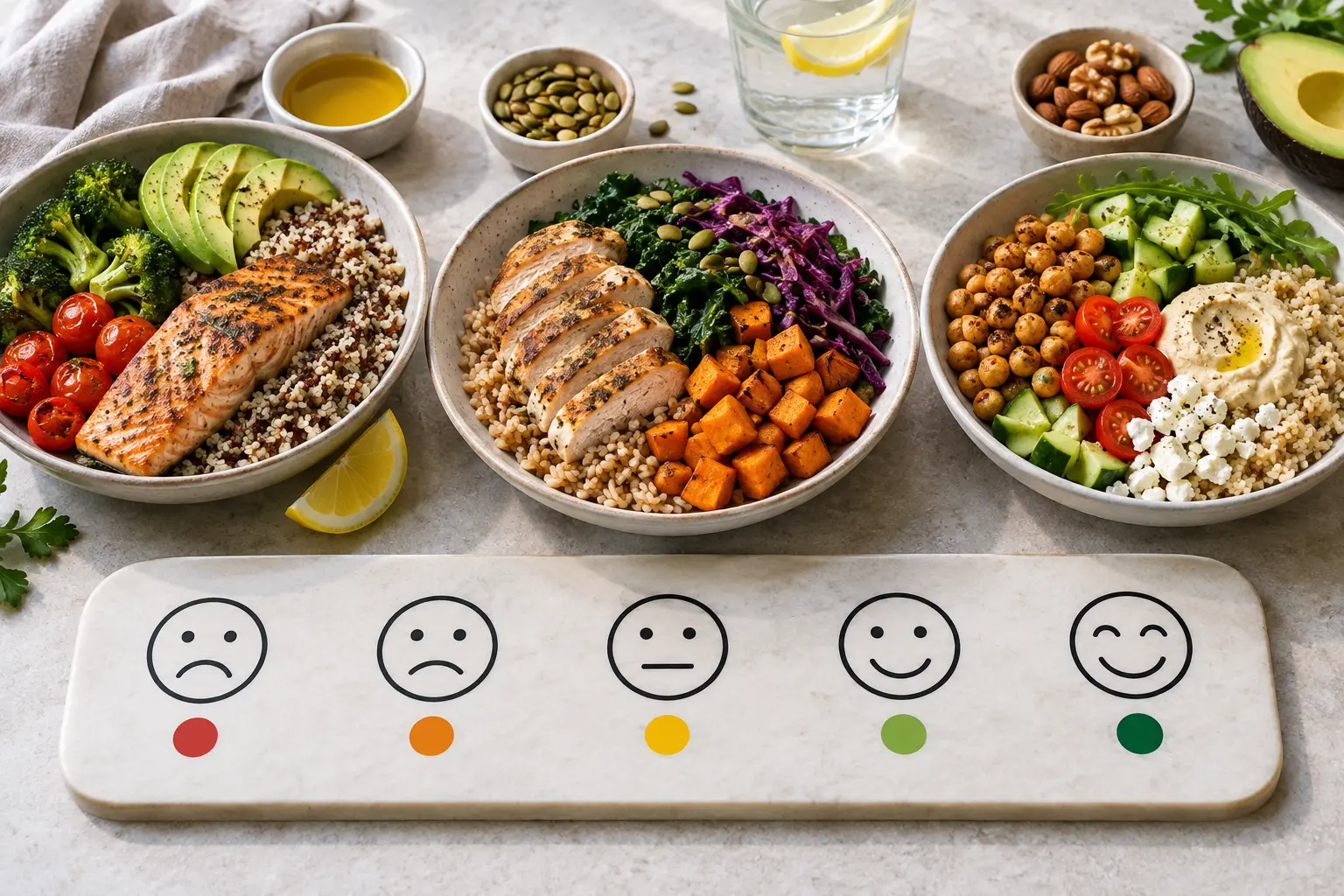
Build a higher-satiety plate
There is no magic order, but meals that combine these components usually offer more food and nutrition than a tiny snack-style plate with the same calories.
The high-protein lunch guide offers a concrete test when afternoon snacking is the sticking point.
Cut low-satiety calories first
Audit specialty coffee, sweetened drinks, alcohol, cooking oil, creamy sauces and distracted bites. Choose one automatic item to reduce or replace while preserving foods that make meals satisfying. Do not remove every enjoyable food. A planned dessert or restaurant meal can fit when its portion is visible within the week.
Calorie density is a tool, not a purity rule. Avocado, nuts and olive oil can support a healthy diet but still need portions compatible with the target. Conversely, potatoes, bread and fruit are not automatically fattening.
Move calories to the hunger window
If breakfast is easy to skip but 4 p.m. hunger leads to uncontrolled snacking, moving food toward lunch and afternoon may help. If evening hunger follows a very small dinner, make dinner more substantial rather than relying on willpower. Meal timing matters mainly through adherence, preference, training and medical needs—not because one clock time turns calories into fat.
Rate hunger before and after three recurring meals and note how long satisfaction lasts. Change protein, volume or timing in one meal and repeat. This turns vague hunger into a solvable design problem.
Use a decision rule before changing the plan
Set the review rule in advance: keep the plan when the multi-week trend and adherence are acceptable; simplify it when execution repeatedly fails; make one modest adjustment when several measurements remain flat; and seek professional review when symptoms, medicines, or medical conditions may be involved. This prevents emotion from rewriting the strategy after every meal or weigh-in.
Translate the daily plan into a weekly budget
A daily target is useful only when it describes the days you actually live. Multiply the planned average by seven, then include the recurring events that are often treated as exceptions: restaurant dinner, weekend drinks, commuting coffee, tasting while cooking, and a larger social meal. This is not permission to bank calories through fasting. It is a visibility exercise that shows whether the plan has enough flexibility to survive the week.
Suppose a person expects a modest 300-calorie daily deficit. Across seven days, the planned gap is about 2,100 calories. A large untracked restaurant meal, two cocktails, and weekend grazing can substantially narrow that gap. The arithmetic does not prove exact fat change because both intake and expenditure are estimates, but it reveals why “perfect weekdays” and a flat monthly trend can coexist.
Build a range rather than one fragile number. Keep a minimum meal structure on busy days, decide which social events matter, and leave room for normal variation. If a higher-intake day occurs, resume the usual plan at the next meal. Trying to repay it with severe restriction often increases hunger and makes another overshoot more likely.
Separate estimates from measurements
Calorie labels, menu numbers, food databases, watches and metabolic equations all contain uncertainty. Use them as consistent tools, not exact laboratory instruments. A mechanism—such as caffeine increasing alertness, protein affecting fullness, or exercise using energy—is not the same as a measured long-term weight outcome.
Prefer human research that measures the outcome being discussed and lasts long enough to matter. Association is not causation, and evidence for one supplement ingredient cannot be assigned to a multi-ingredient finished product. A useful plan works even after every product link is removed.
Use a two-week experiment, not daily punishment
For the first three days, observe normal meals, drinks, hunger, activity, sleep and scale conditions without trying to produce a perfect record. Then choose one high-impact change and keep the rest of the routine reasonably stable for eleven days. Useful changes include measuring calorie-dense cooking fats, replacing one automatic caloric drink, packing a planned afternoon snack, or setting a restaurant decision before arriving.
Use comparable morning weigh-ins and calculate a seven-day average. Add waist, hunger, training performance and adherence. Fourteen days can expose a large leak, but it may not prove a small fat change when menstrual-cycle shifts, travel, illness, hard training or inconsistent measurements add noise. Continue for another comparable period when needed.
Change one variable at a time. If you cut food, add exercise, stop carbohydrates and begin a stimulant simultaneously, you cannot tell what changed hunger, sleep, fluid or weight. Do not respond to a high reading by fasting, dehydrating or doubling exercise. The best adjustment creates cleaner evidence and remains usable during an ordinary week.
Know when generic deficit advice is not enough
Calorie needs and safe rates vary with body size, age, activity, health, medicines and life stage. Pregnancy, breastfeeding, adolescence, frailty, eating-disorder history, diabetes treatment, kidney disease and other clinical contexts require individualized guidance. Persistent dizziness, fainting, chest symptoms, severe weakness, repeated loss-of-control eating, purging, or rapid unexplained weight change should trigger qualified care rather than a deeper deficit.
Weight management is not a character test. Hunger and adherence are data. If the plan causes constant food preoccupation, worsening mood, poor sleep, falling performance or repeated rebound eating, reduce the burden and seek appropriate support.
Where Fat Burn Active fits
An appetite sensation from a stimulant should not be used to tolerate an excessively restrictive plan. Fat Burn Active is optional; it cannot create a weekly deficit when food and drink intake exceed expenditure. Its current official page lists at least 120 mg caffeine per serving from caffeine anhydrous and guarana, additional green-tea caffeine that is not quantified, and bitter-orange extract standardized to 6 mg synephrine. Alertness, warmth, reduced appetite or sweating does not prove meaningful finished-product fat loss.
Once the practical steps in How to Create a Calorie Deficit Without Constant Hunger are working, decide whether an optional supplement adds enough value. Start with the Fat Burn Active review; if the formula and limitations are acceptable, see current availability and official ordering details. We may receive a commission.
Frequently asked questions
Must I count every calorie?
No. Tracking can diagnose portions and patterns, but repeatable meal structures and targeted checks can also create a deficit.
Can one high-calorie meal stop fat loss?
One meal changes the weekly total but does not define it. Resume the normal plan at the next meal.
How long should I check a trend?
Use comparable weekly averages for several weeks; short-term water and digestive changes can hide a small tissue trend.
Sources
- CDC: Healthy Eating for a Healthy Weight
- Mayo Clinic: Feel Full on Fewer Calories
- NIDDK: Treatment for Overweight and Obesity
- NIH ODS: Weight-Loss Supplements
Sources reviewed September 13, 2026. This article is general educational information, not medical advice, diagnosis, or treatment.