
Why the scale is only part of the story after 50
A crash diet can lower body weight while leaving you weaker and more tired. Muscle mass and strength can change with age and inactivity, and the ability to climb stairs, lift groceries or get up from a chair matters more than a target number chosen without context. NIA emphasizes that strength training can support muscle and function as people age. Losing weight without considering strength can miss the outcome you actually care about.
Not every person over 50 has the same metabolism or needs. Activity, body size, medicines, menopause or other hormonal changes, sleep and health conditions all affect the plan. There is no birthday at which fat loss becomes impossible, nor a special supplement that reverses aging. The decision should begin with your health goals and whether losing weight is appropriate for you.
Build meals that support strength
Protein helps maintain and repair body tissue. Include a suitable protein source at meals: eggs, yogurt, fish, poultry, beans, lentils, tofu or another food you enjoy. The right amount varies with body size, activity and health, especially kidney disease. A dietitian can individualize it when medical conditions complicate the picture. Avoid treating one internet gram target as mandatory for every older adult.
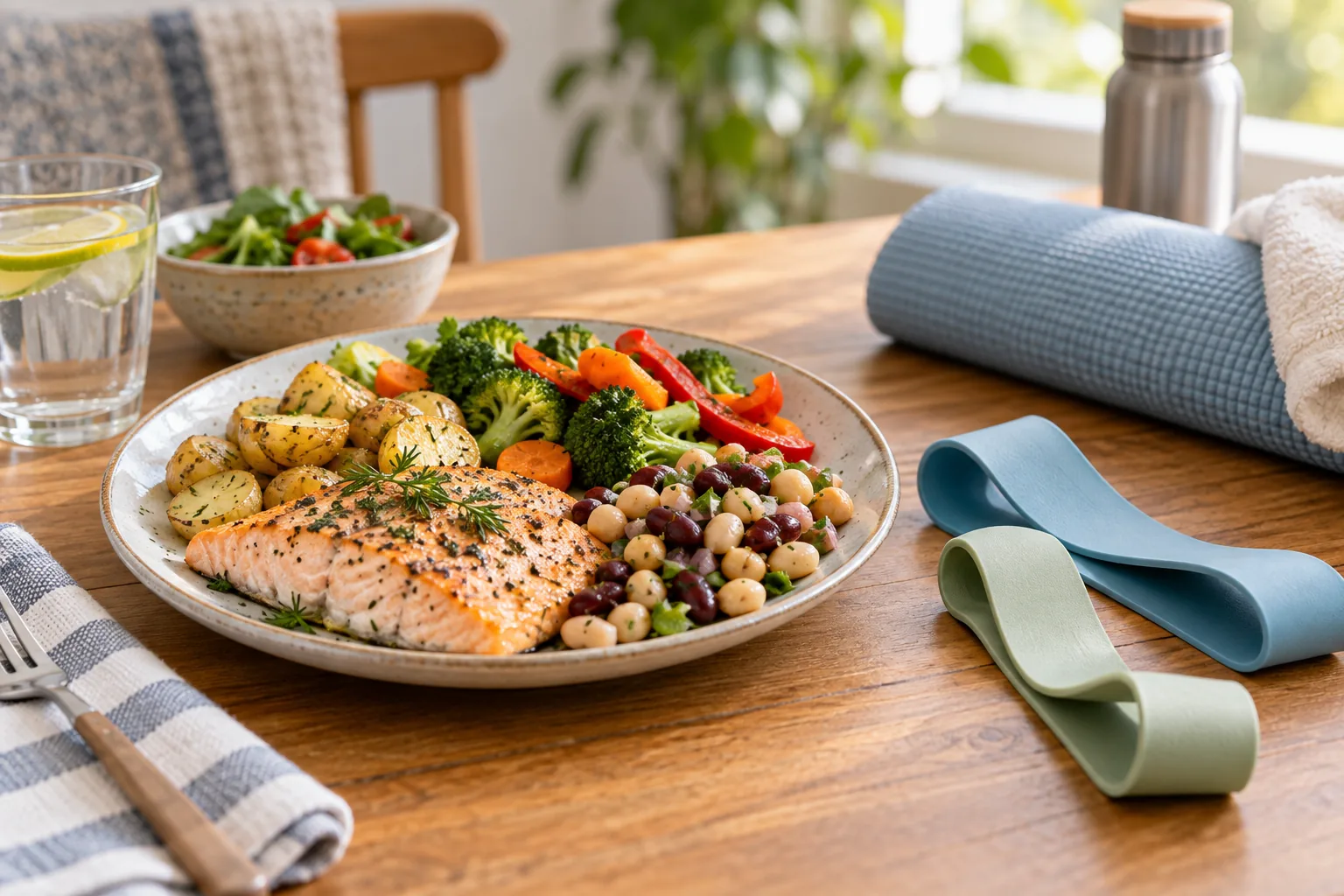
Vegetables, fruit, whole grains and enough dietary fat still matter. A high-protein plan that crowds out fiber and other nutrients is not a complete plan. If appetite is low, focus on meals that deliver adequate energy and nutrition rather than assuming you should eat as little as possible. If hunger is high, revisit whether the deficit or meal distribution is too aggressive.
A realistic strength-training start
Choose movements suited to your current capacity: chair stands, wall push-ups, resistance-band rows and gentle carrying or other exercises prescribed to you. Start with technique and a manageable effort, allow recovery, and progress gradually when movements feel controlled. NIA describes bands, machines, weights and bodyweight as possible strengthening methods. You do not need a gym membership to begin, but a qualified professional can help if balance, pain or medical limitations make exercise uncertain.
Walking, cycling or swimming can support cardiovascular health and daily activity, but they do not fully replace a strength stimulus. If you already train, keep working at an appropriate level rather than dropping resistance exercise during a diet. If you are new, consistency matters more than a punishing first week. The goal is to keep everyday movements easier as the eating pattern changes.
Set a pace that leaves room for life
Use a modest change in intake rather than an extreme restriction. An online calculator such as the NIDDK Body Weight Planner can provide an estimate, but your response over time, medical history and how you feel matter. If you feel weak, dizzy or unable to recover, review the plan rather than pushing through for a faster scale result. NIDDK recommends an eating and activity pattern you can sustain.
Track a multiweek weight trend if weighing is helpful, but add measures of function: chair stands, walking comfort, resistance used in training, energy for ordinary tasks and perhaps waist measurement. A temporary scale increase from water, salt or a new exercise session does not automatically indicate fat gain. Conversely, rapid weight loss with worsening strength deserves attention.
A four-week starting framework
This is a sequence of decisions, not a medical exercise prescription or a promise of a four-week weight result. If you use medications for diabetes or blood pressure, changes in food intake and activity may require monitoring or clinician advice. If you have unexplained weight loss, start with medical assessment, not a dieting plan.
Three common detours
- Only counting calories. A number cannot show whether you kept strength and adequate nutrition.
- Only walking. Walking is valuable, but deliberate resistance work better addresses strength and muscle preservation.
- Expecting a supplement to solve the gap. Appetite suppression or temporary stimulation does not replace meals, training or recovery.
Our muscle-preservation guide explains the wider principles, and protein target setting explains why individual needs differ. A practical seven-day meal plan can help translate the pattern into food without prescribing a universal calorie limit.
How to assess an optional product
Fat Burn Active cannot preserve muscle by itself, replace strength training or guarantee fat loss. The product contains stimulant ingredients, so medical conditions, medicines and sleep deserve attention. If you are considering it despite these limits, read the Fat Burn Active evidence and safety review and discuss suitability with a clinician when relevant. Keep the expected benefit separate from the foundations above.
Adjust for real barriers
If knee pain limits walking, a suitable lower-impact activity and appropriately modified strength work may help; seek professional guidance for persistent pain. If time is scarce, a short set of movements done consistently may be more realistic than a demanding program abandoned after a week. If meals are provided at work or in a dining hall, choose a protein food, vegetables and a satisfying portion of a staple from what is actually available.
Menopause, medication changes and sleep disruption can alter appetite, energy and weight trends, but they do not justify blanket claims that losing fat is impossible. Discuss persistent symptoms and medication effects with a clinician. Avoid changing prescribed medicines or adding stimulants on the basis of online weight-loss advice.
Protect social life as well. Eating with family and friends, enjoying favorite foods and allowing rest are part of a plan you can follow for months. If a weekly weigh-in makes you anxious or the scale obscures improvements in mobility, focus more on strength, function and medical goals agreed with your care team. The goal is useful health, not merely a smaller number.
Frequently asked questions
Is it too late to build strength after 50?
No. People can benefit from appropriately scaled strengthening activity at older ages. Start from your current capacity and seek guidance when needed.
Do I need a very high-protein diet?
Not necessarily. Aim for adequate intake suited to your health and activity rather than copying a high number from social media.
Should I stop trying to lose weight if the scale is slow?
Evaluate function, nutrition, adherence and a longer trend. A clinician can help decide whether further weight loss is appropriate for your situation.
Sources
- NIA: Strength training as we age
- NIA: Strengthening exercises
- NIA: Maintaining healthy weight
- NIDDK: Body Weight Planner
- NIDDK: Eating and activity
Sources reviewed September 27, 2026. This article is general education, not individualized medical or exercise advice.